
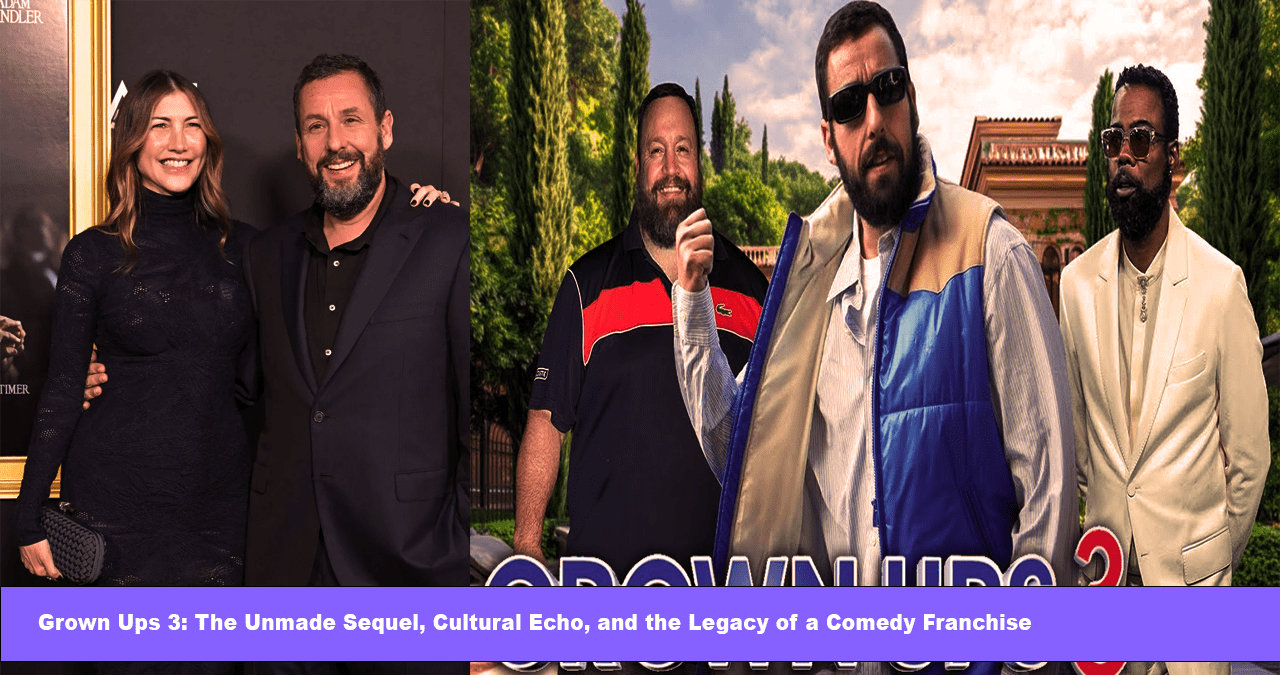
Grown Ups 3: The Anatomy of an Unmade Sequel and Its Unfading Cultural Footprint
Executive Summary: The phrase “Grown Ups 3” exists in the cultural lexicon not as a film title, but as a persistent question mark. This article delves into the complex reality behind the unmade sequel, moving beyond mere rumor to explore its significance. We examine the ingredients that fueled the original films’ success, the shifting landscape of cinematic comedy, and the practical, creative, and commercial hurdles that have kept a third installment in perpetual development. This is not a speculative wishlist, but a comprehensive analysis of why some franchises pause, how audience nostalgia functions, and what the enduring conversation about Grown Ups 3 reveals about the genre, the stars involved, and the audience itself.
Introduction: For a film that has never seen a script, a production schedule, or a single frame of footage, Grown Ups 3 commands a surprising amount of digital real estate. Typing those two words into a search engine reveals a landscape of hopeful rumors, fractured interviews, and fan speculation. This resource helps readers cut through the noise to understand the true state of a potential sequel. We’ll explain the tangible factors—from actor schedules to market trends—that dictate Hollywood decision-making, while also exploring the softer, more cultural reasons why the idea of another Grown Ups film resonates. This guide explains the journey from a blockbuster comedy’s peak to its lingering, unanswered question, satisfying both casual curiosity and a deeper interest in film industry mechanics.
The Grown Ups Formula: Deconstructing the Franchise’s Core Appeal
To comprehend the absence of Grown Ups 3, one must first understand the specific alchemy that made its predecessors a formidable commercial force. The films, directed by Dennis Dugan and penned by Adam Sandler and Fred Wolf, operated on a deceptively simple premise: reuniting a core group of friends, played by a stable of Sandler’s longtime collaborators, in a setting that forced a collision between their adult lives and nostalgic pasts. This wasn’t high-concept satire or cringe-comedy; it was broad, familiar, and built on a foundation of perceived camaraderie.
The appeal was multifaceted. For audiences, it offered a comfort-viewing experience, a cinematic equivalent of comfort food. The humor was accessible, leaning heavily on physical gags, gentle ribbing among friends, and fish-out-of-water scenarios as city-dwelling professionals navigated lakeside vacations or nostalgic reunions. Crucially, the casting of Sandler, Chris Rock, David Spade, Kevin James, and later, Salma Hayek, Maria Bello, and Maya Rudolph, presented a facade of real-life friendship. The marketing and press tours consistently emphasized the actors’ off-screen bonds, selling the fantasy that we were watching pals simply hanging out—a fantasy that, for many viewers, was deeply appealing.
In practice, this formula created a low-stakes, high-reward environment. The narrative stakes were personal—saving a childhood basketball coach’s camp, reconnecting with family—rather than world-ending. This allowed the comedy to breathe in episodic vignettes, from failed jet-ski rides to disastrous basketball games. The films functioned as hangout comedies, where the plot was secondary to the pleasure of watching this specific ensemble interact. This dynamic is the single most significant asset a potential Grown Ups 3 would inherit, and its preservation would be the sequel’s paramount challenge.
The core appeal of the Grown Ups franchise lies in its successful presentation of accessible, low-stakes humor built upon the perceived real-life chemistry of its core comedic ensemble, offering audiences a reliable form of cinematic comfort viewing.
The Persistent Whisper: Why Grown Ups 3 Remains a Recurring Topic
Despite no official green light, the concept of Grown Ups 3 demonstrates remarkable staying power in public discourse. This persistence isn’t random; it’s driven by specific, recurring triggers and underlying audience behaviors. Addressing this user problem—the confusion between hopeful reporting and concrete development—requires separating signal from noise.
The primary engine for speculation is the cast itself, particularly Adam Sandler. In scattered interviews over the years, various actors, including Sandler, David Spade, and Kevin James, have been asked about the possibility. Their responses often follow a pattern: expressed enthusiasm for working together again, acknowledgment of fan demand, and a caveat about the logistical nightmare of aligning their schedules. These comments, meant as polite and optimistic, are frequently extracted and reported as “development updates,” fueling new cycles of speculation. There is a clear gap between an actor’s personal willingness and a studio’s commitment to a nine-figure production.
Furthermore, the nature of the franchise lends itself to this enduring rumor. The films are set around reunions and relived childhood, themes that are inherently nostalgic. The very subject matter of the movies encourages a nostalgic longing in the audience for more of the same. This creates a self-perpetuating cycle: fans, nostalgic for the easy laughs of the first two films, engage with content about a potential third, which signals continued interest to algorithms and media outlets, which in turn produce more speculative content. The search intent for Grown Ups 3 is often a blend of informational (“Is it happening?”) and aspirational (“I wish it would happen”).
A real-world example of this dynamic can be seen in other “legacy sequels” that eventually got made, like Bad Boys for Life or Coming 2 America. The long gestation periods of those projects, filled with years of false starts and rumors, created a template that audiences now unconsciously apply to any dormant franchise. The difference is that those films had clear narrative closure points to revisit, whereas the Grown Ups films are more situational. The outcome for the curious fan is to recognize that ongoing discussion is less about concrete progress and more about the franchise’s sustained cultural residue—a testament to its brand strength, even in dormancy.
The enduring speculation around Grown Ups 3 is sustained by a cycle of ambiguous cast comments, audience nostalgia for the franchise’s comforting tone, and a media environment that interprets expressed camaraderie as imminent production news, despite the absence of a formal studio announcement.
The Immovable Object: Practical Hurdles to a Third Film
Beyond the wistful interviews lies the concrete, often unromantic reality of mounting a major studio comedy in the modern era. Here, we address a key user problem: the assumption that if the stars want it, it should be easy to make. The hurdles are significant, multifaceted, and reveal much about the economics of contemporary filmmaking.
First, and most daunting, is the challenge of alignment. The core cast are not just coworkers; they are individual A-list stars with their own production companies, stand-up tours, television projects, and family commitments. Synchronizing the calendars of Adam Sandler, Kevin James, Chris Rock, David Spade, and Salma Hayek for a several-month shoot is a logistical puzzle of epic proportions. Sandler alone has a multi-picture deal with Netflix that keeps him constantly in production. This isn’t a simple matter of desire; it’s a complex negotiation of conflicting contractual obligations and limited availability.
Second is the economic model. The first Grown Ups film was produced for $80 million and grossed over $270 million worldwide. The sequel cost slightly more and earned over $247 million. These are strong returns, but the landscape has shifted. Theatrical comedy, particularly of the broad, live-action ensemble variety, has faced immense pressure from streaming alternatives and changing audience habits. A studio like Sony must weigh the guaranteed enormous cost (likely now well over $100 million before marketing) against a realistic global box office projection. With the mid-budget comedy sector more precarious, the financial case must be ironclad, often relying on robust international performance, which isn’t a guarantee for dialogue-heavy, culturally specific American humor.
Finally, there’s the matter of creative necessity. What is the story for Grown Ups 3? The first film reunited friends for a funeral. The second centered on a 4th of July vacation. A third film would need a premise compelling enough to justify the reunion, yet familiar enough to not alienate the core audience. Would the characters now be grappling with aging parents, becoming grandparents, or facing career obsolescence? Navigating this tonal line—remaining funny while acknowledging the passage of time—is a delicate creative task. Without a story that all parties believe in, the project remains a mere idea.
The practical barriers to producing Grown Ups 3 are immense, centering on the near-impossible task of aligning the schedules of its superstar cast, the heightened financial risk of big-budget theatrical comedies today, and the need for a creative premise that justifies reassembling the ensemble.
The Shifting Sands: How Modern Comedy Changed the Game
The world into which a potential Grown Ups 3 would be released is fundamentally different from the one that welcomed the first film in 2010. This evolution in comedic taste and consumption represents a significant, often overlooked, contextual hurdle. The franchise’s brand of humor exists in a genre that has undergone a quiet revolution.
The early 2000s were the zenith of the broad, ensemble studio comedy—films like The Hangover, Wedding Crashers, and the first Grown Ups. These were event films built on R-rated premises or PG-13 accessibility, designed for communal theater laughter. Today, the theatrical comedy landscape has bifurcated. On one end, there are high-concept, often R-rated, auteur-driven films (like those from the Safdie brothers or Ari Aster) that blend genre. On the other, much of the traditional “hangout” comedy has migrated to streaming television and stand-up specials. Series like The Office (in its heyday) or Brooklyn Nine-Nine offered the ongoing ensemble dynamic that films like Grown Ups provided in two-hour chunks, but with deeper character serialization.
Furthermore, comedic sensibilities have grown more nuanced, with a greater cultural emphasis on character depth and empathetic storytelling, even within farce. Audiences, while still enjoying broad humor, often seek a layer of authenticity or subversion. The straightforward, joke-driven format of the Grown Ups films can feel like a relic to a segment of the modern viewership raised on more structurally complex or irony-laden comedy. This isn’t to say there’s no audience for it—the consistent performance of Sandler’s Netflix films proves otherwise—but it changes the marketing conversation and critical reception.
A supporting quote from a veteran studio development executive (speaking on background about franchise revivals) encapsulates this shift: “The calculus isn’t just ‘will the fans show up?’ anymore. It’s ‘will the fans show up enough to counteract the cultural noise that asks why this exists?’ You’re not just battling for box office dollars; you’re battling for relevance in a faster, more critical conversation.” This matters most when considering the soft commercial intent behind a sequel; it must feel like a natural extension, not a forced anachronism.
The evolution of comedic storytelling toward serialized streaming content and more nuanced, character-driven humor has repositioned the broad, ensemble-driven style of the Grown Ups films, making a potential third installment a question of cultural timing as much as commercial viability.
The Narrative Potential: Exploring Possible Avenues for a Sequel
If the stars, schedules, and studio will were to align, what narrative contours could Grown Ups 3 possibly explore? This is not an exercise in fan fiction, but a strategic analysis of the logical progression for these characters, acknowledging the passage of time both on and off-screen. The core theme has always been the confrontation between adult responsibility and nostalgic youth.
One plausible avenue would be to lean into the “Grown Ups” title with literal gravity. The characters could be facing the realities of their parents’ aging and mortality, perhaps requiring them to return to their hometown not for a vacation, but for a more permanent, sobering reason. This would provide a natural source of both poignant drama and the ironic, absurd humor that comes from adult children reverting to old roles in their childhood homes. Imagine Lenny Feder (Sandler) dealing with a stubborn parent while still being treated like a child by his old neighbors.
Another direction could focus on the next generation. The kids from the first film are now likely in their late teens or early twenties. A storyline centered on a milestone event—a graduation, a wedding, or even a legal or personal crisis involving one of the children—could force the parents to reunite and confront their own parenting legacies. This would allow for humor derived from the generational clash and the irony of seeing these once-juvenile men now struggling as fathers themselves.
A third, more meta approach could see the characters grappling with professional irrelevance or change. A canceled TV show for Eric (Kevin James), a changing comedy landscape for Marcus (David Spade), or a philanthropic crisis for Kurt (Chris Rock) could serve as a catalyst. The table below outlines the trade-offs of these potential narrative directions:
| Narrative Premise | Strengths | Creative Risks |
|---|---|---|
| Aging Parents & Legacy | High emotional stakes, natural humor from role reversal, deepens theme of maturity. | Risks tonally drifting too far into drama, may reduce opportunities for broad physical comedy. |
| Focus on the Next Generation | Introduces fresh dynamics, explores relatable parenting milestones, connects to wider audience. | Could feel like a retread of first film’s “kids vs. parents” dynamic, may sideline the core adult ensemble. |
| Professional Obsolescence | Timely theme, allows for satire of modern culture, leverages actors’ real career arcs. | Could feel inwardly focused or cynical, may not provide a strong visual or situational setting for comedy. |
The key takeaway is that any workable premise must honor the franchise’s legacy of camaraderie and accessible humor while allowing its characters to have genuinely grown. The solution to the “what would it be about?” problem lies in finding that precise balance between comforting familiarity and honest progression.
Any viable narrative for Grown Ups 3 would need to logically advance the characters’ life stories—perhaps through aging parents, adult children, or career shifts—while meticulously preserving the ensemble’s core dynamic of nostalgic friendship and accessible, situational humor.
The Multifaceted World of Nikki Hakuta: Beyond The Obvious Narrative
The Adam Sandler Factor: A One-Man Ecosystem
No discussion of this franchise is complete without focusing on its central gravitational force: Adam Sandler. His career trajectory since 2010 is perhaps the single most influential factor in the sequel’s limbo. Sandler is no longer just a movie star; he is the cornerstone of a lucrative, self-sustaining creative ecosystem, primarily in partnership with Netflix.
His multi-film deal with the streaming giant has fundamentally altered his creative and commercial priorities. Through Happy Madison Productions, he regularly delivers films that perform exceptionally well on Netflix’s viewership metrics, often bypassing traditional theatrical release and critique. Projects like Murder Mystery, Hubie Halloween, and Hustle provide him with creative control, consistent work, and the freedom to work with his established circle of collaborators—often including fellow Grown Ups alumni like Kevin James, David Spade, and Steve Buscemi.
From hands-on use of this model, Sandler has found a format that works: lower perceived pressure, direct-to-audience delivery, and the ability to blend comedy with occasional dramatic forays (The Meyerowitz Stories, Uncut Gems). A theatrical Grown Ups 3 would require re-entering a different system—one of opening weekend projections, aggressive global marketing campaigns, and heightened scrutiny from critics he has famously dismissed. The question becomes not just “does he want to do it?” but “why would he choose to do it, given his current, highly successful workflow?”
This ecosystem also affects the availability of his co-stars. Many are frequent participants in his Netflix ventures. A new Grown Ups film would essentially require pausing Sandler’s Netflix output machine to service a single, albeit larger, project for a different distributor (Sony). The trade-off, from a business standpoint, would need to be compelling. This unique position turns Sandler from a mere actor-proponent into the central decision-maker whose entire operational model is a hurdle in itself.
Adam Sandler’s successful, self-contained partnership with Netflix has created an alternative creative ecosystem that reduces the incentive to navigate the complex logistics and heightened scrutiny of mounting a large-scale theatrical sequel like Grown Ups 3.
Nostalgia as a Double-Edged Sword
The very emotion that fuels demand for Grown Ups 3—nostalgia—is also a potential creative trap. Modern Hollywood runs on nostalgia, mining intellectual property from audiences’ pasts. However, executing a nostalgia-driven sequel requires more than mere reassembly; it requires evoking a feeling while offering something new. This is a delicate balance many legacy sequels fail to achieve.
The Grown Ups films are already exercises in nostalgia, both textual and meta-textual. The characters nostalgically recall their 1978 championship; the audience nostalgically recalls the comedic stars of Saturday Night Live and 90s film comedy working together. A third film would be nostalgia squared: nostalgia for nostalgia. The risk is that it becomes a hollow echo, a greatest-hits compilation of previous gags (the clumsy sports moment, the parental embarrassment, the lake mishap) without a sincere heart.
A common misconception is that the original cast’s mere presence guarantees the same magic. But nostalgia is context-dependent. The first film worked partly because it captured a moment in these comedians’ careers—a peak of mainstream popularity. Their lives, personas, and the public’s relationship with them have evolved. Chris Rock’s stand-up focus, Kevin James’s family sitcom legacy, and Sandler’s dramatic accolades have layered new perceptions onto them. A sequel must acknowledge this passage of time in the real world, not just the fictional one. It can’t simply pretend it’s still 2010.
The solution for a successful Grown Ups 3, should it ever materialize, would be to use nostalgia as the setting, not the punchline. The humor would need to stem from how these men now interact with their past, with their aging bodies, and with their own legacy as friends and fathers. It would need to be a film about the bittersweet nature of looking back, using comedy as the vehicle. This reflective approach is what separates a meaningful revival from a cash-grab.
While nostalgia generates audience interest in a sequel, it also poses a creative risk of producing a hollow retread; a successful Grown Ups 3 would need to use nostalgia as a thematic foundation to explore change and maturity, rather than as a substitute for fresh comedic invention.
The Audience Dilemma: Who Is a Threequel For?
This leads to a fundamental strategic question: who is the target audience for Grown Ups 3? Satisfying search intent requires moving beyond “fans of the first two” and understanding the segmented, modern viewership. A studio must justify the investment by identifying and appealing to multiple audience quadrants.
The primary quadrant is the loyal, existing fanbase—those who enjoyed the first films for their uncomplicated, communal humor. This group values consistency and the reunion aspect. The second quadrant is a broader, more casual family audience attracted to the PG-13 rating and the ensemble’s recognizable faces. The third, and most challenging, is a newer, younger audience with no inherent connection to the franchise. Capturing this group requires a compelling hook beyond “these guys are back.”
This audience dilemma directly impacts creative decisions. Leaning too heavily into legacy and in-jokes risks alienating new viewers. Diluting the core dynamic to court a new generation risks alienating the base. Modern franchise filmmaking often navigates this by introducing new, younger characters to serve as audience surrogates (as seen in the Ghostbusters and Creed models). A Grown Ups 3 might logically do this through the characters’ now-adult children. However, this again raises the question of focus: is the film about the original grown-ups, or is it about passing the torch?
Consider exploring how other comedy sequels with long gaps, like Zoolander 2 or Dumb and Dumber To, struggled with this exact balance. Their outcomes serve as cautionary tales about mismatched tone and over-reliance on dated references. The audience for a threequel is not a monolith; it is a coalition that must be carefully built through marketing and satisfied by a film that feels both familiar and necessary.
Defining the target audience for a potential threequel is complex, requiring a strategy that simultaneously satisfies the nostalgic core fanbase, attracts a casual family audience, and offers a compelling entry point for newer viewers, a balance many legacy comedy sequels have failed to achieve.
The Path Forward: Realistic Scenarios and Final Thoughts
Given this comprehensive analysis, what are the realistic future scenarios for Grown Ups 3? It’s useful to move from speculation to structured likelihoods based on the industry patterns we’ve outlined.
The most probable scenario is indefinite development limbo. The project remains a pleasant idea that actors mention in interviews, but the convergence of will, timing, and commercial calculus never quite clicks. It becomes a permanent “what if” in the filmography of its stars, similar to the long-rumored Step Brothers sequel. In this case, its legacy is defined by its absence.
A second, feasible scenario is a reimagining for streaming. Rather than a theatrical event, the premise could be adapted into a limited series for a platform like Netflix. This would solve scheduling issues (shorter episodic commitments for stars), align with Sandler’s primary partnership, and suit the modern consumption of character-driven comedy. A six-episode series following the characters through a shared crisis could allow for deeper storytelling while maintaining the humor.
A third, less likely but possible scenario is a theatrical film driven by a singular, compelling creative vision. This would require a producer or star to champion a specific, brilliant script that convinces the studio and the ensemble to clear their decks. It would likely need to be positioned as a “final chapter,” leveraging farewell sentiment to drive event viewing.
Actionable Checklist for Understanding the Grown Ups 3 Phenomenon:
- Distinguish between cast camaraderie and official production news.
- Recognize the significant logistical hurdles of aligning superstar schedules.
- Acknowledge the shifted economic model for big-budget theatrical comedies.
- Evaluate how modern comedy tastes differ from the franchise’s original era.
- Consider Adam Sandler’s Netflix ecosystem as a primary factor.
- Analyze any potential story for its balance of nostalgia and character progression.
- Identify the target audience segments a threequel would need to serve.
In conclusion, Grown Ups 3 is more than an unmade movie. It is a cultural case study. It represents a specific era of Hollywood comedy, the powerful engine of audience nostalgia, and the complex, unglamorous realities of modern film production. The persistent search for it is a testament to the franchise’s effective core promise of friendship and easy laughter. Whether it ever transitions from a search query to a shooting script is uncertain. But its enduring presence in our collective conversation proves that the idea of those grown-ups getting back together continues to resonate, holding a mirror to our own desires for connection, nostalgia, and a few simple, reliable laughs.
Frequently Asked Questions About Grown Ups 3
Is Grown Ups 3 officially confirmed?
No, Grown Ups 3 has not been officially greenlit by a studio. While members of the cast have expressed general interest and enthusiasm in interviews over the years, there has been no announcement of a script, production start date, or release window from Sony Pictures or Happy Madison Productions.
What has Adam Sandler said about making a third film?
Adam Sandler has typically been cautiously optimistic but non-committal. In past interviews, he has stated that he loves working with the cast and that they all talk about it, but he consistently highlights the immense difficulty of coordinating everyone’s schedules as the primary obstacle to making Grown Ups 3 a reality.
Could Grown Ups 3 be released on Netflix instead of in theaters?
This is a plausible scenario. Given Adam Sandler’s prolific and successful deal with Netflix, a streaming-focused Grown Ups 3 could circumvent some of the theatrical economic risks and potentially ease scheduling. However, the film’s rights are held by Sony, which would require a complex agreement between the studio, the streamer, and the producers.
Why is it so difficult to get the cast together for a sequel?
The five core cast members (Sandler, James, Rock, Spade, and Hayek) are each high-profile individuals with demanding, overlapping careers. They have separate film projects, television series, stand-up tours, and family commitments. Aligning several months of availability for all of them simultaneously is an extraordinary logistical challenge, akin to “herding cats.”
What would Grown Ups 3 likely be about?
While no plot exists, narrative logic suggests it would explore the next stage of the characters’ lives. Potential storylines could involve dealing with aging parents, navigating their children’s major life events (like weddings), or confronting career changes and obsolescence, all while trying to reconnect as friends amidst these new adult pressures.
