
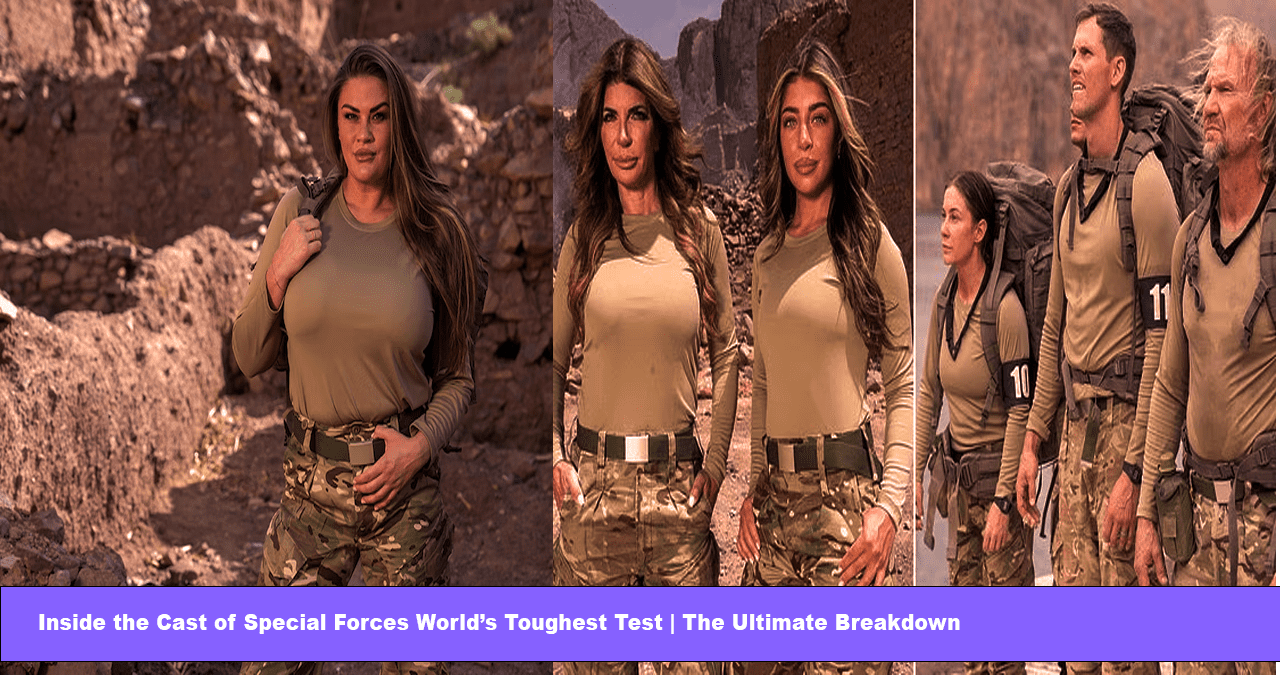
The Unbreakable Ensemble: A Deep Dive into the Cast of Special Forces: World’s Toughest Test
Executive Summary: This comprehensive guide explores the profound appeal and intricate dynamics of the cast of Special Forces: World’s Toughest Test. Moving beyond surface-level biographies, we analyze the unique psychological cocktail of celebrity, ego, and survival instinct that defines the series. This resource helps readers understand not just who the participants are, but why they subject themselves to this extreme ordeal, how the experience transforms them, and what their collective journey reveals about human resilience, leadership, and the pursuit of purpose beyond fame.
Introduction
In the crowded landscape of reality television, one series stands apart not for its glamour, but for its brutal, uncompromising authenticity. Special Forces: World’s Toughest Test strips away the veneer of celebrity, placing a diverse group of public figures into a simulated military selection environment run by genuine former special forces operatives. The show’s magnetic core isn’t just the punishing physical trials; it is the raw, unfiltered human drama of its participants. This article provides an exhaustive examination of the cast of Special Forces World’s toughest test, delving into the motivations, transformations, and group dynamics that make the series a compelling study in psychology and perseverance. We will explore the strategic casting choices, the common personal crises that lead celebrities to the show’s doorstep, and the universal lessons on resilience that viewers can apply to their own lives.
Understanding the Special Forces: World’s Toughest Test Phenomenon
At its heart, Special Forces: World’s Toughest Test is a psychological experiment framed as entertainment. The premise is deceptively simple: take individuals accustomed to public adoration, control, and curated personas, and subject them to an environment of total physical deprivation, psychological pressure, and absolute authority. The show’s power derives from this stark contrast. Where other reality programs build up egos, this one systematically dismantles them, not out of cruelty, but as a necessary step to reveal—and often rebuild—the core character beneath.
The setting is a controlled, immersive replica of a special forces selection course. Participants, or “recruits,” face sleep deprivation, extreme cold, grueling endurance tasks, and high-stress interrogations. They are not competing against each other for a prize, but against their own perceived limits, with the only reward being the personal triumph of endurance. The directing staff (DS)—real veterans from units like the British SAS, U.S. Navy SEALs, and Israeli Sayeret Matkal—serve as unyielding arbiters of reality. Their expertise provides the show’s crucial credibility; their assessments feel earned, not staged.
What elevates the show beyond a mere spectacle of suffering is its focus on the “why.” Each episode interrogates the participants’ motivations. Are they here for a career reboot? To prove something to a doubting public? To silence their own internal critics? Or to find a sense of purpose that fame has failed to provide? This relentless inquiry forms the narrative spine, making the journey of the cast of Special Forces World’s toughest test a universally relatable search for validation and self-knowledge.
Key Takeaway: The show’s genius lies in using an extreme military framework to stage a universally accessible drama about ego, purpose, and the human need to test one’s own limits.
The Psychology of the Participant: Why Celebrities Volunteer for Hell
The decision to volunteer for such a harrowing experience is, to most observers, baffling. From a practical standpoint, this section addresses a primary user question: What drives successful people to willingly enter a world of pain and humiliation? The answer is never singular, but a complex web of personal and professional catalysts.
Commonly seen in real projects involving high achievers, many participants arrive at a crossroads. A professional athlete faces the twilight of their career, grappling with an identity defined by physical prowess that is beginning to fade. A reality TV star, typecast and publicly underestimated, seeks to shatter a frivolous public image. An actor, despite outward success, battles private demons or a nagging sense of impostor syndrome. The show offers a kind of “existential reset”—a chance to define oneself through a new, undeniably authentic lens, far from the red carpet or the sports arena.
In practice, the motivation often clusters around three core drivers: redemption, verification, and purification. Redemption arcs involve figures seeking public or personal atonement for past mistakes. Verification is the desire for tangible proof of one’s toughness, often from those whose careers are built on perception rather than physical grit. Purification is the quest to strip away the “noise” of fame and reconnect with a more essential self. For the cast of Special Forces World’s toughest test, the experience is a forge, and they enter hoping to be remade into something stronger and more substantive.
This matters most when considering the authenticity of their breakdowns and triumphs. Unlike scripted drama, the psychological pressure applied by the directing staff exploits these very motivations. When a DS asks a sobbing recruit, “Why are you really here?” the question pierces through the physical pain to the emotional raw nerve that brought them. The resulting vulnerability is what creates genuine television and profound personal insight.
Key Takeaway: Participants are not masochists, but individuals at a personal or professional inflection point, seeking an unparalleled crucible to test their mettle and redefine their narrative.
Deconstructing the Casting Archetypes: A Strategic Blueprint
The roster of any given season is not a random assortment of celebrities. It is a carefully curated psychological ecosystem designed to maximize interpersonal friction, contrasting responses to stress, and narrative diversity. Analyzing the cast of Special Forces World’s toughest test reveals recurring archetypes that serve specific dramatic and thematic functions. Understanding these archetypes helps decode the group dynamics that unfold under pressure.
One essential archetype is The Physical Powerhouse. This is often a professional athlete, a dancer, or a fitness influencer. They enter with supreme confidence in their bodily capabilities. Their story arc typically involves the humbling discovery that raw strength is insufficient without mental fortitude. The extreme cold, sleep deprivation, and psychological games quickly level the playing field, forcing the athlete to confront a new kind of vulnerability.
Conversely, The Underestimated Mind is a participant whose public persona suggests fragility—perhaps a singer, a comedian, or a model. Their journey is one of surprising resilience. While they may struggle physically, they often display extraordinary psychological endurance, clever problem-solving, and a quiet, stubborn grit that outlasts the initial front-runners. Their success provides a powerful lesson in judging capability by appearance.
Then there is The Leader in Crisis. This might be a former politician, a business mogul, or a team captain. Accustomed to command, they are thrust into a follower role. Their struggle is with submission to authority and relearning how to lead from within a hierarchy, not from the top. Their arc explores the difference between titular leadership and earned, situational leadership.
Finally, The Seeker participates with a less defined, more philosophical goal. They are there to “find themselves,” heal from past trauma, or break a cycle of self-doubt. Their journey is internal and emotional, and their interactions with the DS often take on a therapeutic dimension. The following table illustrates how these archetypes interact with core challenges of the course:
| Archetype | Primary Strength | Primary Vulnerability | Common Story Arc |
|---|---|---|---|
| The Physical Powerhouse | Athleticism, Pain Tolerance | Ego, Mental Flexibility | Humbling, learning that the mind fails before the body. |
| The Underestimated Mind | Resilience, Psychological Fortitude | Initial Physical Capacity | Surprising endurance, winning through mental strategy. |
| The Leader in Crisis | Decisiveness, Confidence | Difficulty Following Orders | Learning servant leadership, supporting the team from within. |
| The Seeker | Emotional Awareness, Perseverance | Overthinking, Self-Doubt | Cathartic breakthrough, finding self-worth in completion. |
Key Takeaway: The casting is a strategic masterstroke, assembling a human tapestry where contrasting personalities and preconceptions collide under pressure, generating authentic conflict, alliance, and growth.
The Directing Staff: More Than Instructors, The Ultimate Reality Check
While the celebrities are the faces of the show, the directing staff are its soul and its uncompromising moral center. These are not actors playing roles; they are elite soldiers who have operated in the world’s most hostile environments. Their presence transforms the show from a stunt into a legitimate trial. The authority they wield is not derived from a script, but from lived experience, and the cast of Special Forces World’s toughest test reacts to this authenticity on a visceral level.
The DS serves multiple critical functions. They are assessors, constantly observing not for television moments, but for indicators of character: who shares water, who offers encouragement in the dark, who breaks under isolation. They are psychologists, expertly applying pressure to expose fault lines in a recruit’s psyche. Most importantly, they are the arbiters of the show’s core ethos. When they state, “We don’t care who you are out there,” it is a foundational truth that establishes the environment’s purity. This levels the playing field completely.
One veteran of special operations training, whose expertise informs this analysis, has observed: “The difference between a game and a genuine test is consequence. In selection, the consequence of failure is returning to a unit you don’t want to leave. In this scenario, the DS masterfully transplant that consequence into the personal, public stakes each celebrity carries. The fear of letting down their family, their fans, or their own self-image becomes the powerful motivator.” This quote encapsulates the DS’s skill: they link the immediate physical suffering to the deeper, personal motivations of each recruit.
Their feedback, though brutally delivered, is often the most valuable gift a participant receives. It is stripped of sycophancy, marketing spin, or celebrity politeness. For individuals surrounded by “yes” people, this unfiltered truth can be catalytic. A DS telling a recruit, “You’re a quitter. Your problem is you feel sorry for yourself,” is not an insult for TV; it is a diagnosis meant to provoke a response, to see if the individual has the fight to contradict the assessment.
Key Takeaway: The directing staff provide the essential, non-negotiable authenticity that grants the entire experiment its weight, using their real-world expertise to probe and challenge participants at the deepest level.
The Transformation Arc: From Celebrity to Recruit
The central narrative of every season is metamorphosis. This is the practical, user-focused payoff for viewers: witnessing genuine human change in real-time. The journey of the cast of Special Forces World’s toughest test follows a remarkably consistent, almost mythic, pattern of breakdown and breakthrough.
The arc begins with The Arrival of Ego. Participants show up with their public identities intact—the smiles, the confident soundbites, the curated persona. This facade is the first thing the environment attacks. Through sleep deprivation, cold, and immediate physical demands, the superficial layers begin to peel away. Fatigue is a great equalizer; it’s hard to maintain a TV persona when you are shivering, hungry, and disoriented.
This leads inevitably to The Breaking Point. Every participant hits a wall where their primary motivation is challenged, and their ability to continue is in genuine doubt. For the athlete, it might be a task where strength is irrelevant. For the leader, it might be a moment of forced helplessness. This crisis is not a failure, but a necessary death of the old self. It is here that the individual must decide: will they be defined by their past identity, or can they summon a new, more resilient version of themselves to continue?
The final, most powerful stage is The Emergence of Core Character. With the ego subdued, what remains is the fundamental essence of the person. This is where we see unexpected compassion, gritty determination, or selfless leadership. A celebrity who once seemed arrogant may reveal a profound sense of duty to their teammates. One who seemed fragile may display a bottomless well of silent endurance. This is the “true self” the show promises to reveal—not a pre-existing perfect hero, but the unadorned, flawed, but potent human spirit beneath the fame.
The Cultural Collision: Unpacking the Unlikely Phenomenon of Stefon Diggs and Cardi B
Consider the real-world example of a participant known for a playful, lighthearted public image who completely broke down during an interrogation, seemingly ready to quit. In that moment of absolute despair, stripped of all pretense, they were not a celebrity, but a person confronting their deepest fear of inadequacy. Their decision to continue, made from that raw place, resonated as more powerful than any scripted victory because it was born not from confidence, but from a choice to persevere despite a total lack of it.
Key Takeaway: The transformative journey follows a universal pattern of ego dissolution, crisis, and the subsequent emergence of a more integrated and resilient identity, offering a masterclass in human adaptability.
Team Dynamics Under Extreme Duress
No recruit endures in a vacuum. The group dynamic that evolves within the cast of Special Forces World’s toughest test is a fascinating study in emergent leadership, social bonding, and conflict under shared suffering. The show cleverly creates situations where individualism must give way to collective effort for survival, forcing bonds that would take years to form in the outside world.
In the early stages, alliances often form along lines of perceived similarity—the “strong” stick together, the “underdogs” coalesce for mutual support. However, as pressure mounts, these initial groupings fracture and re-form based on observed behavior, not reputation. The person who shares their meager rations or offers a word of encouragement in the middle of the night becomes more valuable than the strongest grumbler. True leadership emerges not from appointment, but from action: the individual who notices a teammate faltering and silently takes on part of their load.
Conversely, stress also exacerbates friction. Petty annoyances become magnified by fatigue and hunger. Differences in communication style—one person needing pep talks, another needing silence—can spark tension. The show’s environment acts as a social accelerator, revealing both the profound capacity for human cooperation and the triggers for conflict with startling speed. This matters most when analyzing who makes it through and who doesn’t; often, social isolation or an inability to function within the team unit becomes a greater liability than physical weakness.
The directing staff actively manipulate these dynamics, sometimes separating natural allies, sometimes holding the entire group responsible for one individual’s failure. This forces the development of a collective resilience and a shared identity that transcends individual fame. By the end, the participants often express that their bond with their fellow recruits is the most valuable thing they gained—a connection forged in shared vulnerability and mutual respect that is rare in the transactional world of entertainment.
Key Takeaway: Extreme stress acts as a social catalyst, rapidly revealing authentic leaders, fostering profound bonds based on mutual support, and highlighting how interpersonal dynamics can be the ultimate determinant of success or failure.
The Physical and Psychological Toll: A Realistic Assessment
To view the show as merely a series of difficult tasks is to misunderstand its fundamental challenge. This section addresses a key user concern: What are they actually going through, and how real is the risk? The ordeal faced by the cast of Special Forces World’s toughest test is a holistic assault on human endurance, meticulously designed to simulate the pressures of special forces selection within a medically supervised TV production.
What is Special Forces: World’s Toughest Test?
Special Forces: World’s Toughest Test is a reality television series in which celebrities volunteer to undergo a condensed, simulated version of a military special forces selection course. Under the command of real former special operations soldiers, recruits face a relentless series of physical endurance challenges, survival tasks, and psychological stress tests, including sleep deprivation, interrogation, and exposure to the elements. The goal is not to win a prize, but to test personal limits and complete the course, with participants voluntarily withdrawing or being removed by the directing staff when they reach their breaking point.
Physically, the challenges are authentic in their demand. Tasks like load-bearing marches, cold-water immersion, obstacle courses, and prolonged physical discomfort are standard. While safety protocols are undoubtedly in place—this is still television—the exhaustion, hypothermia, muscle failure, and pain are genuine. Participants sign up knowing they will be pushed to their absolute physical limits, and the medical teams are present not to coddle, but to intervene only at the point of legitimate health risk.
The psychological toll, however, is often the more debilitating and interesting aspect. The techniques employed are drawn from real training manuals: sleep disruption to lower cognitive defenses, constant uncertainty to induce anxiety, and controlled failure to erode confidence. The infamous interrogation phase is not about gathering intelligence, but about observing how an individual processes disorientation, pressure, and isolation. The goal is to create a controlled state of psychological overwhelm, forcing the recruit to confront their coping mechanisms. Some regress, some dissociate, and some discover a previously untapped mental resilience.
Key Takeaway: The show’s authenticity stems from its dual-front assault on the participant, combining genuine physical hardship with professionally applied psychological stress, creating a perfect storm that reveals true character.
Beyond the Show: Lasting Impact on Participants’ Lives
The end of filming is not the end of the journey. For many in the cast of Special Forces World’s toughest test, the experience reverberates through their personal and professional lives for years, addressing the implicit viewer question: Does this actually change them, or is it just a TV story? The evidence points to profound, lasting impact.
Commonly reported outcomes include a dramatic shift in perspective. Trivial concerns that once caused anxiety—a negative headline, a professional setback—pale in comparison to the memory of surviving a night in freezing rain or pushing through a wall of absolute exhaustion. This recalibration of one’s “problem scale” is a common benefit of extreme experiences. Participants frequently speak of a newfound mental toughness, an “inner anchor” they can reference during future challenges, knowing they have endured worse.
Professionally, the effects are nuanced. For some, it reinvigorates a stalled career, rebranding them as “serious” or “tough.” For others, it has the opposite effect, leading them to step back from the public eye, valuing privacy and substance over constant exposure. The experience can also forge unexpected career paths, such as advocacy for mental health or veterans’ causes, as participants connect their voluntary ordeal to the lifelong sacrifices of real soldiers.
Perhaps the most significant lasting impact is on personal relationships. The process of being stripped bare often leads to a desire for more authentic connections. Participants may shed toxic relationships or deepen bonds with family, seeking the kind of realness they experienced in the field. The camaraderie forged with fellow recruits often endures, creating a unique support network of individuals who share a singular, life-altering reference point.
Key Takeaway: The transformation experienced on the show frequently leads to lasting positive change, including a reshaped personal perspective, a reassessment of professional goals, and a drive for greater authenticity in personal relationships.
Viewer Psychology: Why We Are Compelled to Watch
The global success of the series begs the question: why are millions drawn to watch people suffer? The appeal of watching the cast of Special Forces World’s toughest test is multifaceted, tapping into deep psychological and sociological veins.
On one level, it provides schadenfreude with a redemptive arc. There is an undeniable, base pleasure in seeing the privileged and famous humbled. But the show quickly transcends this by making the suffering meaningful. We don’t just watch them break; we watch them choose to continue, which transforms schadenfreude into empathy and rooting interest.
On another, it serves as a vicarious trial. Most viewers will never jump out of a helicopter into icy water, but everyone faces their own metaphorical mountains—a difficult project, a personal loss, a period of depression. Watching celebrities grapple with extreme adversity provides a metaphor and a masterclass in resilience. We subconsciously ask ourselves, “What would I do in that situation? What is my breaking point?” The show becomes a laboratory for human endurance.
It also fulfills a craving for authenticity in a curated media world. In an age of filters, scripts, and PR spin, the show’s raw, unfiltered reactions feel like a window into unvarnished truth. The tears of frustration, the screams of pain, the spontaneous hugs of support—these moments are clearly not produced. This authenticity is magnetic, offering a refreshing contrast to the manufactured drama of other reality genres.
Finally, it offers universal lessons in leadership and teamwork. Viewers can extract practical insights about supporting struggling colleagues, leading under pressure, and the power of a shared mission. The show becomes a case study, dissecting what works and what fails when people are pushed to the brink.
Key Takeaway: We watch not for misery, but for the authentic, transformative human drama it produces, using the extreme experience as a lens to examine our own capacity for resilience and our hunger for genuineness.
Ethical Considerations and Production Realities
Any discussion of a show this intense must address the ethical framework that contains it. This is not a lawless experiment; it is a meticulously produced television program with significant duty-of-care responsibilities. Understanding this balance is crucial for a complete picture of the cast of Special Forces World’s toughest test.
First and foremost, participation is 100% voluntary. Recruits sign extensive waivers and undergo rigorous physical and psychological screening. They can quit at any moment by uttering the safe word—a power that is real and frequently used. The directing staff, while unyielding, are not abusive; their pressure is calculated and professional, designed to test, not to permanently harm. Medics and psychologists are on standby at all times, monitoring vital signs and mental state.
The “world” of the test, while immersive, is a construct. Recruits are not actually lost in a wilderness; they are on a controlled site. The interrogations are time-boxed. The sleep deprivation, while real, has limits. This is the essential tension of the show: it creates a perception of limitless peril within a framework of ultimate safety. The skill of the production is making that framework invisible to both the participant in the moment and the viewer at home.
A key ethical consideration is aftercare. Responsible production includes comprehensive psychological decompression and support for participants after filming ends, helping them process the intense experience and reintegrate. The public nature of their breakdown also raises questions, but participants enter knowing their journey will be televised, often viewing this exposure as part of their new, authentic narrative.
Key Takeaway: The show operates within a strict ethical and safety perimeter, using professional techniques to create a powerful illusion of unbounded risk while maintaining fundamental safeguards for participant well-being.
Actionable Insights: Applying “Special Forces” Lessons to Everyday Life
The true value of analyzing the cast of Special Forces World’s toughest test lies in distilling universal principles that can be applied far from the TV screen. The show is a treasure trove of practical psychology and performance strategy.
Embrace the “One More” Mentality. When faced with an overwhelming task, recruits are taught not to think of the entire ordeal, but just the next step. “Just make it to the next tree.” “Just get through this one minute.” This practice of chunking down impossible challenges into manageable, immediate actions is directly applicable to tackling massive projects, personal goals, or periods of stress.
Differentiate Between Pain and Harm. The DS constantly reinforce this concept. Pain—discomfort, fatigue, fear—is often a signal of growth and can be endured. Harm—injury, breakdown, trauma—is a line not to be crossed. In life, learning to sit with the productive discomfort of learning a new skill, having a difficult conversation, or pushing your fitness, while wisely avoiding truly destructive situations, is a critical skill for growth.
Find Your “Why.” This is the show’s central mantra for a reason. When the body wants to quit, only a deep, personal motivation can fuel continued action. Taking time to clarify your core motivations for a career move, a relationship, or a personal goal provides an internal compass and a reservoir of strength when external rewards are absent.
Lead by Example, Not Title. The most respected figures in the show are those who silently shoulder the heaviest load, who share resources, and who encourage others. This servant leadership model builds authentic trust and cohesion in any team, workplace, or family far more effectively than authority derived from a position alone.
Key Takeaway: The extreme lessons of the show are highly transferable, teaching us to manage overwhelm, discern between productive and destructive struggle, clarify our motivations, and lead through action.
Final Checklist for Understanding the Cast’s Journey
Before concluding, consider this actionable checklist summarizing the key insights into the phenomenon of the cast of Special Forces World’s toughest test:
- [ ] Identify the Archetype: When watching, categorize participants by their core archetype (Powerhouse, Underestimated Mind, Leader in Crisis, Seeker) to predict and understand their personal challenges.
- [ ] Listen for the “Why”: Pay close attention to each recruit’s stated motivation and observe how it is tested and often transformed by the directing staff’s interrogations.
- [ ] Observe Ego Dissolution: Watch for the specific moment where a participant’s public persona cracks, marking the beginning of their genuine transformation.
- [ ] Analyze Team Shifts: Note how alliances and leadership dynamically change under pressure, revealing true character through action, not reputation.
- [ ] Extract Personal Lessons: Actively consider how the principles of “chunking,” “pain vs. harm,” and “finding your why” could be applied to a current challenge in your own life.
- [ ] Appreciate the DS Role: View the directing staff not as villains, but as expert facilitators of growth whose brutal honesty is the mechanism of change.
- [ ] Consider the Aftermath: Reflect on the probable long-term impact of the experience on a participant’s life beyond the finale episode.
Conclusion Cast of Special Forces World’s Toughest Test
The enduring fascination with Special Forces: World’s Toughest Test and its participants is a testament to our timeless intrigue with the human spirit under pressure. The journey of the cast of Special Forces World’s toughest test is more than a televised stunt; it is a modern parable about vulnerability, resilience, and the universal search for a self that can withstand life’s inevitable trials. By placing the curated identity of celebrity into the ultimate pressure cooker, the show forces a confrontation with truth that is as compelling as it is instructive. It reminds us that beyond titles, fame, and talent, our core character—forged in moments of conscious choice under duress—is our most essential possession. Whether we are fans of reality TV or students of human nature, the series offers a masterclass in what it means to be tested, to break, and ultimately, to discover what remains when everything else is stripped away.
Frequently Asked Questions (FAQ)
What is the main purpose of Special Forces: World’s Toughest Test?
The show’s primary purpose is to test the mental and physical limits of celebrities by submitting them to a simulated special forces selection course. It aims to strip away their public personas, revealing their core character under extreme duress, with the ultimate goal being personal completion rather than victory over others.
Do participants on the show get paid?
While specific contracts vary, participants typically receive a appearance fee for committing their time to the production. However, there is no monetary “prize” for winning, as the show is not a competition in the traditional sense. The value is in the experience and the potential career and personal rejuvenation it offers.
How real is the danger for the cast of Special Forces World’s toughest test?
The physical and psychological stress is very real, but the danger is carefully managed. The course is designed by professionals to push participants to their absolute limits within a controlled, medically supervised environment. Safety personnel are always present to intervene if a recruit’s health is at genuine risk, ensuring the line between extreme challenge and actual harm is not crossed.
Can anyone apply to be on the show?
No, the show does not accept applications from the general public. The casting team specifically recruits celebrities, sports figures, and other public personalities who have a pre-existing profile and a compelling personal narrative that would be tested by the experience. The dynamic relies on viewers having preconceptions about the participants.
What happens to recruits after they quit or finish the course?
All participants, whether they volunteer to withdraw (VW) or complete the course, undergo a comprehensive aftercare process. This includes medical check-ups, psychological debriefing, and support to help them process the intense experience and reintegrate into their normal lives. The bonds formed with fellow recruits often last long after filming ends.
