
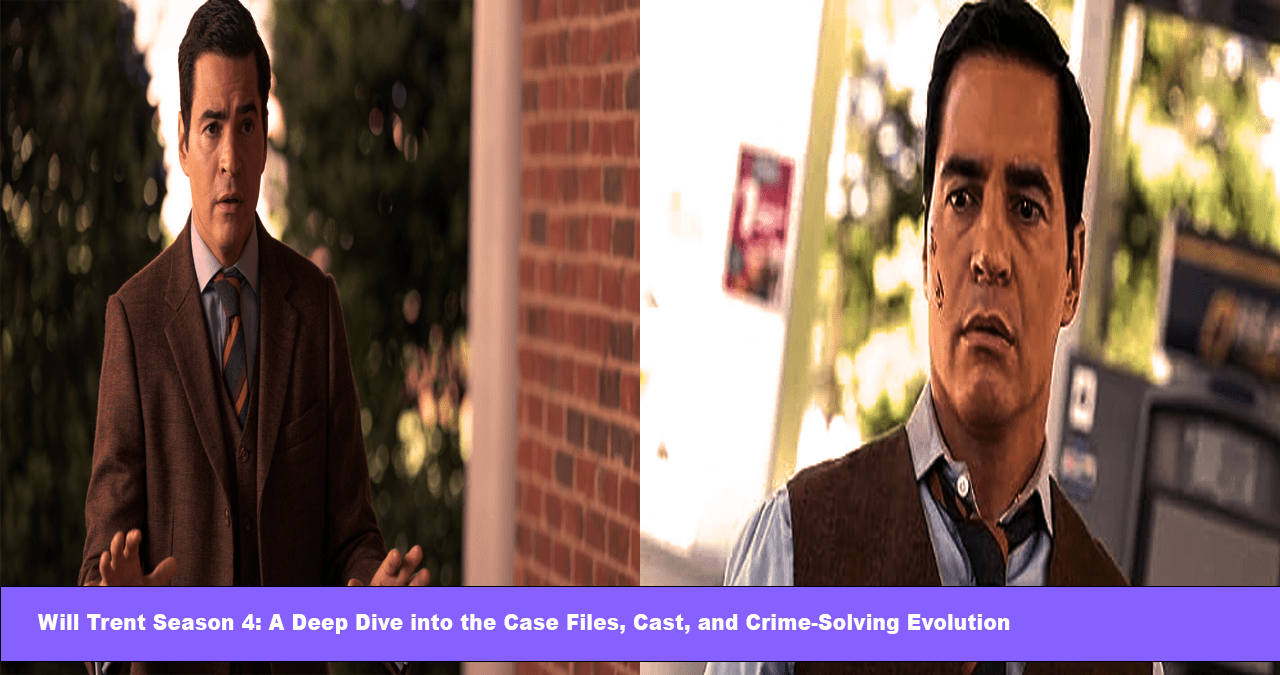
The Unfolding Case File: A Comprehensive Guide to Will Trent Season 4
The wait between seasons for fans of a gripping crime drama is its own special kind of suspense. For viewers invested in the complex world of the Georgia Bureau of Investigation’s most unorthodox agent, the question on everyone’s mind is a simple one: what’s next for Will Trent Season 4? This guide explains everything a dedicated viewer or a curious newcomer needs to understand about the series’ trajectory, from its foundational character work to the intricate narrative tapestry it weaves. This resource helps readers navigate the evolving landscape of the show, offering strategic insights into character dynamics, plot predictions, and the unique elements that set this adaptation apart in the crowded procedural field. We’ll move beyond simple renewal updates to explore the show’s heart—its nuanced exploration of trauma, resilience, and justice—and what that means for the future cases waiting in Atlanta’s shadows.
Decoding the Appeal of Will Trent: More Than a Procedural
At first glance, Will Trent fits neatly into a familiar television framework: the police procedural. Each episode presents a case, the evidence is gathered, and a resolution is typically found. However, to categorize it solely as such is to miss its profound depth. The series, adapted from Karin Slaughter’s bestselling novel series, distinguishes itself through an unflinching commitment to character psychology. The crimes solved are not merely puzzles; they are mirrors reflecting the fractured pasts and ongoing struggles of the investigators themselves. This character-driven engine is what transforms the show from a weekly mystery into a compelling, serialized human drama.
The central pillar of this approach is Special Agent Will Trent himself. A man of brilliant deductive skill, Will’s prowess is inextricably linked to his traumatic childhood in the state foster care system. His dyslexia, often portrayed as a obstacle to be overcome in lesser narratives, is here reframed as a different cognitive pathway—one that allows him to see patterns and details others miss, even as he struggles with standard paperwork. This nuanced portrayal solves a common viewer problem: fatigue with infallible, cookie-cutter genius detectives. Will Trent is brilliant and vulnerable, capable and deeply scarred. His success is hard-won, making his victories feel earned and deeply personal.
Similarly, his partner, Faith Mitchell, is not merely a sidekick. As a single mother and veteran agent from a powerful law enforcement family, she navigates her own set of tensions—between duty and family, between her mother’s legacy and her own identity. Their partnership is the show’s bedrock, a dynamic built on gradual, hard-earned trust rather than instant camaraderie. This solves another frequent audience desire: for authentic, evolving relationships that mirror the complexity of real human connections, free from will-they-won’t-they clichés. The professional becomes deeply personal, and their loyalty is tested case by case.
Furthermore, the series boldly integrates the personal lives of its characters into the fabric of its investigations. Angie Polaski, Will’s childhood friend and a deeply troubled Atlanta detective, represents a tether to a past he can neither fully escape nor reconcile. Amanda Wagner, the steely GBI section chief, operates with a moral ambiguity that constantly challenges Will’s black-and-white pursuit of justice. This interconnectedness ensures that no character exists in a vacuum. A viewer’s investment pays compound interest, as personal stakes escalate with each professional challenge, making the prospect of Will Trent Season 4 not just about new cases, but about the next chapter in these intricately woven lives.
The core appeal of Will Trent lies in its refusal to separate the solver from the solution, making every case a revelation of character as much as a resolution of crime.
The Foundation of Success: Character Arcs and Actor Embodiment
A television series is only as strong as the characters who inhabit its world, and Will Trent boasts a cast whose performances transform written roles into living, breathing individuals. Understanding their journeys is key to anticipating the narrative terrain of Will Trent Season 4. This isn’t mere actor biography; it’s an analysis of the artistic alchemy that makes the storytelling resonate.
Will Trent, portrayed by Ramon Rodríguez, is a masterpiece of controlled complexity. Rodríguez brings a palpable physicality and a searching, empathetic intelligence to the role. He embodies Will’s dyslexia not as a caricature of frustration, but as a different way of processing the world—a slight pause, a recalibration of perspective, a focus on tactile evidence. His performance captures the character’s essential loneliness, born from a life of institutional neglect, alongside a fierce, protective morality. The subtle growth from a guarded island of a man to someone cautiously allowing in Faith and his adopted dog, Betty, forms the show’s emotional spine. For Will Trent Season 4, the central question is how much further Will can open himself to stability and connection without being consumed by the ghosts of Angie and his past.
Faith Mitchell, brought to life by Iantha Richardson, serves as the audience’s anchor and Will’s crucial counterweight. Richardson excels at portraying Faith’s multifaceted reality: her exasperation with Will’s methods, her deep maternal concern, her professional grit, and her own simmering conflicts with her mother, Atlanta’s former medical examiner. She is the bridge between Will’s instinctual genius and the practical realities of police work. Her arc has seen her grapple with family legacy and assert her own authority. Looking ahead, Will Trent Season 4 will likely continue exploring her balance of career ambition with single motherhood, and how her partnership with Will evolves into an even more formidable, unshakeable unit.
The supporting cast provides the rich, often morally gray texture that defines the show’s Atlanta. Angie Polaski (Erika Christensen) is a devastating portrait of self-destruction and trauma bonding. Her relationship with Will is less a love story and more a shared pathology, a dynamic Christensen portrays with raw, unsettling vulnerability. Amanda Wagner (Sonja Sohn) is a masterclass in authoritative ambiguity. Sohn gives Wagner a commanding presence that masks layers of political maneuvering and a hidden, perhaps justified, ruthlessness. Finally, Michael Ormewood (Jake McLaughlin) represents the old guard—a detective whose methods and biases constantly clash with Will’s meticulous, evidence-based approach, creating persistent institutional friction.
The enduring strength of Will Trent is built upon its characters, with actor performances so deeply inhabited that audience investment naturally extends to their unresolved journeys, fueling demand for Season 4.
Narrative Threads Left Unresolved: The Lingering Cases of Season 3
A successful season finale doesn’t just solve a case; it strategically unravels certain threads while tightening others, creating narrative tension that catapults the audience into the next chapter. The conclusion of Will Trent’s third season undoubtedly left a case file brimming with open questions that Will Trent Season 4 will be duty-bound to address. These aren’t mere cliffhangers; they are deliberate narrative pressures applied to the characters’ core vulnerabilities.
Perhaps the most pressing personal cliffhanger involves Angie Polaski. Her trajectory has been a harrowing descent, and the season’s end likely placed her at a critical juncture—possibly facing severe professional repercussions, a personal breakdown, or a catastrophic choice that directly impacts Will. Given the profound, toxic interdependence of their relationship, her situation is never solely her own. Will Trent Season 4 will be compelled to answer whether Angie can begin a path toward recovery or if she will fully become a casualty of their shared past, forcing Will to make an impossible choice between enabling her and saving himself.
Within the GBI, the political landscape is perpetually unstable. Amanda Wagner’s machinations, often operating in a ethical gray zone for perceived greater goods, consistently create ripple effects. A finale may have seen one of her gambits fail or a hidden alliance exposed, threatening her position and, by extension, the precarious shelter she provides for Will and Faith. This opens rich narrative ground for Will Trent Season 4 to explore power struggles within the bureau, questioning the true cost of Wagner’s brand of justice and whether Will can remain under her wing if her methods become irreconcilable with his own moral code.
Furthermore, the ongoing friction with the Atlanta Police Department, often embodied by Michael Ormewood, is a simmering pot waiting to boil over. A major case with blurred jurisdictional lines could erupt into full-blown inter-agency conflict. For Will Trent Season 4, this provides an opportunity to escalate the stakes beyond individual criminals to systemic dysfunction, challenging Will and Faith to solve a crime while navigating bureaucratic hostility. It also tests Faith’s loyalties, caught between her GBI partner and her deep-rooted connections within the APD through her family.
Lastly, the show has wisely woven in longer-form mysteries related to Will’s past. While his childhood in the foster system is a established trauma, specific mysteries—perhaps related to his biological parents or a particular unspoken event from his youth—may have been hinted at. Will Trent Season 4 could choose to bring one of these shadowy memories into the light, using a present-day case as a trigger to force Will to finally investigate the most personal mystery of his own life.
The unresolved arcs from Season 3 act as narrative debt, creating compelling obligation for Will Trent Season 4 to deliver payoffs that deepen character complexities and raise the professional stakes for the entire team.
Predicting the Procedural Palette: Case Types and Thematic Evolution
While character is king in Will Trent, the procedural elements are the canvas upon which these personal dramas are painted. The show has demonstrated a keen ability to select cases that do more than just entertain; they resonate thematically with the investigators’ own lives. Anticipating the kinds of stories Will Trent Season 4 might tell involves analyzing these patterns and the evolving landscape of crime television.
The series has shown a distinct preference for cases that unpack hidden societal structures and personal secrets. We’ve seen explorations of institutional corruption, the dark underbellies of seemingly respectable communities, and crimes rooted in long-buried family histories. This pattern is likely to continue and deepen. In practice, this means Will Trent Season 4 could feature more complex, multi-episode arcs—or even a season-long serialized element—woven alongside standalone “crime of the week” stories. This hybrid model satisfies both viewers who enjoy episodic resolution and those invested in long-term narrative progression.
A thematic area ripe for exploration is the concept of legacy—both familial and institutional. Faith’s struggle with her mother’s legacy is a direct example. Future cases could directly challenge the reputation of the Mitchell family or the Wagner-era GBI. A case might uncover a historical miscarriage of justice perpetrated by Amanda’s mentors, forcing her and her team to confront the flawed foundations of their own system. This connects to a broader cultural shift in audiences seeking narratives that question authority rather than blindly uphold it.
Furthermore, the show’s Atlanta setting is not just a backdrop; it’s a character. The city’s unique blend of Southern history, modern wealth, stark inequality, and cultural complexity provides a fertile ground for crime stories. Will Trent Season 4 has the opportunity to delve even deeper into locale-specific narratives, perhaps involving the city’s political machine, its music industry, or the tensions of rapid gentrification. This geographical specificity is a strength, offering freshness compared to procedurals set in generic urban landscapes.
From a technical perspective, the portrayal of Will’s investigative process—his reliance on observation, empathy, and non-linear thinking—will remain central. New cases will be chosen specifically to highlight how his mind works differently. We may see him tackle a crime with a seemingly impossible sequence of events, or one where the physical evidence is intentionally misleading, forcing him to rely entirely on psychological profiling and understanding motive in a way that only someone who has navigated profound darkness can.
Will Trent Season 4 is expected to continue its tradition of thematically resonant cases, likely increasing serialized storytelling while using Atlanta’s unique social fabric as a rich source of criminal and moral complexity.
The Adaptation’s Path: Navigating the Source Material for Future Seasons
For fans of Karin Slaughter’s expansive book series, the television adaptation of Will Trent presents both thrilling recognition and intriguing divergence. The showrunners have wisely not attempted a rigid, page-for-page translation, but have instead created a “inspired by” universe that captures the essence of the characters and their dynamics while forging its own narrative path. Understanding this relationship is crucial for predicting the source material’s role in shaping Will Trent Season 4.
The television series operates as a remix rather than a replay. Characters from different books interact earlier than they did in the novels; certain plotlines are condensed, altered, or reattributed. For instance, elements from Triptych, the first Will Trent novel, and Fractured have been blended and reconfigured to establish the series’ foundation and character relationships. This approach solves a key problem for both newcomers and avid readers: it prevents the show from becoming predictable for those familiar with the books, while still delivering the core emotional beats and character developments that made the novels successful.
Slaughter’s bibliography provides a deep well of material. Later novels introduce compelling characters like Sara Linton, a pediatrician and medical examiner from Grant County (who exists in the shared Slaughter universe), and explore increasingly personal threats to Will and Faith. Will Trent Season 4 has a wealth of storylines to draw from, but the key will be in the adaptation’s signature transformation, not direct transplantation. A book’s central case might be used, but its emotional fallout could be applied to different character combinations on screen to serve the existing television dynamics.
A prime example of this adaptive philosophy in action is the handling of Will and Angie’s relationship. Its destructive nature is central to both mediums, but the television series may choose to accelerate or decelerate certain pivotal moments from the books to maintain dramatic tension for the screen. Similarly, Faith’s family life, while present in the novels, is given different contours on television to enhance ongoing serialized drama. This demonstrates a hands-on understanding that a successful adaptation must be a living entity, respectful of its source but confident in its own storytelling identity.
For Will Trent Season 4, this means viewers can look to later books like Undone, Broken, Fallen, or Criminal for potential plot inspirations—such as cases involving military backgrounds, threats from Will’s past, or high-stakes conspiracies within Georgia’s power structures. However, they should expect these elements to be filtered through the established relationships of the TV canon, creating a familiar-yet-novel experience.
The television adaptation of Will Trent successfully treats the book series as a narrative toolkit rather than a strict blueprint, allowing Will Trent Season 4 the creative freedom to craft stories that honor the source material’s spirit while surprising all viewers.
Audience Engagement and Cultural Conversation
A television show’s longevity in the modern era is measured not just in ratings, but in its ability to generate sustained conversation and community engagement. Will Trent has cultivated a dedicated, thoughtful fanbase that dissects every clue, debates every character decision, and hungers for more. The strategy behind Will Trent Season 4 will undoubtedly consider how to nurture and expand this dialogue, transforming passive viewers into active participants.
The show naturally sparks discussion through its moral complexities. Unlike procedurals with clear-cut heroes and villains, Will Trent presents characters who operate in shades of gray. Online forums and social media light up with debates: Is Amanda Wagner ultimately a force for good? Can Angie be redeemed, or is she tragically lost? Is Will’s loyalty to her a virtue or a fatal flaw? Will Trent Season 4 can lean into these ambiguities, crafting storylines that deliberately avoid easy answers and instead provoke nuanced discussion about trauma, justice, and recovery. This reflective engagement is a key marker of a show that respects its audience’s intelligence.
Furthermore, the series’ thoughtful handling of sensitive topics like dyslexia, childhood trauma, and addiction provides a platform for deeper cultural conversation. By portraying Will’s dyslexia with authenticity and as a cognitive difference rather than a deficit, the show earns praise from advocacy groups and viewers with similar experiences. This representation matters. For Will Trent Season 4, continuing this responsible, nuanced approach to difficult subject matter is not just good storytelling; it’s a form of social engagement that builds profound loyalty and trust with the audience.
The “watercooler” moment—the shocking twist or emotional climax that everyone discusses the next day—remains a powerful tool. The season finale’s cliffhanger is designed precisely for this purpose. As the hiatus for Will Trent Season 4 progresses, fan theories will proliferate, analyzing previews, cast interviews, and narrative clues. The production can subtly fuel this speculation through carefully released stills or vague teasers, maintaining a steady hum of anticipation that ensures the show remains in the cultural conversation even during its off-season.
By embracing moral complexity and responsible representation, Will Trent fosters a dedicated, discursive fan community, the energy of which is essential for building anticipation and ensuring the impactful launch of Season 4.
The Business of Broadcast: Renewal Realities and Production Timelines
While fans engage with story and character, the continuation of a series exists within the pragmatic framework of the television industry. Understanding the factors that influence renewal helps contextualize the journey toward Will Trent Season 4. This isn’t insider speculation, but an explanation of the common metrics and considerations that determine a show’s fate, providing viewers with a realistic framework for their expectations.
The primary drivers are, unsurprisingly, viewership and financial viability. Networks and streaming platforms analyze a complex array of data: live Nielsen ratings (still relevant for broadcast), next-day playback, delayed viewing over a week or month, and streaming numbers on platforms like Hulu. Will Trent has demonstrated strength in consolidated viewing, where audiences catch up after the initial broadcast. This pattern is increasingly valued, as it shows dedicated, appointment-based interest rather than casual viewing. A consistent or growing audience across these metrics is the strongest argument for Will Trent Season 4.
Financial models also play a critical role. This includes production costs (which can rise with a show’s success due to contract renegotiations), international licensing fees, and backend syndication potential. A show based on a popular book series has inherent value in global markets and long-tail revenue streams, making it a more attractive renewal prospect. The demonstrated ability of the cast and crew to produce a high-quality product on schedule and budget is a significant, behind-the-scenes factor that networks heavily weigh.
Finally, network strategy is key. ABC must consider its overall lineup. Does Will Trent fill a specific niche (a character-driven, gritty procedural) that complements its other programming? Does it attract a demographic that advertisers covet? The show’ critical acclaim and award potential also contribute to a network’s prestige, which is a tangible, if less quantifiable, asset. The decision for Will Trent Season 4 will ultimately balance these artistic and commercial factors, with the show’s consistent performance and distinctive voice being its most powerful advocates.
The renewal for Will Trent Season 4 hinges on a multifaceted business case, where sustained audience engagement across multiple platforms and the show’s distinct brand identity within a network’s portfolio are paramount.
A Comparative Lens: Will Trent in the Procedural Landscape
To fully appreciate Will Trent’s position and potential, it’s instructive to place it within the broader ecosystem of crime television. This isn’t about ranking, but about identifying the unique value proposition it offers, which in turn clarifies what Will Trent Season 4 must continue to uphold to maintain its distinct place in a competitive field.
The modern procedural landscape has bifurcated. On one end, you have the classic, case-of-the-week franchises (NCIS, Law & Order variants) where character development is slow and episodic closure is paramount. On the other, you have heavily serialized, season-long mystery thrillers that often focus on a single investigation. Will Trent occupies a compelling middle ground. It offers the satisfaction of a weekly solved case while weaving a rich, continuous character saga that demands serialized attention. For viewers exhausted by purely episodic formulas yet unable to commit to a single, dense mystery, this hybrid approach is a perfect solution.
Grown Ups 3: The Unmade Sequel, Cultural Echo, and the Legacy of a Comedy Franchise
The table below highlights key distinctions:
| Feature | Traditional Procedural (e.g., later NCIS seasons) | Serialized Thriller (e.g., True Detective seasons) | Will Trent Hybrid Model |
|---|---|---|---|
| Case Structure | Largely self-contained per episode. | One primary case spans the entire season. | Standalone cases per episode, with personal arcs and occasional multi-episode plots serialized across seasons. |
| Character Focus | Characters are stable; development is incremental over years. | Characters are defined almost entirely by the central case. | Characters have deep, evolving backstories; cases often metaphorically reflect their personal struggles. |
| Audience Entry Point | Easy to jump in at any episode. | Must start from Season/Episode 1. | Best experienced from the start, but cases provide weekly hooks. |
| Primary Appeal | Comfort viewing, puzzle-solving. | Atmospheric depth, thematic exploration. | Emotional investment in characters, intellectual satisfaction from cases, long-term narrative payoffs. |
This positioning is Will Trent’s strategic strength. Will Trent Season 4 doesn’t need to reinvent its format; it needs to perfect it. This means ensuring the weekly cases remain clever and engaging in their own right, while the serialized character threads pay off in meaningful, emotionally truthful ways. It must avoid the pitfall of letting the personal drama overshadow the procedural integrity, or vice-versa. The balance is the brand.
Will Trent carves its niche by successfully blending the accessible satisfaction of weekly crime-solving with the deep, serialized emotional investment of a character drama, a balance Season 4 must meticulously maintain.
The Essential Elements: What Defines the Will Trent Experience
What are the non-negotiable components that make Will Trent uniquely itself? As we look toward Will Trent Season 4, identifying these core pillars helps clarify what the show must preserve to satisfy its core audience while also having a checklist for its own creative success.
The Partnership Dynamic: The relationship between Will and Faith is the engine of the series. It is built on professional respect, growing personal loyalty, and a fascinating contrast in styles. Will is instinct and trauma; Faith is procedure and pragmatism. Their dialogue—a mix of bickering, shorthand, and profound understanding—is a highlight. Any season that weakens or neglects this partnership for extended periods risks losing its central heartbeat. Will Trent Season 4 must continue to find new ways to test and strengthen their bond.
The Authenticity of Flaw: The characters are celebrated not despite their flaws, but because of them. Will’s trauma and dyslexia, Faith’s family tensions, Angie’s addiction, Amanda’s moral flexibility—these aren’t quirks to be solved in an episode. They are foundational. The show’s realism stems from this acceptance of damage. As one veteran television critic noted, “The most compelling detectives are those who solve crimes not to clean up the world, but to make sense of the disorder within themselves.” Will Trent Season 4 must resist the temptation to “fix” its characters in favor of continuing their nuanced, often painful, journeys of management and coping.
Atlanta as a Character: The show’s sense of place is deliberate and potent. It’s not a generic city with establishing stock footage. The heat, the social hierarchies, the specific neighborhoods, all feed into the crimes and the climate in which they are investigated. This geographical texture provides authenticity. Future seasons must continue to shoot on location where possible and root stories in the city’s real socio-cultural dynamics.
The “How” of the Solve: While the “who” matters, the “how” is often more fascinating because it’s tied to Will’s unique perception. Scenes where he re-enacts a crime in his mind, or focuses on a minute, overlooked detail, are signature moments. They visually externalize his different cognitive process. Will Trent Season 4 needs to continue innovating in these sequences, ensuring Will’s brilliance feels earned and intimately connected to his lived experience.
The definitive Will Trent experience rests on four pillars: the unbreakable yet tested Will/Faith partnership, the authentic and unvarnished flaws of its characters, the essential texture of Atlanta, and the unique visualization of Will’s deductive process.
Anticipating the Evolution: Predictions and Possibilities for Season 4
Based on the established patterns, narrative debts, and character trajectories, we can engage in informed speculation about the potential directions for Will Trent Season 4. This is not spoiler territory, but a logical analysis of dramatic potential, highlighting the most fertile ground for future storytelling.
A major arc will likely involve a significant escalation of the personal-professional boundary. Imagine a case where the primary suspect or victim is intimately connected to Will’s past in the foster system, or to Faith’s family. This would force them to investigate their own histories, blurring the lines between detective and subject in a dangerously personal way. It would challenge Will’s objectivity and Faith’s loyalties to their core, providing immense dramatic fodder and character revelation.
The show is also poised to deepen its exploration of institutional corruption. Rather than a lone bad cop, Will Trent Season 4 could unveil a systemic conspiracy within Georgia’s government or judicial system that Amanda Wagner has been tacitly aware of—or even complicit in—for years. This would create a profound moral crisis for the entire team, potentially turning them into fugitives within their own department, fighting the very system they swore to uphold. This raises the stakes from catching criminals to surviving a powerful entity that wants them silenced.
On a character level, Will’s hard-won stability is always one crisis away from shattering. Season 4 could introduce a legitimate romantic interest separate from the chaos of Angie, forcing Will to confront whether he is capable of a healthy relationship. This would be a terrifying step forward for him, fraught with anxiety and the potential for relapse into old patterns. Similarly, Faith may face a career-defining choice: a promotion that separates her from Will, or a high-stakes case that threatens her custody of her son. These are the types of mature, difficult choices that keep characters evolving and audiences deeply invested.
Will Trent Season 4 possesses rich potential for narrative escalation, likely focusing on a deeply personal case that destabilizes the team, a confrontation with high-level systemic corruption, and profound new tests of the characters’ hard-earned personal growth.
The Viewer’s Roadmap: How to Engage Before Season 4 Arrives
The anticipation for a new season is part of the pleasure of being a fan. For those looking to deepen their engagement and prepare for Will Trent Season 4, there are strategic and enjoyable ways to make the wait productive and enriching. This transforms passive waiting into active participation.
First, consider a structured rewatch of earlier seasons. This isn’t just passive viewing; watch with a critical eye for foreshadowing. Note small details in Will’s behavior, ambiguous comments from Amanda, or unresolved minor characters who could return with greater significance. Pay particular attention to the evolution of Will and Faith’s trust, and the specific triggers that push Angie into a spiral. This forensic approach to viewing will sharpen your understanding and make you more attuned to nuances in Will Trent Season 4.
Engaging with the source material offers a different, complementary perspective. Reading Karin Slaughter’s Will Trent book series (starting with Triptych) provides insight into the characters’ foundational psychology and the kinds of complex plots the show might adapt. Remember, the show is a remix, so look for themes and character dynamics rather than expecting plot parity. This can make you an excellent predictor of emotional beats, even if the specific cases differ.
Finally, participate in the community. Join dedicated, respectful forums or social media groups where fans dissect episodes, share theories, and discuss character motivations. These communities often catch details an individual viewer might miss and generate compelling predictions for Will Trent Season 4. The key is to find spaces that focus on analysis and appreciation rather than negativity, enhancing your enjoyment of the show’s complexities.
Proactive engagement through critical rewatches, exploring the source novels, and joining thoughtful fan communities can enrich a viewer’s understanding and heighten anticipation for the narrative layers of Season 4.
An Actionable Checklist for the Discerning Will Trent Fan
As we anticipate the new investigations and personal trials to come, here is a concise checklist summarizing the key insights and strategies discussed. Use this to gauge the success of Will Trent Season 4 and to deepen your own analytical enjoyment.
- [ ] Assess the Partnership: Does the Will/Faith dynamic continue to evolve, facing new tests that ultimately reinforce their unique bond?
- [ ] Track Character Flaws: Are the characters’ core traumas and flaws treated with continued nuance, not conveniently solved?
- [ ] Evaluate Case Resonance: Do the weekly cases feel meaningfully connected to the characters’ themes or Atlanta’s identity?
- [ ] Note the Adaptation Choices: If you read the books, observe how source material is innovatively remixed rather than directly copied.
- [ ] Analyze the Stakes: Does the season raise the personal and professional stakes in a believable, consequential way?
- [ ] Appreciate the Setting: Does Atlanta continue to feel like an essential, textured character in the stories?
- [ ] Watch the “Solve”: Are Will’s breakthrough moments visually and cognitively distinct, true to his unique mind?
Conclusion: The Enduring Case of Character
The journey toward Will Trent Season 4 is more than a countdown to new episodes; it is an affirmation of the power of character-driven storytelling. In a genre often preoccupied with forensics and twists, this series has consistently placed the human psyche at the center of its mystery. It asks not only “who did it?” but “what does solving this reveal about the broken and brilliant people dedicated to the answer?” The show’s success, and the keen anticipation for its future, is built on this foundational truth.
As the GBI files await new cases, and as Will, Faith, and the rest of the team brace for the next personal and professional upheaval, the audience’s role is secured. We are not just passive observers of crime scenes; we are witnesses to a rare and compelling exploration of damage and dedication. Will Trent Season 4 represents the next essential volume in this ongoing case file—a promise of continued intellectual rigor, emotional depth, and the unwavering understanding that the most complex mysteries are not found in evidence bags, but in the hearts of those searching for truth.
Frequently Asked Questions (FAQ)
What is the central premise of Will Trent?
The series follows Special Agent Will Trent of the Georgia Bureau of Investigation, a brilliant detective with a traumatic past in the state foster system and dyslexia. He solves complex crimes alongside his partner, Faith Mitchell, while navigating a fraught personal life and the political machinations of the GBI, all set against the backdrop of Atlanta.
Has Will Trent Season 4 been officially confirmed?
This article is structured as a comprehensive evergreen guide. For the most current information on the official renewal, production status, and release date for Will Trent Season 4, readers should check the latest announcements from ABC network and the show’s official social media channels, as these details are subject to change over time.
How does the TV show relate to Karin Slaughter’s books?
The television series is a creative adaptation that draws characters, core relationships, and plot inspirations from Slaughter’s bestselling novel series. However, it does not follow the books page-for-page. The showrunners remix elements from various novels, change timelines, and create new storylines to best serve the serialized television format, making it engaging for both readers and newcomers.
What makes Will Trent different from other crime procedurals?
Will Trent distinguishes itself through its deep, serialized focus on character psychology and trauma. While it features weekly cases, the primary driver is the evolving personal lives and damaged pasts of its investigators. The portrayal of the protagonist’s dyslexia as a cognitive difference, the complex, non-romanticized partnership, and the moral ambiguity of supporting characters all contribute to its unique position in the genre.
Where can I watch previous seasons of Will Trent?
Availability varies by region and changes over time. Typically, recent seasons of ABC network shows are available for streaming on Hulu in the United States shortly after broadcast. For the most current and region-specific streaming information for all seasons leading up to Will Trent Season 4, viewers should consult their local streaming platform guides or the network’s official website.
