
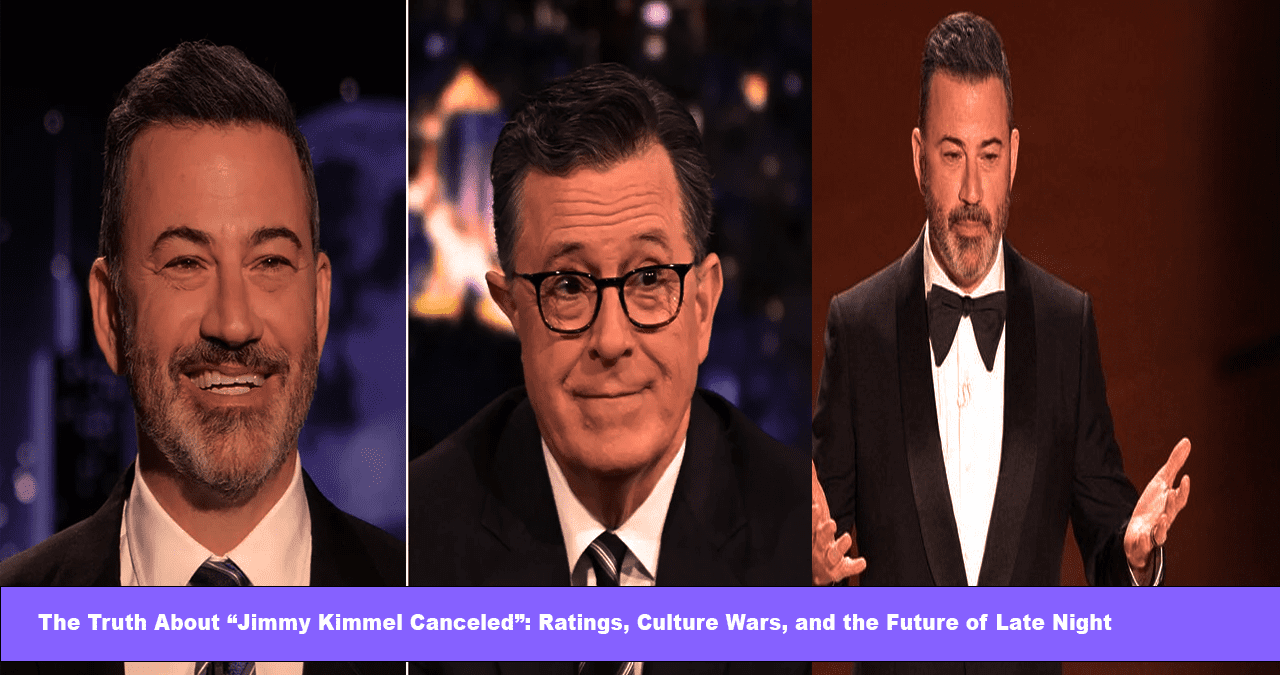
Jimmy Kimmel Canceled? Dissecting the Viral Rumors and the Real State of Late-Night Television
In the churning digital ocean of social media discourse, few phrases generate as much speculative heat as a celebrity’s name followed by the word “canceled.” The latest subject of this relentless online trial is a mainstay of American broadcasting. Searches for “jimmy kimmel canceled” have surged repeatedly, painting a picture of a career in imminent peril. But what is the tangible truth behind this persistent rumor? This guide explains the complex interplay of television ratings, cultural politics, and viral misinformation that fuels the “cancel culture” narrative, using the case of Jimmy Kimmel as a lens to examine the modern media landscape. This resource helps readers move beyond sensationalist headlines to understand the actual mechanics of network television, the business of controversy, and the evolving challenges facing late-night talk shows today.
Understanding the “Canceled” Phenomenon in Modern Media
The concept of being “canceled” has evolved from a niche online call for accountability into a broad cultural catch-all. It now describes everything from legitimate boycotts and career-ending scandals to mere public criticism or even unfounded internet rumors. In practice, the term is often weaponized, creating a fog of confusion where perception can temporarily outweigh reality.
For a figure like Jimmy Kimmel, whose job is inherently tied to cultural commentary and humor, this environment is particularly fraught. A monologue joke that lands poorly with a segment of the audience can be clipped, stripped of context, and amplified across social platforms as “evidence” of offensive behavior. This cycle feeds a narrative of impending professional doom, regardless of the actual institutional support or contractual realities behind the scenes. The “jimmy kimmel canceled” search trend is less a report on his employment status and more a symptom of this larger, often performative, digital culture war.
The outcome for users searching this phrase is often frustration. They encounter a maze of partisan commentary, clickbait videos, and ambiguous headlines, but rarely a clear, factual account of his show’s performance, network standing, or future. This article aims to fill that content gap by providing a dispassionate, evidence-based analysis.
Key Takeaway: The search for “jimmy kimmel canceled” is a prime example of how viral online narratives often conflate public criticism with actual professional termination, creating confusion that requires unpacking the separate forces of ratings, contracts, and culture.
The Anatomy of a Rumor: Where Did “Jimmy Kimmel Canceled” Start?
Pinpointing the exact origin of any viral rumor is like finding the source of a river after it has reached the sea. However, the “jimmy kimmel canceled” narrative has identifiable tributaries that consistently feed it. These are not one-time events but recurring themes that resurface during specific cultural moments.
One primary source is the predictable backlash following politically charged monologues. Kimmel’s shift in later years to more overtly political commentary, particularly on issues like healthcare and gun control, transformed him from a perceived neutral comedian into a partisan figure in the eyes of many conservatives. Each monologue on these topics generates a wave of social media condemnation, with calls for boycotts and demands for ABC to cancel his show. These campaigns, while vocal, are often diffuse and lack the organized, sustained pressure that has impacted other public figures.
Another persistent catalyst involves controversies with other celebrities. High-profile feuds, especially those involving figures with intensely loyal fanbases, can lead to coordinated online campaigns. Followers of the targeted celebrity may flood social media with the “canceled” hashtag, create petition drives, and aggressively lobby sponsors. The intensity of these campaigns can create a false signal of widespread public outrage, when it may be a concentrated effort from a specific community.
Finally, the very structure of the television industry contributes. Late-night shows go on seasonal hiatuses—typically in the summer and around major holidays. To an audience fragmentarily engaged through online clips, the sudden absence of new content can feel abrupt. This seasonal programming break, a standard practice for decades, is often misinterpreted by some as a silent cancellation, leading to a fresh round of “what happened to Jimmy Kimmel?” queries that morph into the canceled rumor.
Key Takeaway: The rumor is not born from a single event but is perpetually recycled through political backlash, celebrity conflicts, and public misunderstandings of standard TV industry hiatuses.
The Real Metrics: Ratings, Contracts, and Network Economics
To separate rumor from reality, one must look to the language spoken in Hollywood boardrooms: ratings, demographics, and advertising revenue. The question of whether Jimmy Kimmel is canceled is, in a business sense, answered by cold, hard data and legal documents, not trending topics.
Jimmy Kimmel Live! consistently performs within the competitive landscape of late-night network television. While no network talk show commands the monolithic audiences of the Carson or Leno heyday, success is measured differently now. The key metric is no longer just total viewers overnight; it is a combination of linear ratings, DVR playback, and, crucially, digital and social virality. A monologue clip that generates millions of views on YouTube and sparks days of news coverage has immense value, even if the traditional overnight rating appears modest. Kimmel’s show has repeatedly demonstrated strength in this area, with segments often crossing over into the broader cultural conversation.
Then there is the matter of the contract. In a major vote of confidence, ABC signed Kimmel to a three-year contract extension, securing his role through the television season. This is not the action of a network preparing to cut ties. Networks make these expensive, long-term commitments based on projected advertising revenue, affiliate station satisfaction, and the overall brand value the host brings. Cancellation would involve breaching this contract, incurring significant financial penalties, and creating a disruptive and costly vacancy in a key programming slot.
The economics also involve lead-in and lead-out flow. Jimmy Kimmel Live! airs after local news in most markets, and its performance is partly judged on its ability to retain that audience and provide a strong lead-in to late-night news programming. Its consistent time slot placement is a strong indicator of its stability within the ABC ecosystem.
What Does “Canceled” Mean for a Network TV Show?
In television, “canceled” specifically means a network has formally decided not to renew a show for additional seasons, effectively ending its production and removing it from the schedule. This decision is primarily driven by unsustainable low ratings, high production costs relative to advertising return, loss of key talent, or a strategic shift in network programming. It is a definitive business termination, distinct from temporary hiatus, seasonal breaks, or online criticism.
Key Takeaway: The stability of Jimmy Kimmel Live! is anchored in multi-year contracts, its performance across modern metrics (including digital virality), and its strategic value to the ABC network lineup—all factors that decisively counter cancellation rumors.
The Late-Night Wars: Evolution, Competition, and Survival
The landscape Kimmel inhabits is radically different from the one he entered. The late-night talk show format, once a monolithic institution, is now a fragmented battlefield. Understanding his position requires a view of this evolving arena.
The dominance of cable gave way to the rise of streaming and the infinite choice of digital platforms. Younger viewers, the coveted demographic, increasingly consume comedy and commentary through YouTube clips, podcasts, and TikTok, not by watching a linear channel at 11:35 PM. This has forced a fundamental adaptation. Hosts like Kimmel are no longer just late-night emcees; they are content engines for digital platforms. The monologue, the interview, the sketch—each is produced with an eye toward its standalone potential online.
This shift has also changed the nature of competition. Kimmel’s direct competitors are not just Stephen Colbert or Jimmy Fallon. He is competing for attention with every viral video, streaming series, and podcast on the planet. Success is measured by the ability to create “moments” that transcend the television screen. His emotionally charged monologues on public policy, or well-executed comedy stunts, are designed to do exactly that—generate headlines and social media engagement that far exceed the show’s broadcast audience.
Furthermore, the role of the host has transformed. The archetype of the neutral, joke-telling machine has faded. Audiences now often seek hosts with a point of view, who engage with the cultural and political zeitgeist. This, however, is a double-edged sword. It creates deeper loyalty among viewers who share that perspective but invites intense blowback from those who oppose it. This is the tightrope every modern host walks, and it directly fuels the “cancel” cycle. Kimmel’s willingness to walk this line, to be more than a comedian, is central to both his relevance in the modern era and the controversies that surround him.
Key Takeaway: The “cancelation” chatter ignores the fact that Kimmel has successfully navigated the most profound shift in late-night history, evolving from a traditional host into a digital-era content creator whose value is tied to cultural impact as much as traditional ratings.
Case Study: When Controversy Meets the Monologue
A practical example illuminates how these forces converge. Consider one of Kimmel’s most-discussed monologue styles: his heartfelt appeals for policy change following national tragedies, such as mass shootings. These segments are a marked departure from standard late-night fare.
From a hands-on perspective in media analysis, these monologues are high-risk, high-reward content. They are not designed for easy laughs; they are designed for emotional resonance and viral amplification. The process is strategic: the writing is more personal, the delivery more somber, the camera often stays in a tight close-up. The goal is authenticity over comedy.
The outcome is polarized. For a significant portion of the audience, these moments are praised as brave and necessary, elevating the talk show from mere diversion to a platform for civic discourse. They are shared millions of times by supporters. However, the backlash is immediate and fierce from another segment. Critics accuse him of virtue-signaling, abandoning comedy for liberalism, or exploiting tragedy. This is when social media floods with demands for ABC to fire him, and the “jimmy kimmel canceled” search volume spikes.
Yet, looking at the outcome through a network lens, these segments are often among the show’s most successful digitally. They achieve massive clip views, earn positive coverage in major news outlets, and are cited by activists and politicians. They define his brand as a host with conscience. The network understands that the vocal online criticism, while real, does not necessarily translate to a mass exodus of viewers or advertisers, and is often outweighed by the positive brand association and engagement metrics. This dynamic explains why the network stands by him despite recurring controversy—the calculus of modern media value justifies it.
Key Takeaway: The very monologues that spark the fiercest “cancel” campaigns are often, by the metrics that matter today, his most valuable content, demonstrating how controversy and relevance are now inextricably linked.
The Business of Backlash: When Do Boycotts Actually Work?
The threat of boycott is the engine of most cancel campaigns. The logic is simple: pressure advertisers to withdraw support, make the show unprofitable, and force the network’s hand. But in practice, the effectiveness of boycotts is highly variable and depends on specific conditions.
Firstly, successful boycotts require clear, achievable demands and a target that is vulnerable to public pressure. A product like a cereal brand is highly susceptible; a broad-based network show with multiple revenue streams and a diverse advertiser pool is far more resilient. Advertisers on late-night TV are often buying access to a demographic profile (affluent, educated viewers) rather than endorsing the host’s every opinion. Unless a host’s behavior becomes legally or ethically toxic in a sustained way, most advertisers will ride out short-term social media storms.
Secondly, the backlash must be sustained and broad, not just a fleeting spike of anger. The online firestorms around Kimmel tend to be intense but brief, fading as the news cycle moves on. They lack the long-term, organized infrastructure of historical boycott movements. As media strategist Erica Manfred notes, “In the current landscape, outrage is a commodity. Networks have become adept at distinguishing between transient Twitter trends and movements that genuinely threaten the bottom line. The former is often just the cost of doing business in a polarized world.”
Furthermore, there is a potential “Streisand Effect,” where the attempt to suppress something only amplifies its reach. A call to boycott can raise a show’s profile, introduce it to new audiences curious about the controversy, and even strengthen the loyalty of existing fans who rally to defend it. This matters most when the content in question is not universally condemned but is divisive. The call to cancel Kimmel often comes from one political sphere, which can inadvertently galvanize support in another.
Key Takeaway: For a late-night institution like Jimmy Kimmel Live!, short-term boycott campaigns are typically absorbed as a cost of relevance, not an existential threat, due to diverse advertising, demographic loyalty, and the fleeting nature of much online outrage.
legacies characters: How Fictional Characters Transcend Their Stories and Shape Our World
The Viewer’s Dilemma: Navigating Bias and Finding Reliable Information
For the average person searching “jimmy kimmel canceled,” the experience is often one of confusion. They are met with a wall of sources, each with its own pronounced bias. This is a core user problem in the digital age: how to find objective truth in a media ecosystem designed for engagement, which often prioritizes emotion over fact.
On one side, they may find conservative-leaning outlets and influencers presenting the cancellation as inevitable or deserved, framing every criticism as a nail in the show’s coffin. On the other, liberal-leaning platforms may dismiss all criticism as bad-faith attacks from political opponents. The actual state of the show—its ratings, its contract, its internal network support—gets lost in the noise. The outcome is an uninformed or misinformed searcher.
The solution lies in seeking out primary sources and neutral data. Instead of commentary, look for trade publications like Variety or The Hollywood Reporter, which report on contract signings and scheduling moves as business news. Look at Nielsen ratings summaries (though understanding their modern context is key). Check the official ABC press site for network announcements. This approach bypasses the partisan filter and provides the foundational facts upon which reasonable opinion can be built.
Readers often benefit from asking a simple set of questions when encountering a “canceled” story: Is there a primary source (a network statement, a court document)? What is the financial and contractual reality? Is the outrage coming from a discrete group or does it reflect a wider consensus? Applying this minimal skepticism can dramatically clarify the picture.
Key Takeaway: The information chaos around such rumors can be mitigated by prioritizing data-driven trade publications and official network statements over partisan commentary, empowering users to find signal in the noise.
The Future of “Cancel Culture” and Media Accountability
The conversation around “jimmy kimmel canceled” is a microcosm of the larger, often toxic, debate about cancel culture itself. It’s crucial to distinguish between the legitimate tool of public accountability and the weaponized rumor mill.
Historically, public pressure has been a necessary force for change, holding powerful institutions and individuals to account when traditional systems failed. The modern iteration, however, is often characterized by a lack of due process, proportionality, and nuance. It operates at internet speed, demanding immediate condemnation and maximum punishment, often based on incomplete information. This is the environment that breeds and sustains rumors about figures like Kimmel.
Looking forward, the best practice for media consumers and creators is evolving toward a more nuanced model. There is a growing emphasis on distinguishing between unforgivable misconduct and mere disagreement, between a pattern of harmful behavior and a single misstep. The concept of “calling in” rather than “calling out” is gaining traction in some circles, focusing on dialogue and education over public shaming.
For a public figure like a late-night host, this may mean the public learns to differentiate between a comedian telling a bad or offensive joke (which can be criticized) and a host engaging in sustained, malicious behavior (which warrants more serious consequences). The future health of public discourse depends on rebuilding these distinctions and resisting the urge to conflate all criticism with a career death sentence.
Key Takeaway: The sustainable path forward lies in cultivating a media culture that values proportional accountability and reasoned debate over the rapid-fire, binary judgments that fuel unfounded cancellation rumors.
A Comparative Look: Late-Night Hosts in the Crossfire
To understand Kimmel’s situation, it’s helpful to view it within the broader spectrum of late-night hosts who have faced genuine scandals or sustained “cancel” pressures. Their outcomes vary widely based on the nature of the controversy and the host’s relationship with their audience and network.
The table below contrasts different scenarios to illustrate the spectrum of outcomes:
| Host & Show | Nature of Controversy | Public & Network Response | Outcome & Reason |
|---|---|---|---|
| Jimmy Kimmel Jimmy Kimmel Live! | Recurring political criticism; backlash from targeted monologues; feuds with other celebrities. | Vocal online backlash from opposing political sphere; sustained support from network (contract renewals); stable ratings. | Show Continues. Controversy is largely ideological and cyclical; perceived as “cost of doing business” for a host with a point of view; strong digital metrics and network loyalty. |
| James Corden The Late Late Show | Multiple reports of alleged rude/diva behavior off-camera; industry gossip and negative press. | Growing negative perception in industry circles; audience perception shift; no major public scandal. | Host Voluntarily Departed. While not officially “canceled,” the accumulation of bad press and a perceived disconnect with his on-air persona likely influenced his decision to leave for other opportunities. |
| Conan O’Brien Various Shows | The Tonight Show timeslot controversy (business dispute, not public scandal). | Massive public and peer support for Conan; backlash directed at NBC. | Show “Canceled,” Host Thrived. Lost Tonight Show due to network business decision, not audience rejection. Leveraged support into a highly successful post-network career, proving fan loyalty is a durable asset. |
| A Host Facing Major Allegations | Serious, substantiated allegations of personal misconduct (e.g., sexual harassment, assault). | Immediate advertiser flight; network investigation; widespread public condemnation. | Typically Canceled. Becomes a liability that networks and advertisers cannot tolerate. Survival is rare and depends on overwhelming evidence exonerating the host. |
This comparison shows that Kimmel’s experience aligns with the category of hosts who face consistent ideological friction. This is distinct from hosts facing allegations of personal misconduct or those suffering from eroding industry and audience goodwill due to behavior. The network’s calculus is different in each case.
Key Takeaway: Kimmel’s controversies are systemic to his chosen editorial stance, placing him in a category of hosts whom networks often protect, unlike hosts felled by personal scandal or toxic reputations.
The Role of Social Media Algorithms in Amplification
No analysis of the “cancel” rumor cycle is complete without examining the machine that fuels it: social media algorithms. These platforms are not neutral town squares; they are engagement engines optimized to show users content that will provoke a reaction.
When a user expresses interest in conservative politics or criticism of mainstream media, the algorithm learns to serve them more content that aligns with those views. This creates a powerful feedback loop. A user who engages with one post criticizing Jimmy Kimmel will soon see a dozen more, each potentially more strident than the last. This creates the illusion that “everyone” is talking about his cancellation, when in reality, the user is in a personalized bubble of amplified outrage.
Similarly, hashtags like #CancelKimmel can trend not because a majority of people are using them, but because a highly motivated, concentrated group is posting about it at high volume in a short time. The algorithm interprets this concentrated activity as “trending” and surfaces it to a wider audience, including people just looking for general news, thus giving the campaign an appearance of scale it may not organically possess. This digital sleight of hand is a core reason why online campaigns often feel disproportionately large compared to their real-world impact.
For the searcher, this means understanding that the volume of conversation is not synonymous with its representativeness. It’s a critical piece of media literacy in the modern age.
Key Takeaway: Social media algorithms artificially inflate the perceived size and consensus of cancellation campaigns by creating personalized feedback loops of outrage, making online noise a poor indicator of real-world impact.
Strategic Takeaways for Media Consumers and Creators
After dissecting the rumor from every angle, what are the actionable insights? Whether you’re a viewer trying to discern truth or a content creator navigating a volatile public sphere, certain principles emerge.
For Media Consumers:
- Follow the Money and the Paper: Contracts and ratings are the bedrock of TV business decisions. Where are the official press releases from ABC or its parent company?
- Seek Trade, Not Tirade: Information from industry-focused publications like Deadline or The Wrap is more valuable than partisan punditry for establishing facts.
- Audit Your Feed: Remember that your social media experience is a curated reality. Actively seek out neutral reporting to break out of algorithmic echo chambers.
- Define “Canceled”: Separate your personal disapproval of a public figure from the practical likelihood of their professional termination. They are very different things.
For Public Figures and Creators:
- Institutional Support is Key: A strong relationship with your network or platform, built on demonstrated value, is the ultimate shield against unfounded rumors.
- Know Your Audience’s Value: Understand the modern metrics of success—digital engagement, brand alignment, demographic delivery—and optimize for them.
- Controversy is a Currency, Handle With Care: Having a point of view generates loyalty and attention but guarantees backlash. The calculation must be intentional, not accidental.
- The Digital Clip is the Product: In late-night, every segment should be produced with the potential to live and engage audiences outside of its original broadcast.
Key Takeaway: Navigating the “cancel culture” storm requires consumers to prioritize primary sources and critical thinking, while creators must build undeniable institutional value and understand the new rules of engagement.
Final Checklist: Separating Rumor from Reality
Before you believe or share the next “celebrity canceled” headline, run through this quick mental checklist to ground your understanding in reality:
- [ ] Check for a Primary Source: Has the network, studio, or employer issued an official statement about termination? If not, it’s likely speculation.
- [ ] Examine the Timeline: Is the show on its standard, published seasonal hiatus? This is often mistaken for cancellation.
- [ ] Follow the Money: Has there been a recent, high-profile contract renewal? This is a powerful counter-indicator.
- [ ] Assess the Criticism: Is the backlash centered on ideological disagreement or professional conduct? The former is survivable for established figures; the latter is often more serious.
- [ ] Look Beyond Social Media: Are mainstream, non-partisan trade publications reporting a crisis? Or is the frenzy confined to specific social platforms?
- [ ] Consider the “Streisand Effect”: Could the attempt to cancel actually be amplifying the subject’s reach and strengthening their core support?
Conclusion: The Enduring Show and the Never-Ending Story
The persistent rumor that “jimmy kimmel canceled” reveals far more about our current media diet than it does about Jimmy Kimmel’s job security. It is a story about how entertainment, politics, and digital culture have fused into an often-indistinguishable mass. It highlights our collective struggle to differentiate between substantive criticism and performative outrage, and between a business decision and a viral hashtag.
Jimmy Kimmel Live! continues, not in spite of these controversies, but in a complex relationship with them. In the modern attention economy, the line between being a target and being relevant is thin. Kimmel’s tenure demonstrates that for a legacy media institution to survive, it must adapt, provoke, and generate conversation—knowing that conversation will sometimes boil over into calls for its destruction.
The phrase “jimmy kimmel canceled” is, and will likely remain, a recurring search query. It is a reliable symptom of our polarized times. But by understanding the mechanics of television, the economics of network support, and the amplifying power of social algorithms, we can diagnose the symptom without mistaking it for the disease. The show goes on, and so does the conversation—for better and for worse.
Frequently Asked Questions
Is Jimmy Kimmel actually fired from ABC?
No, Jimmy Kimmel is not fired from ABC. He is under a multi-year contract extension with the network to host Jimmy Kimmel Live!, securing his position well into the future. Rumors of his firing consistently stem from online criticism and misinformation, not from any official action by ABC.
Why do people keep saying Jimmy Kimmel should be canceled?
People most frequently call for Jimmy Kimmel to be canceled due to his political monologues, which criticize certain politicians and policies, drawing intense backlash from viewers who disagree with him. Other reasons include past comedy segments being re-contextualized as offensive and conflicts with other celebrities whose fans then campaign against him.
Has “Jimmy Kimmel Live!” been officially canceled by the network?
No, Jimmy Kimmel Live! has not been canceled by ABC. It remains a staple of the network’s late-night lineup, airing in its regular time slot. The show is consistently renewed, receives strong network promotion, and continues production without any indication of an impending series finale from ABC.
How are the ratings for Jimmy Kimmel’s show?
The ratings for Jimmy Kimmel Live! are competitive within the modern late-night landscape. While linear TV ratings have declined industry-wide, the show’s success is also measured through social media virality, YouTube views, and its ability to generate cultural conversation—metrics where it often performs very strongly for ABC.
What would it take for ABC to actually cancel Jimmy Kimmel?
For ABC to cancel Jimmy Kimmel, it would require a severe and sustained collapse in viewership and advertising revenue, a major breach of contract, or involvement in a legitimate, unresolvable scandal that makes him a long-term liability. Short-term online backlash and ideological criticism have not met this threshold.
