
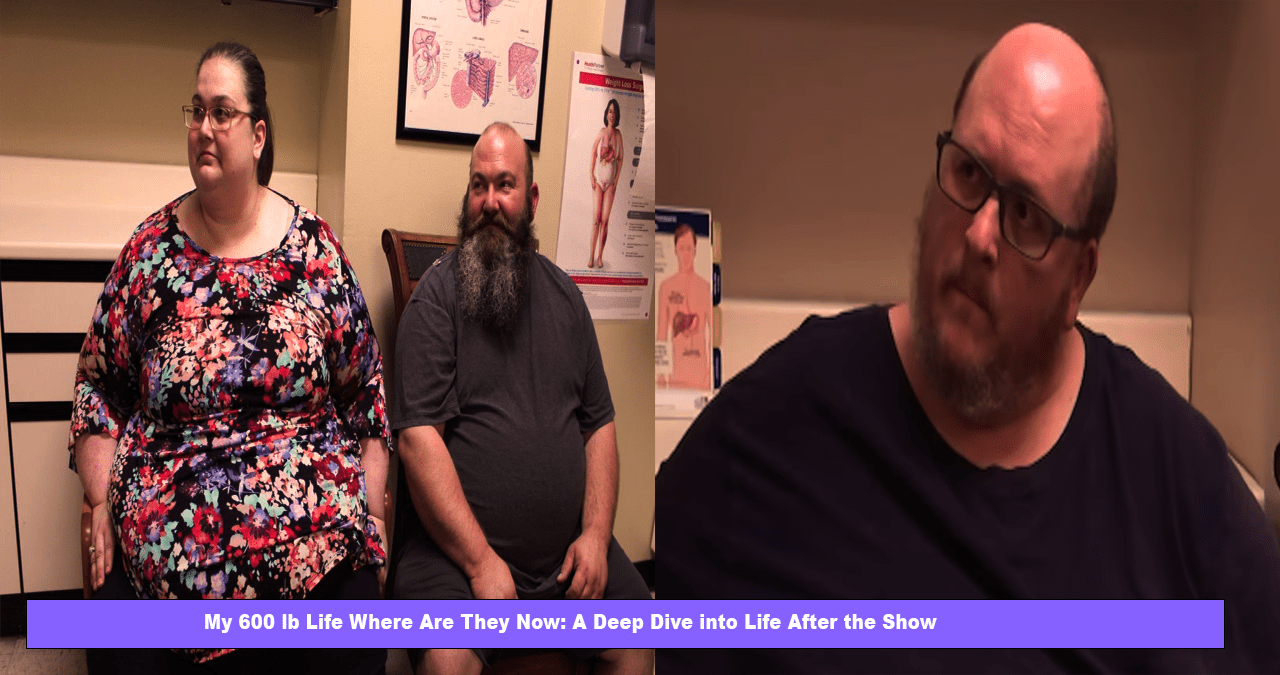
The journey of the participants on TLC’s transformative series My 600-lb Life begins with a desperate plea for help and a trip to Houston to meet Dr. Nowzaradan. But for viewers, the story doesn’t end when the credits roll on their episode. The burning question that lingers is always about the long-term outcome. The 600 lb life where are they now curiosity speaks to our deep investment in these individuals’ fights for survival. We witness the brutal honesty of the process—the strict 1,200-calorie diet, the emotional trauma unpacked in therapy, the arduous physical therapy, and the life-altering gastric bypass or gastric sleeve surgery. Yet, the true test begins in the years that follow, in the daily choices made away from the cameras. This article is dedicated to those next chapters, exploring the successes, the setbacks, and the sobering realities of maintaining such a monumental transformation. The path from immobility to independence is rarely a straight line, and the updates on these participants reveal as much about human resilience as they do about the relentless challenge of obesity.
The allure of the 600 lb life where are they now updates lies in the unfinished narrative. The show provides a snapshot, often spanning a single year, but morbid obesity is a chronic condition managed over a lifetime. We see participants hit their goal weight, or get tantalizingly close, but the struggle against regain, loose skin, and psychological hurdles is perpetual. Following up on these stories offers a more complete picture of bariatric surgery and long-term weight management. It underscores that the surgery is not a magic cure but a powerful tool, one that must be wielded with constant discipline and continued psychological support. The journeys of these individuals, from Melissa Morris to James King, from Christina Phillips to Sean Milliken, form a complex tapestry of human experience, showing that sometimes the greatest battles are fought long after the perceived victory.
The Triumphs: Sustained Success and New Beginnings
Among the many stories of struggle, there are those that shine as beacons of hope and determination. These individuals have not only lost a monumental amount of weight but have also managed to maintain their loss and rebuild their lives in profound ways. Their successes provide a blueprint for what is possible with unwavering commitment, a strong support system, and a focus on mental health alongside physical transformation. For them, life after the show has meant reclaiming autonomy, pursuing dreams long deferred, and becoming sources of inspiration for others facing similar battles. Their updates are the most sought-after when fans inquire about 600 lb life where are they now, as they affirm the core message of the show: change is possible, even from the most dire of circumstances.
One of the most celebrated success stories is that of Melissa Morris. Starting at 653 pounds and facing a grim prognosis, Melissa’s dedication was relentless. After her surgery with Dr. Now, she lost over 300 pounds. But her story didn’t stop there. In her 600 lb life where are they now update, it was revealed that she underwent extensive skin removal surgery, a grueling but transformative process. More importantly, she earned her degree as a registered nurse, a career path directly inspired by her own healthcare experiences. She has since married and leads an active, fulfilling life, often sharing her journey on social media to motivate others. Similarly, Christina Phillips, who started at 699 pounds, emerged as a triumphant figure. After losing over 400 pounds, she focused on her family and her health, maintaining her weight loss consistently. She has been vocal about the importance of therapy in addressing the childhood sexual abuse that contributed to her food addiction, emphasizing that healing the mind is just as critical as healing the body.
Another standout is Justin McSwain, whose positive attitude and dedication made him a fan favorite. Starting at 707 pounds and bedridden, Justin transformed his life, losing over 400 pounds. His 600 lb life where are they now journey is particularly inspiring because of his focus on fitness and strength. He didn’t just lose weight; he rebuilt his body, sharing videos of himself lifting weights and being actively involved in his family’s life. He has spoken openly about using his platform to combat bullying and to promote body positivity within the context of health. Then there’s Brandi and Kandi, the twins from season two, who underwent surgery together. Their update showed sustained success; they both lost significant weight, pursued cosmetology careers, and found romantic relationships, stepping out of the isolated world they had inhabited for so long. These stories share common threads: a embrace of the dietary guidelines long-term, a commitment to ongoing therapy, and the channeling of their new energy into purposeful goals and relationships.
The Struggles: Battling Regain and Personal Demons
For every story of sustained victory, there is another that highlights the vicious, cyclical nature of addiction and the disease of obesity. The path documented on My 600-lb Life is grueling, and the pressure to perform for the cameras can sometimes create a temporary momentum that is difficult to sustain alone. When fans search for 600 lb life where are they now updates on certain participants, they often find tales of heartbreaking regain, continued emotional turmoil, and in some tragic cases, premature death. These stories are not failures but stark reminders that weight loss surgery is a tool, not a cure, and that without addressing the deep-seated psychological issues—the “why” behind the eating—the tool can become ineffective. The struggle with food addiction is lifelong, and triggers, stress, and trauma can lead to old habits resurfacing, sometimes with devastating consequences.
The case of James King is one of the most tragic in the series’ history. Plagued by non-compliance with Dr. Now’s program and ongoing struggles with alcohol, James never managed to lose the weight needed for surgery. His health continued to spiral, leading to multiple hospitalizations and organ failure. His 600 lb life where are they now story ended with his passing in 2020 at the age of 49. His story underscores the lethal reality of the disease when treatment is not followed. Similarly, Sean Milliken, who viewers watched grow from a young man under the care of his mother to an orphan struggling with profound grief, faced immense challenges. After initial success and skin surgery, Sean tragically regained a significant amount of weight. He passed away in 2019 at the age of 29 due to complications from an infection. His journey highlighted the critical role of environment and mental health; without his mother and without developing independent life skills, he was tragically unequipped to maintain his health.
Regain is a common and demoralizing theme for many. Participants like Pauline and Chuck have had public battles with weight regain after their episodes aired. Their 600 lb life where are they now narratives often involve a return to old eating habits, a departure from the structured diet, and a avoidance of the necessary therapy. These updates can be frustrating for viewers, but they are a clinically normal part of many people’s weight loss journeys. Bariatric surgery has a high long-term success rate, but a percentage of patients do experience significant regain, often due to stretching the surgical pouch by overeating or reverting to high-calorie soft foods and liquids. These struggles emphasize Dr. Now’s constant refrain: “The diet is not temporary. You have to change your whole relationship with food for life.” The stories of struggle are essential to understanding the complete picture of the 600 lb life where are they now saga, showing that the battle does not end with a scale victory but continues in the mind and in daily choices.
The Role of Dr. Nowzaradan and Professional Aftercare
The formidable figure of Dr. Younan Nowzaradan is the cornerstone of the show, and his role extends far beyond that of a surgeon. He is part physician, part therapist, and part drill sergeant, confronting patients with unvarnished truths about their life-threatening habits. His blunt pronouncements—”You are eating 10,000 calories a day” or “This is a pattern of self-destructive behavior”—have become iconic. But his importance in the long-term 600 lb life where are they now outcomes cannot be overstated. He provides the medical framework and the immediate intervention, yet his influence is inherently limited by time and geography. Patients typically return home after their year in Houston, which makes establishing local, continuous aftercare the single most critical factor for sustained success. Dr. Now’s model highlights a gap in the broader healthcare system: the desperate need for integrated, accessible, and long-term support for individuals with extreme obesity.
Dr. Now’s program is uniquely intensive, combining immediate bariatric surgical intervention with mandatory therapy and dietary oversight. He often forces patients to prove their commitment by losing weight on their own before he will approve surgery. This process is designed to break the cycle of dependency and demonstrate that the patient can adhere to the rules. As he famously states, “The surgery is only a tool. It is not magic.” This philosophy is central to understanding the divergent 600 lb life where are they now paths. Those who internalize this lesson and build their own discipline tend to fare better. However, the show also reveals the limitations of this approach. Not every patient has access to a therapist like the ones featured on the show once they return home. Not every community has support groups for post-bariatric patients or physicians who understand the unique challenges they face. This discontinuity in care is where many participants falter.
Billie Eilish Bikini, and the Battle for Body Autonomy in the Public Eye
The professional aftercare component, particularly psychotherapy, is the unsung hero of the success stories. Participants like Christina Phillips and Melissa Morris consistently credit therapy with helping them heal from the trauma that led to their food addiction. The show’s featured therapist, Dr. Lola Clay, helps patients unravel complex webs of abuse, neglect, and grief. When this therapeutic work continues after the cameras leave, the chances of long-term success skyrocket. Conversely, when patients dismiss therapy or cannot continue it, they often find themselves unable to cope with stress, grief, or boredom without turning to food. The 600 lb life where are they now updates that show struggle frequently mention a discontinuation of therapy or a refusal to engage with it in the first place. This underscores a critical reality: treating the physical body without treating the mind is a temporary fix. The most sustainable transformations are those that are holistic, addressing the psychological wounds with the same urgency as the physical ones.
The Physical and Emotional Toll of Excess Skin
A reality seldom discussed in mainstream weight loss narratives, but painfully front-and-center for My 600-lb Life participants, is the issue of excess skin. After losing hundreds of pounds, individuals are left with massive folds of skin that can weigh upwards of 50 to 100 pounds. This skin is not merely a cosmetic concern; it is a source of chronic physical and emotional distress. It can cause severe rashes, infections, and mobility issues, making exercise—a key component of maintenance—incredibly difficult and painful. Emotionally, it serves as a constant, tangible reminder of the former body, preventing individuals from fully embracing their new selves and often leading to body dysmorphia. For anyone following the 600 lb life where are they now stories, the topic of skin removal surgery becomes a significant chapter in their ongoing journey.
The physical challenges are debilitating. Participants like Justin Assanti and Charity Pierce documented the daily struggle with hygiene, the persistent sores, and the difficulty finding clothes that fit properly. The skin can literally trip them up, hinder their movement, and cause excruciating pain. From a medical perspective, removing this skin is often the next necessary step for full rehabilitation. However, it is another massive surgery, with its own risks, lengthy recovery time, and significant cost. While Dr. Now performs these surgeries for some patients on the show, not all qualify or choose to undergo the procedure. This means many individuals are left to manage this difficult reality on their own long after their episode airs. Their 600 lb life where are they now reality may include saving money for years for a procedure that insurance often deems cosmetic, despite its clear medical necessity.
The psychological impact is equally profound. After working so hard to lose weight, many feel trapped in a body that still doesn’t feel like their own. They may have reached a healthy weight, but they cannot see or feel the achievement because of the hanging skin. This can be a trigger for depression and, in some tragic cases, for regain. If the physical result doesn’t match the mental image of success, a sense of hopelessness can set in. Successful participants like Melissa Morris and Nikki Webster have been open about the transformative effect of skin removal surgery, describing it as the final step to feeling free. In discussing their 600 lb life where are they now status, they often describe the skin removal as the moment they truly got their life back. For those who cannot access it, it remains a significant barrier to complete recovery, a testament to the fact that the journey doesn’t end at a number on the scale but continues through multiple stages of physical and emotional reconstruction.
The Power and Peril of Social Media Updates
In the modern era, the question of 600 lb life where are they now is often answered not by traditional media follow-ups, but by the participants themselves on social media platforms like Facebook, Instagram, and YouTube. This direct access has created a new dynamic between the show’s subjects and its audience. For participants, social media can be a tool for accountability, a platform for inspiration, and a potential source of income through sponsorships and paid promotions. For fans, it offers an unfiltered, real-time look into the ongoing journey. However, this landscape is a double-edged sword, bringing with it a host of new challenges including intense public scrutiny, cyberbullying, and the pressure to monetize one’s personal transformation.
Many successful alumni have built supportive communities online. They share healthy recipes, workout routines, and words of encouragement. Figures like Brittani Fulfer and David Bolton Jr. use their platforms to showcase their active lifestyles, family moments, and continued commitment to health, providing positive 600 lb life where are they now content. They can control their narrative, share their milestones like skin removal surgeries or career achievements, and connect with others on a similar path. This can be incredibly empowering and can solidify their new identity as health advocates. For some, it even becomes a new career, shifting from a place of dependence to becoming an influencer in the wellness space.
Conversely, social media can be a toxic environment. Participants who are struggling with regain or personal issues often face brutal criticism and harassment in their comments sections. The anonymity of the internet emboldens trolls to make cruel remarks about their appearance, their choices, or their families. This added stress can exacerbate existing mental health issues and trigger emotional eating. Furthermore, the temptation to present a curated, always-positive version of their life can be at odds with the messy reality of recovery. The pressure to maintain a “success story” for followers can be immense. In some cases, participants have become embroiled in online dramas with each other or have made controversial statements, shifting the focus away from health. The 600 lb life where are they now story told via social media is therefore a complex, participant-driven epilogue, filled with both inspiring transparency and the potential for new, digitally-native pitfalls on the road to wellness.
Notable Updates: A Selection of Participant Journeys
The collective narrative of My 600-lb Life is best understood through the specific arcs of its participants. Their individual 600 lb life where are they now stories paint a detailed picture of the myriad outcomes possible after such an intense intervention. The following table provides a snapshot of notable participants, their starting points, and their publicly known current status, highlighting the spectrum of long-term results.
| Participant (Season) | Starting Weight | Key Episode Outcome | “Where Are They Now” Status (Public Info) |
|---|---|---|---|
| Melissa Morris (S2) | 653 lbs | Underwent surgery, lost over 300 lbs. | Sustained success. Became an RN, married, underwent skin removal, maintains active, healthy life. |
| Christina Phillips (S3) | 699 lbs | Underwent surgery, lost over 400 lbs. | Sustained success. Maintains weight loss, focuses on family and mental health, active on social media. |
| Justin McSwain (S6) | 707 lbs | Underwent surgery, lost over 400 lbs. | Sustained success. Focus on weightlifting and fitness, advocates against bullying, involved family man. |
| James King (S4) | 791 lbs | Did not qualify for surgery due to non-compliance. | Tragically passed away in 2020 at age 49 from multiple organ failure. |
| Sean Milliken (S5) | 919 lbs | Underwent surgery, lost weight, had skin removal. | Struggled with regain after mother’s death. Tragically passed away in 2019 at age 29 from an infection. |
| Brittani Fulmer (S8) | 605 lbs | Underwent surgery, lost significant weight. | Sustained success. Maintains loss, active on social media sharing fitness journey, appears happy and healthy. |
| Steven Assanti (S6) | 793 lbs | Underwent surgery after much turmoil, lost weight. | Known for ongoing struggles. Has been in and out of hospitals, uses social media sporadically amid health concerns. |
| L.B. Bonner (S6) | 714 lbs | Underwent surgery, was a positive, determined figure. | Tragically passed away by suicide in 2018, a stark reminder of the deep psychological battles. |
| David Bolton Jr. (S3) | 800 lbs | Underwent surgery, lost over 400 lbs. | Sustained success. Married, became a father, very active on social media showcasing his transformed life. |
| Nicole Lewis (S4) | 653 lbs | Underwent surgery with husband Charlie. | Mixed journey. Has experienced significant regain and struggles but continues to work on her health publicly. |
The story of L.B. Bonner is a particularly poignant one in the context of 600 lb life where are they now inquiries. He was a fan favorite for his gentle demeanor and strong work ethic. After losing hundreds of pounds, he seemed to be on a solid path. His death by suicide in 2018 shocked fans and was a devastating reminder that the internal demons fought by participants are often invisible and can persist even after physical transformation. It emphasized that weight loss does not automatically cure depression or other mental illnesses. On the other end of the spectrum, David Bolton Jr.’s journey is a heartwarming tale of full-circle transformation. From being unable to leave his bed to becoming an active father and husband who regularly posts about his fitness and family life, David embodies the dream outcome. His social media is a living 600 lb life where are they now update, showing a man who has not only lost weight but has gained an entirely new life, full of the ordinary joys he once could only imagine.
The Assanti brothers, Steven and Justin, represent perhaps the most complex and ongoing public saga. Steven, notorious for his manipulative behavior and extreme demands, did eventually have surgery but has continued to have a turbulent health journey with frequent hospitalizations. Justin, who had a more sympathetic edit and found success, has had to navigate his own health issues and a complicated relationship with his brother. Their continued story in the public eye shows that for some, the drama and dynamics that defined their episode become a lasting part of their identity, for better or worse. Each of these individual updates contributes to the overarching understanding that the query 600 lb life where are they now has no single answer, but rather a thousand different answers, each a unique human story of fighting against incredible odds.
The Unseen Challenges: Relationships, Identity, and Life After Trauma
While the focus of My 600-lb Life is squarely on the individual participant, their transformation inevitably ripples out to affect every relationship in their life. The 600 lb life where are they now question must consider this relational dimension. Marriages are tested, parent-child dynamics shift dramatically, and enabler-dependent relationships are forcibly restructured. The person who emerges after massive weight loss is often fundamentally different in confidence, mobility, and outlook, which can be disorienting for partners and family members who are accustomed to the old dynamics. Furthermore, the participant themselves must grapple with a new identity—no longer defined by their size or their helplessness, but now tasked with building a self-concept based on capability and health, which is an emotionally complex process.
Many episodes feature a spouse or parent who is an “enabler,” often out of love, guilt, or a need to feel needed. Dr. Now famously calls out these behaviors, demanding they stop bringing the patient unhealthy food. When the participant gets healthy, the enabler’s role vanishes, which can lead to resentment, insecurity, and even sabotage. Some relationships do not survive this shift. For others, it’s an opportunity to rebuild on healthier terms. The 600 lb life where are they now updates often reveal divorces or breakups, but they also show strengthened bonds where partners become workout buddies or cheerleaders. Similarly, participants who were cared for by their children must learn to become the parent, reclaiming authority and responsibility, which is a difficult but vital transition.
On a personal level, participants face the challenge of building a new life. For years, their world was small, defined by the room they inhabited and their relationship with food. Suddenly, they have energy, mobility, and potential. This freedom can be as terrifying as it is exhilarating. They must find jobs, build social circles, and discover interests and passions—all tasks that are developmentally typical for teenagers, but which they are confronting as adults. This “re-entry” into the world is a massive psychological undertaking. As one participant in a follow-up special noted, “I spent so long being the fat girl, I don’t know who I am without that.” This identity crisis is a common, though less televised, part of the 600 lb life where are they now reality. Success is not just keeping the weight off; it is constructing a meaningful, engaged life from the foundation of health they have fought so hard to build, navigating a world they were once secluded from.
Conclusion
The enduring public fascination with 600 lb life where are they now updates is a testament to the profound human drama at the heart of TLC’s series. It moves beyond sensationalist reality TV into the realm of documented medical and psychological intervention, with real, lasting consequences. The journeys we witness are not tidy narratives with guaranteed happy endings; they are messy, nonlinear, and deeply human. They encompass breathtaking triumphs of will, like Melissa Morris earning her nursing degree, and heartbreaking tragedies, like the losses of James King and Sean Milliken. Each story, whether of sustained success, difficult struggle, or tragic setback, adds a critical piece to our understanding of extreme obesity as a chronic, multifaceted disease.
Ultimately, the collective 600 lb life where are they now narrative teaches us that the scale is only one measure of change. True transformation is holistic. It requires the surgical tool, yes, but it is cemented by relentless dietary discipline, unwavering commitment to psychological healing, a strong support system, and the courage to build a new identity. The participants who thrive long-term are those who embrace the totality of this process. They show us that while the body can be reshaped through medicine and willpower, the mind and spirit require a more nuanced, ongoing kind of surgery—one that cuts away at trauma and stitches together a new sense of self-worth. Their continued stories, shared in updates and on social media, offer an unvarnished look at life after crisis, reminding us that recovery is not a destination but a lifelong journey of choices, a daily answer to the question of how to live.
Frequently Asked Questions
How can I find official “My 600-lb Life” updates on the participants?
TLC occasionally produces “Where Are They Now?” specials that catch up with several participants, and these are the most official sources. Beyond that, many alumni maintain public social media profiles on platforms like Instagram and Facebook, where they share their ongoing journeys directly with fans. These profiles offer real-time, though self-curated, insights into their lives. It’s important to approach these with understanding, as they represent the participant’s own chosen narrative. For a consolidated look, reputable entertainment and news websites often compile verified updates on notable cast members, which can help answer the 600 lb life where are they now question with sourced information.
Has any participant from “My 600-lb Life” kept all the weight off?
Yes, several participants have demonstrated remarkable long-term success in maintaining their weight loss. Individuals like Melissa Morris, Christina Phillips, Justin McSwain, and David Bolton Jr. have, by all public accounts, kept off the vast majority of their lost weight for years after their episodes aired. Their sustained success is typically attributed to a lifelong commitment to Dr. Now’s dietary guidelines, ongoing attention to their mental health through therapy, and the development of an active lifestyle. Their stories are pivotal when considering the 600 lb life where are they now landscape, as they prove that while immensely challenging, long-term maintenance is an achievable reality with the right tools and mindset.
Why do so many participants seem to regain weight after the show?
Weight regain after bariatric surgery is a known medical phenomenon, not unique to the show’s participants. It can happen for several interconnected reasons. The most common is a return to old eating patterns, where individuals may stretch their surgical pouch by overeating or consume high-calorie soft foods and liquids that bypass the restriction. Crucially, many regain when they do not continue the psychological work needed to address the root causes of their food addiction. Stress, trauma, grief, and mental health disorders can trigger a relapse. Furthermore, once the intense focus of the show’s year-long program ends, and the participant returns to their home environment without daily accountability, old triggers and enablers can resurface. This complex interplay of physical, psychological, and environmental factors is why the 600 lb life where are they now stories often feature battles with regain.
Does “My 600-lb Life” pay for the participants’ treatments and surgeries?
The show’s production typically covers the cost of the medical care received during the filming period, which includes Dr. Now’s consultations, the surgery itself, and the associated hospital stays. This is a significant financial burden lifted from the participants, who often have limited means and inadequate insurance. However, it is widely understood that this coverage is for the duration of the documented year. Long-term costs, such as ongoing therapy, nutritional supplements, treatments for complications, and especially the expensive skin removal surgeries that many need later, are generally the responsibility of the participant. This financial reality is a key part of the untold 600 lb life where are they now story, as the ability to afford continued care greatly influences long-term outcomes.
What is the most important factor for long-term success on “My 600-lb Life”?
While surgery provides a critical physical tool, the single most important factor for long-term success is consistently shown to be the participant’s commitment to addressing their psychological health. The patients who thrive in their 600 lb life where are they now chapters are those who fully engage with therapy, not just during filming but as an ongoing practice. They work to heal from past trauma, develop healthier coping mechanisms for stress and emotion, and fundamentally change their relationship with food from one of addiction to one of sustenance. Without this mental and emotional work, the surgery’s effects can be undermined by old behaviors. As Dr. Now constantly emphasizes, the diet and the surgery are not temporary fixes; they require a permanent psychological shift to be effective for a lifetime.
