
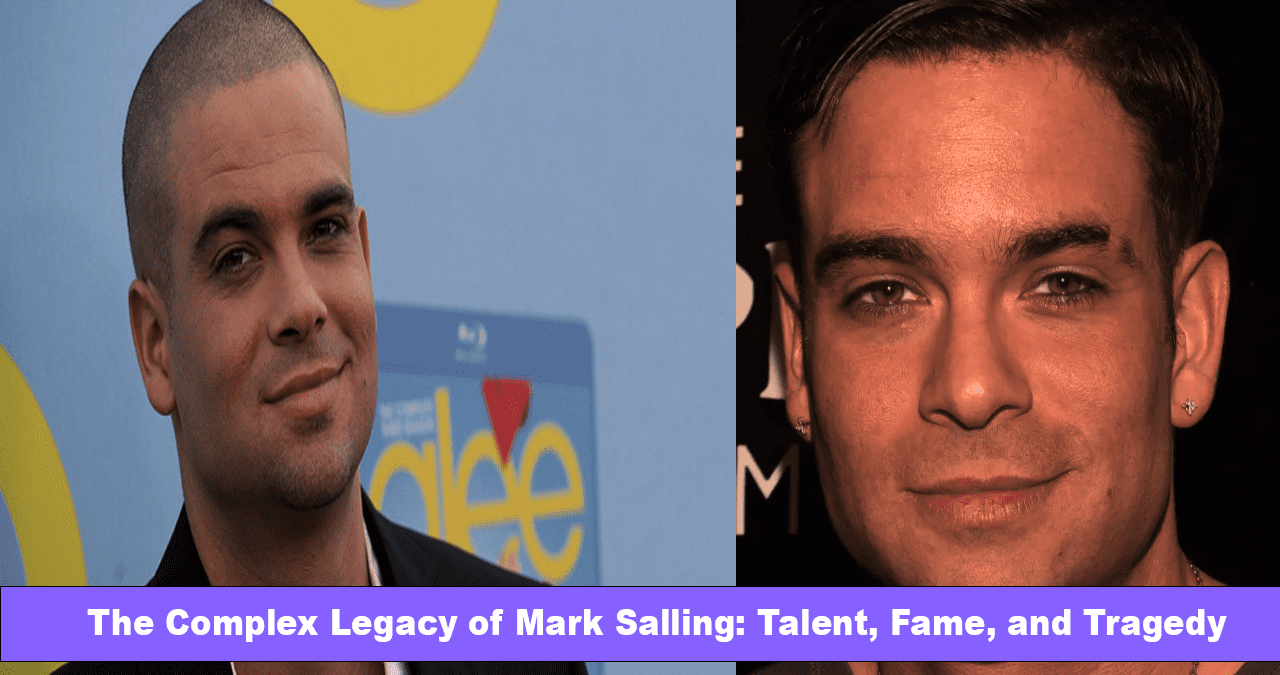
The name Mark Salling became a global talking point for two very distinct reasons. For millions of young viewers in the early 2010s, he was Noah “Puck” Puckerman, the bad boy with a heart of gold on the smash-hit television series Glee. He was the character you loved to hate, then eventually loved to root for, sporting a signature Mohawk and a cocky grin that launched a thousand fan blogs. But as the years went on, the name became attached to a much darker, more somber narrative that overshadowed the fictional world of McKinley High. The story of mark salling is not a simple one; it is a cautionary tale woven from the threads of immense talent, sudden fame, the pressures of Hollywood, and a series of devastating personal choices that led to a tragic and untimely end. To understand the full scope of his legacy, we must look beyond the glee club performances and delve into the complexities of the man who portrayed him.
It is impossible to separate the public perception of the actor from the legal battles and convictions that defined his final years. His story serves as a stark reminder that the personas we see on screen are just that—performances. The contrast between the beloved, if troublemaking, high school student he played and the reality of his off-screen life is jarring and deeply unsettling. For fans of the show, reconciling the two is a difficult, if not impossible, task. This article aims to provide a comprehensive, respectful, and factual look at the entirety of his journey, from his early days in Texas to his rise to stardom, the allegations and legal proceedings that followed, and the lasting impact of his life and death on the entertainment industry and the show’s legacy. It is a story that warrants a deep, thoughtful examination, not to sensationalize the tragedy, but to understand the multifaceted and often contradictory nature of a life lived in the public eye.
Early Life and the Road to Hollywood
Before the fame, before the scripts and the cameras, mark salling was simply Mark Wayne Salling, a boy from Dallas, Texas. Born on August 17, 1982, he grew up in a seemingly typical American household. His father was an accountant and his mother a school secretary, and he had two younger brothers. From a young age, it was clear that Mark was drawn to the arts, but his first passion was not acting—it was music. He became a proficient musician, teaching himself to play the piano, guitar, bass, and drums. This musical inclination would later become a cornerstone of his identity, both on and off the screen. He attended Providence Christian School and later Culver Military Academy, but the structured environments seemed to chafe against his burgeoning artistic sensibilities.
After graduating high school, Salling set his sights on the entertainment capital of the world: Los Angeles. He enrolled at the Los Angeles Music Academy College of Music in Pasadena, diving headfirst into the study of jazz guitar. It was a period of intense focus on his craft, honing the skills that he hoped would lead to a career in music. However, like countless hopefuls before him, he discovered that the path to success in LA was rarely a straight line. While his heart was in music, he soon realized that acting offered a more viable entry point into the industry. He began taking acting classes and auditioning for small roles, a decision that would eventually change the course of his life. The transition from musician to actor was not a compromise of his dreams, but rather an expansion of his artistic toolkit, one that would uniquely position him for a role that required both dramatic timing and musical ability.
His early forays into acting were modest. He appeared in a low-budget film called The Graveyard in 2006 and had a minor role in the children’s television series The Adventures of Kids & an Android. These were the quintessential struggling actor gigs—small paychecks, little recognition, but invaluable experience. He also continued to work on his music, recording and producing his own material. During this period, he was just another face in the crowd, living the transient life of an artist in a sprawling city, waiting for a breakthrough. He took odd jobs to make ends meet, including working as a landscaper, a reality check that kept him grounded even as he chased a dream that for most remains just out of reach. This period of anonymity was crucial, as it built the resilience and hunger that would later fuel his performance. He was a young man with talent and drive, standing on the precipice of a life he could barely imagine.
The Breakthrough: Landing the Role of Puck on Glee
In 2009, the television landscape changed with the arrival of Glee. The Fox musical comedy-drama was an instant cultural phenomenon, a vibrant, heartfelt, and often hilarious look at a high school show choir. The show was an ensemble piece, and each character was meticulously crafted to represent a different high school archetype. Among them was Noah “Puck” Puckerman, the football-playing, mohawk-sporting bully who was initially antagonistic to the glee club members. The role required a specific blend of bravado, vulnerability, and musical talent, a combination that mark salling possessed in spades. He walked into the audition and, by all accounts, embodied the character perfectly. He wasn’t just acting the part; he brought a raw energy and a surprising depth that convinced the casting directors he was the one.
Salling’s portrayal of Puck quickly evolved beyond the one-dimensional jock. As the series progressed, the writers peeled back the layers of the character, revealing a young man grappling with a learning disability, a complicated home life with a single mother, and the responsibilities of unintended fatherhood. Puck’s relationship with his best friend Finn Hudson, played by the late Cory Monteith, became a central pillar of the show, a complex friendship tested by loyalty, rivalry, and shared experience. Salling and Monteith developed a close bond off-screen as well, a friendship that mirrored their characters’ connection in many ways. This on-screen chemistry was palpable and contributed significantly to the show’s emotional core. Salling proved he could handle the comedic moments with a perfect smirk, while also delivering the dramatic scenes with a surprising tenderness that made Puck one of the most beloved characters on the show.
The role catapulted Salling to a level of fame he had never anticipated. He went from being an unknown musician to a teen heartthrob, recognized on the streets of every city. The Glee cast became a family, and they toured the world, performing sold-out concerts to screaming fans. For Salling, it was the realization of a dream, but it came with its own set of pressures. The constant public scrutiny, the grueling production schedule of a network television show, and the blurring lines between his personal identity and his famous alter ego began to take a toll. He was no longer just Mark from Texas; he was Puck from Glee. While he embraced the opportunities the role provided, including the ability to pursue his music with a built-in audience, the weight of his newfound celebrity was a heavy burden to carry, a theme that would become increasingly poignant in the years to come.
Eric Graise: The Rising Star Redefining Representation in Hollywood
Life as a Star: Music, Fame, and Public Persona
As Glee reached the peak of its popularity, mark salling took full advantage of the platform to pursue his first love: music. In 2010, he released his debut album, Pipe Dreams, under his own label, Pipe Dreams Records. It was a personal project, a collection of songs he had written and produced himself, showcasing his skills as a guitarist and singer-songwriter. The album was a departure from the show’s show tunes and pop covers, leaning more toward alternative rock and folk-influenced sounds. While it didn’t achieve mainstream chart-topping success, it was a significant statement of his artistic identity outside of the Glee machine. It was important for him to be seen as a musician in his own right, not just an actor who sang on television. This desire for creative control and artistic legitimacy was a driving force for him during these years.
His public persona during the height of Glee was that of the cool, slightly edgy cast member. He was often photographed at events with a guitar in hand, reinforcing his musician image. He dated several high-profile women, including fellow Glee co-star Dianna Agron and singer Naya Rivera, keeping his personal life in the tabloid headlines. To the outside world, he was living the Hollywood dream: fame, money, and creative freedom. He was active on social media, giving fans glimpses into his life, his music, and his thoughts. He seemed to be navigating the treacherous waters of sudden fame with a level head, always keeping his music at the forefront. This curated public image, however, often masks the internal struggles that many young stars face, and the gap between the public persona and the private reality can be immense.
Behind the scenes, Salling was known by his co-stars as a dedicated and talented, albeit sometimes intense, individual. He was passionate about his beliefs and his art. He was also reportedly a generous and kind person to those on set, contributing to the family-like atmosphere that the cast often spoke about. The friendships forged during those years, particularly with the male members of the cast, were real. The loss of his close friend and co-star Cory Monteith in 2013 was a devastating blow to the entire Glee family, and Salling was visibly shaken by the tragedy. This event seemed to cast a shadow over the remaining years of the show, serving as a grim reminder of the pressures and perils of their unique lives. Looking back, this period represents the peak of his career, a time when his talent was celebrated and his future seemed limitless, making the events that followed all the more tragic and incomprehensible.
The Unraveling: Legal Troubles and Public Downfall
The world of Glee and its fans was rocked in late 2015 by news that shattered the wholesome image of its cast. Mark Salling was arrested by the Los Angeles Police Department on suspicion of possessing child pornography. The news was met with widespread shock and disbelief. The actor who played the lovable bad boy on a family-friendly show was now at the center of a horrifying real-life scandal. The initial arrest stemmed from a tip received by the LAPD’s Internet Crimes Against Children Task Force, leading to a search of his home where digital devices were seized. For the public, it was the first crack in the facade, the moment when the character of Puck and the man Mark Salling became irreparably separated. The news cycle exploded, and the narrative around him shifted overnight from one of celebrity to one of criminality.
The initial charges were serious, but as the investigation continued, the situation escalated dramatically. In May 2016, a federal grand jury indicted him on charges of receiving and possessing child pornography. The indictment contained far more disturbing details than the initial arrest, alleging that he possessed thousands of images and videos depicting the sexual abuse of minors. This marked the point of no return in his public downfall. He was immediately fired from any pending projects, and his relationship with his agency and representatives dissolved. The man who had been a fixture on red carpets and in teen magazines was now a pariah, his name synonymous with one of the most heinous crimes imaginable. The legal process was just beginning, but the court of public opinion had already delivered its verdict. The contrast between the character he played and the evidence presented in the indictment was so stark that it left many fans grappling with feelings of betrayal, disgust, and profound sadness.
As the legal proceedings dragged on, Salling’s life became a series of court appearances, legal maneuvering, and isolation. He was initially released on bond, but under strict conditions, including no internet access and no contact with minors. The man who had once commanded a global stage was now confined to the margins of society, awaiting a fate that would almost certainly involve a lengthy prison sentence. The financial burden of his legal defense was immense, and he was forced to sell his home. The years of fame and fortune evaporated, replaced by the grim reality of federal prosecution. His co-stars and the show’s creators remained largely silent publicly, a silence that spoke volumes about the severity of the situation. There was no way to contextualize or explain away the charges; there was only the slow, painful process of the justice system, a process that would ultimately lead to a final, desperate act.
A Guilty Plea and Its Aftermath
In a legal case of this magnitude, the pre-trial phase can be a drawn-out affair, filled with motions and negotiations. For Mark Salling, this period was marked by a struggle between fighting the charges and accepting the inevitable. Initially, he pleaded not guilty, and his legal team explored various defense strategies. However, as the evidence against him was overwhelming, the prospect of going to trial and facing a potential sentence of decades in prison became a terrifying reality. In October 2017, nearly two years after his initial arrest, Salling changed his plea to guilty as part of a deal with prosecutors. He admitted to possessing child pornography, a federal crime that carried a mandatory minimum sentence of four to seven years in prison, with the possibility of up to 20 years.
The guilty plea was a pivotal moment. It was a public admission of guilt that solidified his fall from grace. As part of the plea agreement, he was also required to register as a sex offender and pay restitution to the victims depicted in the materials he possessed—a provision that underscored the real-world harm of such crimes. For the victims in the images, the knowledge that their abuse was being viewed and collected by someone like Salling adds another layer of trauma. The plea deal was meant to provide a measure of closure for them and a clear path to justice. The sentencing was scheduled for March 2018, and it was expected that he would receive a sentence at the higher end of the guideline range given the vast number of images involved. The world waited for the final chapter in this tragic legal saga.
In the months between his guilty plea and the scheduled sentencing, Salling remained out on bond, living a quiet, secluded life. The man who had once performed for tens of thousands of fans was now a ghost, rarely seen in public. The weight of his impending imprisonment, the complete destruction of his career and reputation, and the shame of his crimes were immense burdens to bear. He was facing the loss of his freedom for the foreseeable future. The friends and support system he had built during his years in Hollywood had largely evaporated. He was alone, confronting the consequences of his actions. This period of waiting was a purgatory of sorts, a time of reflection and, as it would tragically turn out, a time of deep despair. The finality of a decades-long prison sentence loomed over him, and the psychological toll was evidently too great to bear.
The Tragic Conclusion
On January 30, 2018, just under two months before he was set to be sentenced, Mark Salling was found dead near his home in Sunland, California. The cause of death was later confirmed as suicide by hanging. He was 35 years old. The news sent another shockwave through the entertainment world and the fans of Glee. It was a grim and tragic end to a life that had once held so much promise. The response was a complex mixture of sorrow for a life lost, anger at his crimes, and sympathy for the pain he must have been in. It was an ending that left no one with easy answers, only more questions about the intersection of mental health, guilt, and the consequences of one’s actions. His death brought a sudden, definitive halt to the legal proceedings, leaving the case officially closed but the emotional fallout far from over.
The circumstances of his death brought a new layer of tragedy to the already somber legacy of Glee. The show had already endured the devastating loss of Cory Monteith in 2013, and now, another one of its stars was gone in an equally heartbreaking manner. For the cast and crew, it was a reopening of old wounds. Many who had worked with him and considered him a friend were forced to process not only his crimes but also his death. It was an impossible situation, grieving a person who had been convicted of terrible offenses. The news cycles were filled with retrospectives that tried to make sense of his life, from his rise to fame on a beloved show to his final, desperate act. The legacy of mark salling was now permanently etched in the public consciousness as a story of talent, crime, and tragedy, a cautionary tale with no heroes, only victims.
In the wake of his death, the legal and financial matters had to be settled. His estate was subject to claims, including the restitution owed to the victims identified in his criminal case. It was a messy and complicated process, a final administrative act to close the chapter on a life that had ended in such chaos. The families of the victims were, in a sense, denied the closure of a formal sentencing, though his death brought a definitive end to the matter. For the public, the story of mark salling faded from the front pages, but it remains a troubling footnote in the history of modern television. It serves as a stark reminder that the people we invite into our homes through our screens are complicated human beings capable of both great creativity and profound darkness. His story is a difficult one to tell, but it is one that holds important lessons about fame, accountability, and the hidden struggles that can exist behind a smiling public face.
The Ripple Effect on the Glee Cast and Legacy
The death of Mark Salling, coming so soon after the loss of Cory Monteith, indelibly marked the legacy of Glee. The show, which was once a symbol of joy, inclusivity, and the power of music, became inextricably linked with tragedy. For the surviving cast members, it was a double blow that forced them to reconcile their fond memories of making the show with the immense sorrow and shock of losing two of their own under such different, yet equally devastating, circumstances. The experience bonded them in a unique way, creating a shared history of grief that few other casts have had to endure. Many cast members have spoken in interviews over the years about the difficulty of processing these losses, and how it has shaped their perspectives on life, fame, and mental health. The bright, optimistic spirit of the show’s early seasons was permanently dimmed by these real-world events.
The show’s creator, Ryan Murphy, and the network faced the difficult task of honoring the memory of their colleagues while also acknowledging the gravity of the situations. In the case of Salling, this was particularly complex given the nature of his crimes. The show’s legacy is now a bifurcated one: on one hand, it is celebrated for its groundbreaking representation and its launch of incredibly talented careers; on the other, it is a somber reminder of the pressures of child stardom and the dark paths some of its stars ultimately walked. Fan conventions and retrospectives often navigate this territory with care, focusing on the music and the positive impact of the show while acknowledging the losses with a respectful silence. The story of mark salling is a part of the Glee narrative, whether fans want it to be or not, a haunting counterpoint to the show’s message of hope and acceptance.
This tragedy has also sparked important, if difficult, conversations about the mental health of young actors in the industry. The intense pressure of fame, the lack of privacy, and the struggle to form a stable identity outside of a beloved character are challenges that many former child and young adult stars face. The cases of both Monteith and Salling highlight the devastating consequences that can occur when these pressures intersect with personal demons, addiction, or other mental health struggles. While Salling’s crimes are his own and cannot be excused by his fame, his story serves as a broader caution about the need for support systems, mental health resources, and the cultivation of a life beyond the red carpet. The entertainment industry has been forced to take a harder look at how it nurtures and protects its young talent, even if those changes have come too late for some. The legacy of Glee is now a complex tapestry of joy, sorrow, and difficult lessons.
A Comparative Look at the Glee Cast’s Trajectories
The cast of Glee was a large ensemble, and in the years since the show ended, its members have followed wildly different paths. Some have become A-list movie stars, others have found success on Broadway or in music, and some have stepped back from the spotlight entirely. The careers of the show’s young stars provide a fascinating and stark contrast, illustrating the unpredictable nature of post-fame life. Comparing these trajectories helps to contextualize the unique and tragic path of mark salling, whose life and career were cut short not by accident or addiction alone, but by the consequences of criminal behavior. The table below offers a snapshot of where some of his key co-stars are now, highlighting the diverse outcomes from the same starting point.
| Actor/Actress | Character | Post-Glee Trajectory | Key Projects & Notes |
|---|---|---|---|
| Lea Michele | Rachel Berry | Continued success in television and Broadway. | Starred in Scream Queens and The Mayor on TV; returned to Broadway in Funny Girl. A prolific recording artist. |
| Chris Colfer | Kurt Hummel | Became a bestselling author. | Has written multiple books in The Land of Stories series, which have been translated into dozens of languages. |
| Darren Criss | Blaine Anderson | Achieved critical acclaim and Emmy success. | Won an Emmy for his role in The Assassination of Gianni Versace. Continues to act in film, TV, and on stage. |
| Jane Lynch | Sue Sylvester | Remains a highly in-demand character actress and host. | Continues to star in numerous TV shows (The Marvelous Mrs. Maisel) and films. Also a well-known game show host. |
| Kevin McHale | Artie Abrams | Transitioned to podcasting and behind-the-scenes work. | Hosts a popular Glee re-watch podcast, And That’s What You REALLY Missed, and works as a choreographer. |
| Jenna Ushkowitz | Tina Cohen-Chang | Moved into producing and podcasting. | Broadway producer (Tony winner for Once on This Island) and co-host of the Glee re-watch podcast. |
| Amber Riley | Mercedes Jones | Found success on the London stage. | Won an Olivier Award for her role in Dreamgirls in London’s West End. Continues to perform music. |
| Naya Rivera | Santana Lopez | Tragically passed away in 2020. | Drowned in a boating accident at Lake Piru while saving her young son. Her legacy is one of talent and bravery. |
| Cory Monteith | Finn Hudson | Tragically passed away in 2013. | Died from a toxic mix of alcohol and heroin. His death was a pivotal, heartbreaking moment for the cast. |
| Mark Salling | Noah Puckerman | Legal issues led to conviction; died by suicide in 2018. | His post-Glee life was defined by his arrest, guilty plea for child pornography, and subsequent tragic death. |
This table clearly illustrates the divergent paths. While many cast members leveraged their Glee fame into long, prosperous careers, others were lost to tragedy. The contrast between the creative and professional achievements of some and the personal devastation of others is a powerful reminder that success on screen does not guarantee happiness or stability off screen. For mark salling, the trajectory was the most severe and self-destructive, a path that led away from the spotlight and into a federal investigation. His story stands as a stark outlier, a case where fame was not just a prelude to a new career, but the backdrop for a profound and irreversible downfall.
Lessons Learned: Fame, Mental Health, and Accountability
The life and death of mark salling offer a multitude of difficult lessons, though none of them are simple or easy to digest. One of the most prominent is the profound impact of sudden, overwhelming fame on a young person’s psyche. Plucked from relative obscurity and placed on a global pedestal, the actors of Glee were expected to be role models while still navigating their own formative years. The lack of privacy, the constant scrutiny, and the pressure to maintain a certain public image can create a distorted sense of self. For some, like Salling, this may have exacerbated underlying issues or created new ones. While it is crucial to state that fame does not cause someone to commit horrific crimes, it can create a high-pressure environment where unhealthy coping mechanisms and poor decision-making flourish. The entertainment industry has a responsibility to provide young stars with the psychological support and guidance needed to navigate this bizarre reality.
Another critical lesson revolves around accountability. The legal system ultimately held Salling accountable for his actions, and his guilty plea was an acknowledgment of that responsibility. However, his death by suicide was also a final, tragic act that some interpret as an escape from facing the full consequences of his choices, including the pain he caused the victims and the public. The concept of accountability extends beyond the courtroom. It involves confronting the harm one has done and living with the repercussions. His inability or unwillingness to face a lifetime of that reality is a central, heartbreaking component of the story. For society, it forces a difficult conversation about justice, punishment, and redemption, and whether those concepts can ever truly coexist with crimes of such a nature. The public is left to grapple with a legacy where justice was served in part, but a life was also lost.
Finally, the story underscores the critical importance of mental health awareness and intervention. Salling’s final act was one of extreme despair. While we can never know the full extent of his internal struggle in his final days, it is clear he was in a state of profound crisis. The stigma surrounding mental health, particularly for men and especially for those in the public eye, often prevents individuals from seeking the help they desperately need. The signs of his unraveling were there for years—the isolation, the loss of his career, the impending doom of a long prison sentence. Whether anyone could have intervened successfully is an unanswerable question, but the tragedy highlights the need for accessible mental health resources and a culture that encourages seeking help without shame. The story of mark salling is a grim tapestry woven from these threads of fame, crime, and despair, leaving behind a legacy that serves as a powerful, if deeply unsettling, teaching tool for all these difficult topics.
Conclusion
The narrative surrounding mark salling is one of stark duality, a life that defies simple summary. He was a talented musician and actor who brought a beloved character to life on one of the most popular television shows of its era. He was also a man convicted of possessing images that represent the most vile abuse imaginable. These two realities exist simultaneously, creating a legacy that is as confusing as it is tragic. For fans of Glee, his story forever complicates the joy of watching the show. The character of Puck, once a symbol of a redeemable bad boy, is now seen through a lens of sorrow and unease. The actor’s personal choices irrevocably altered how his work is perceived, a permanent stain on his artistic contributions.
His life also serves as a profound cautionary tale about the intoxicating and often destructive nature of fame. The transition from an unknown artist to a global celebrity is a disorienting experience, one that can magnify personal flaws and create a dangerous disconnect from reality. When combined with the immense pressure of maintaining that status and the inevitable scrutiny that follows a fall from grace, the results can be catastrophic. The story of the Glee cast is a modern parable of Hollywood, filled with stories of triumph and heartbreaking tales of loss. Mark Salling’s chapter is the darkest of them all, a narrative that forces us to look beyond the glossy surface of entertainment and confront the very real human struggles that often lie beneath.
In the end, the legacy of mark salling is a fractured one. It is a story that offers no redemption arc, no silver lining. It is a collection of cautionary notes about talent, crime, mental health, and the irreversible consequences of our actions. While his artistic work on Glee will continue to be seen and heard, it will always be accompanied by the somber knowledge of his real-life fate. His is a story that should be remembered not to sensationalize his downfall, but to understand the complexity of human nature, the devastating impact of crime, and the vital importance of compassion, accountability, and mental health awareness. It is a difficult story, but an important one, ensuring that the name mark salling is remembered not just for the character he played, but for the tragic and complex life he led.
Frequently Asked Questions
H3: Who was Mark Salling and what was he known for?
Mark Salling was an American actor and musician best known for his role as Noah “Puck” Puckerman on the popular Fox television series Glee. The show, which aired from 2009 to 2015, featured him as a high school jock who joins the glee club, showcasing his character’s bad-boy charm and musical talent. Prior to his acting career, he was a dedicated musician who played multiple instruments. His life and career were ultimately overshadowed by his arrest and conviction for possession of child pornography, leading to his tragic death by suicide in 2018 at the age of 35.
H3: What was the outcome of Mark Salling’s legal case?
Mark Salling was initially arrested in 2015 on suspicion of possessing child pornography. After a federal investigation, he was indicted on charges of receiving and possessing child pornography. In October 2017, he pleaded guilty to one count of possessing child pornography involving a minor. As part of his plea agreement, he faced a mandatory minimum sentence of four to seven years in prison, with the possibility of up to 20 years. He was also required to register as a sex offender and pay restitution to the victims. He died by suicide in January 2018, before he could be sentenced.
H3: How did Mark Salling’s death affect the cast of Glee?
The death of Mark Salling was a devastating blow to the Glee cast, coming just a few years after the sudden death of their co-star Cory Monteith in 2013. The news forced them to once again process the loss of a colleague and friend under incredibly difficult and complex circumstances. Many cast members have spoken about the profound sadness and shock, and how these back-to-back tragedies have created a unique, shared bond of grief among them. The events have permanently colored the legacy of the show for everyone involved.
H3: Did Mark Salling have a music career outside of Glee?
Yes, music was Mark Salling’s first passion, and he pursued it seriously both before and during his time on Glee. He was a multi-instrumentalist, proficient in guitar, piano, bass, and drums. In 2010, at the height of Glee‘s popularity, he released a debut album titled Pipe Dreams. The album was a personal project that he wrote and produced himself, featuring a sound that was more alternative rock and folk than the pop music associated with the show, allowing him to express his own artistic identity.
H3: What happened to the character Puck after Mark Salling’s legal issues?
The character of Noah “Puck” Puckerman had already been written out of Glee by the time Mark Salling’s legal troubles became public. The series concluded in March 2015, several months before his initial arrest in December of that year. Therefore, the show’s narrative was not directly impacted by his real-life legal situation. Puck’s story arc on the show concluded with his character graduating from McKinley High and later appearing as a young adult figuring out his path, leaving his fate in the fictional world separate from the tragic events of the actor’s life.
