
Introduction
Pappedeckel is a traditional German expression associated with cardboard, paperboard, and everyday products made from these materials. Although the word may be unfamiliar outside German-speaking regions, the objects it describes are commonly used in homes, restaurants, offices, and businesses. From simple cardboard covers to beverage coasters and packaging materials, Pappedeckel represents a practical part of everyday life. Its usefulness comes from the lightweight structure, affordability, and versatility of cardboard.
Over the years, cardboard products have become increasingly important in packaging, advertising, education, and creative activities. Growing interest in sustainable materials has also encouraged businesses to explore paper-based alternatives to certain plastic products. Pappedeckel is particularly interesting because it combines traditional German vocabulary with modern manufacturing and environmental considerations. Understanding its meaning, history, production, and applications helps explain why these simple cardboard materials remain useful in many industries.
What Is Pappedeckel?
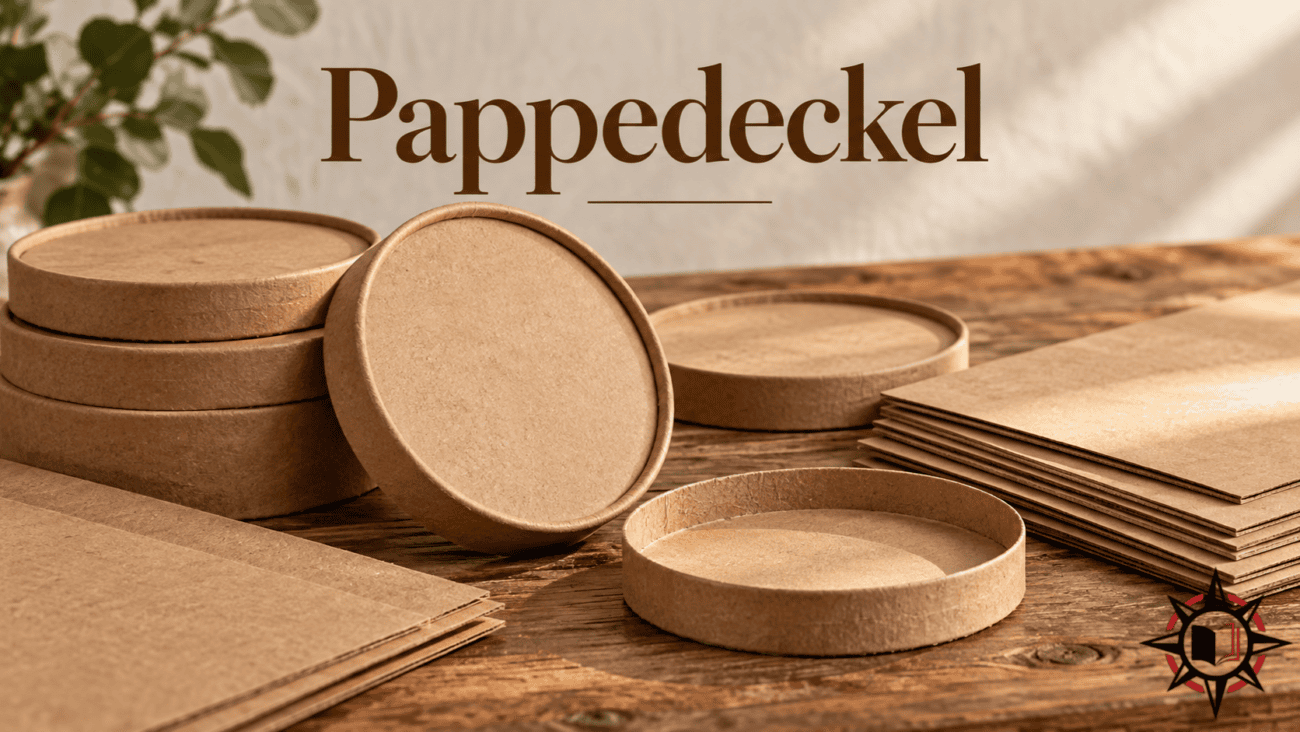
Pappedeckel is a regional German word that generally refers to cardboard, a piece of stiff paper, or an object made from cardboard. It is closely related to the German terms Pappdeckel and Pappendeckel, which are recognized in German dictionaries. The word combines the ideas of cardboard and a cover, although its actual meaning depends on the context. Sometimes it describes a cardboard lid, while in other situations it refers to a flat piece of cardboard used for protection or support.
In English, Pappedeckel can be translated as cardboard piece, cardboard cover, paperboard, or cardboard lid. When used in connection with drinks, it may describe a cardboard coaster placed beneath a glass. However, not every Pappedeckel is a beverage coaster. The word has broader applications, particularly in regional German speech. This flexibility makes it useful in conversations about packaging, household materials, and traditional cardboard products.
History and Origin of Pappedeckel
The history of Pappedeckel is closely connected with the development of paper and cardboard manufacturing. Cardboard has been used for generations to create protective coverings, storage containers, book covers, and everyday household objects. As industrial production expanded during the nineteenth century, manufacturers developed more efficient techniques for producing thick paperboard. These improvements made cardboard products affordable, lightweight, and suitable for many commercial purposes. Different German-speaking regions also developed their own vocabulary for describing these materials.
An important historical connection involves German beer coasters. Printed cardboard coasters were being manufactured by the late nineteenth century, with documented production dating to 1880. In 1892, inventor Robert Sputh registered an innovation involving molded-fiber beverage coasters. These developments helped establish cardboard coasters as familiar products in German drinking establishments. Over time, cardboard became increasingly popular in hospitality, retail, and packaging, giving related expressions such as Pappedeckel a continuing place in everyday language.
Different Types and Materials of Pappedeckel
Pappedeckel-related products can be manufactured from several types of cardboard and paperboard. Solid cardboard is commonly used for protective covers, decorative items, and packaging inserts because it provides a relatively firm surface. Corrugated cardboard contains a structured middle layer that improves strength while keeping the material lightweight. Paperboard is often used for retail packaging and folding cartons. The right material depends on whether the finished product needs to provide stiffness, absorb moisture, protect objects, or display printed designs.
Some cardboard products are uncoated, while others receive special surface treatments. Uncoated cardboard usually has a natural paper texture and may absorb moisture, making certain grades suitable for beverage coasters. Coated cardboard can offer improved resistance to grease or water, depending on the treatment used. Manufacturers may also combine recycled and virgin paper fibers to achieve the required properties. However, not all cardboard products are suitable for food contact, and coatings can sometimes affect recycling options.
Pappedeckel in German Beer Culture
One of the most recognizable applications associated with Pappedeckel is the traditional cardboard beer coaster. In Germany, these coasters are commonly called Bierdeckel and are frequently found in pubs, restaurants, and beer gardens. Their main purpose is to absorb condensation and protect tables from moisture and stains. Traditional coasters are usually made from absorbent paper-based materials that can handle small amounts of liquid while remaining sufficiently firm to support drinking glasses.
Beer coasters also have cultural and commercial importance. Many German breweries print their logos, illustrations, and promotional messages on coasters, turning ordinary objects into advertising materials. Some designs feature regional landmarks, historical artwork, or special events. Collecting beer coasters has become a hobby for enthusiasts interested in brewery history and decorative printing. Although Bierdeckel is the more precise German expression for these products, their cardboard construction explains their association with the broader meaning of Pappedeckel.
Common Uses of Pappedeckel in Packaging
Cardboard materials associated with Pappedeckel are widely used in modern packaging because they are practical and adaptable. Manufacturers use cardboard to create boxes, protective inserts, container covers, retail displays, and product sleeves. These materials help protect merchandise during storage and transportation while providing space for branding and product information. Their lightweight structure can also make handling convenient. Different cardboard grades are selected according to the weight, shape, and protection requirements of the packaged items.
Food and beverage businesses also use paper-based packaging for certain containers, trays, and lids. However, products intended for direct food contact must meet applicable safety requirements. A cardboard lid designed for hot food may require special barriers or coatings to withstand moisture and temperature. Similarly, packaging for dry products differs from containers intended for liquids. Businesses must therefore consider material composition, durability, and safety before selecting a particular cardboard product for commercial use.
Creative and Everyday Uses of Pappedeckel
Pappedeckel materials are useful for many household and educational activities. Thick cardboard can be used to create school models, handmade decorations, picture-frame backings, gift tags, and simple storage organizers. Teachers often use cardboard for classroom activities because it is affordable and easy to cut into different shapes. Students can experiment with building miniature houses, geometric figures, and scientific models. These projects encourage creativity while helping children understand basic construction and design principles.
Cardboard is also popular in do-it-yourself projects and promotional design. People can decorate cardboard pieces with paint, printed artwork, or colored paper to create personalized objects. Businesses may use custom cardboard coasters for weddings, restaurants, exhibitions, and special events. Printed designs can include company logos, event dates, or QR codes. These applications demonstrate how a simple material can serve both decorative and practical purposes, although the finished product must still be suitable for its intended use.
Environmental Benefits and Recycling of Pappedeckel
One reason cardboard products remain important is their potential contribution to more responsible material use. Cardboard is primarily produced from paper fibers, which may come from responsibly managed forests, recycled paper, or a combination of sources. Many clean, uncoated cardboard products can be recycled through established paper collection systems. Recycling allows recovered fibers to become raw materials for new paper products, helping reduce waste and supporting more efficient resource use when suitable collection facilities are available.
However, not every Pappedeckel product is automatically environmentally friendly or recyclable. Some contain plastic coatings, adhesives, or other materials that complicate processing. Food contamination can also affect whether cardboard is accepted by local recycling programs. Although untreated paper fibers can biodegrade under suitable conditions, that does not make every finished product compostable. Consumers should follow local disposal guidelines, while businesses should consider responsible sourcing, efficient manufacturing, product durability, and recyclability when choosing cardboard packaging.
How to Choose High-Quality Pappedeckel Products
Choosing the right Pappedeckel product depends on its intended purpose. Thickness, strength, absorbency, surface texture, and size are important factors. A beverage coaster needs sufficient absorbency to manage condensation, while a packaging cover must provide adequate stiffness and protection. Decorative cardboard may require a smooth surface for printing, whereas shipping materials may need stronger construction. Selecting the appropriate grade helps ensure that the product performs reliably without using more material than necessary.
Businesses should also consider printing quality, customization options, supplier reliability, and environmental documentation. Cardboard products can be manufactured in different shapes and sizes to match specific branding or packaging requirements. For applications involving food, buyers should confirm that the materials are appropriate for the intended contact conditions. Comparing suppliers based on performance, material quality, cost, and sustainability information can help organizations choose products that balance functionality with responsible purchasing decisions.
Conclusion
Pappedeckel is a meaningful regional German expression connected to cardboard, traditional craftsmanship, and practical everyday products. Although its meaning varies across different contexts, it commonly describes cardboard pieces, covers, or related paper-based objects. Its association with German beer coasters highlights an interesting cultural history, while modern applications demonstrate the material’s value in packaging, advertising, education, and creative design. The continued popularity of cardboard reflects its flexibility and wide availability.
As businesses and consumers become more conscious of material choices, cardboard products remain relevant in discussions about packaging and waste reduction. Their environmental advantages depend on responsible production, suitable applications, and effective recycling systems. From protecting products to supporting creative projects, Pappedeckel demonstrates how a simple material can serve numerous purposes. Understanding its origins, properties, and practical uses makes it easier to appreciate its continuing role in everyday life.
