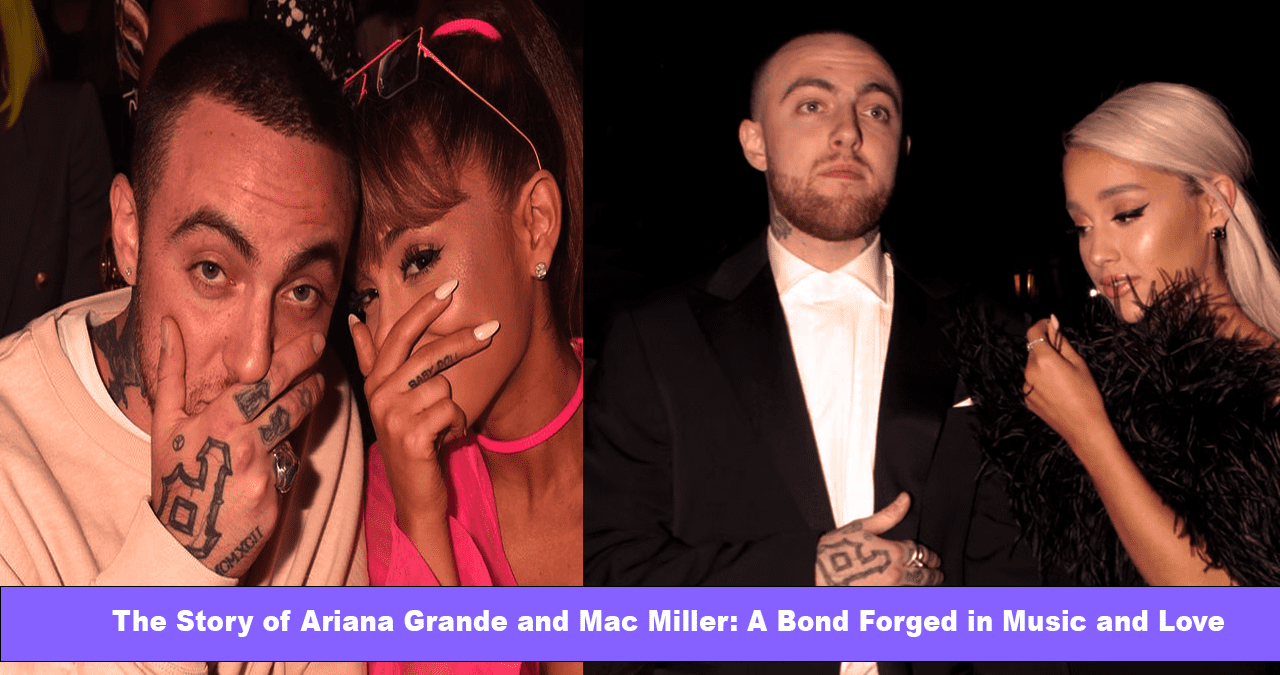
The story of Ariana Grande and Mac Miller is one that resonates far beyond the typical celebrity relationship timeline. It is a narrative woven with threads of youthful passion, profound creative synergy, and a deep, abiding friendship that outlasted their romantic partnership. In the landscape of pop culture, where high-profile romances often feel transactional or fleeting, the connection between these two artists felt remarkably authentic. They were two souls from different worlds within the same industry—one a pop sensation with a four-octave range, the other a introspective wordsmith from Pittsburgh—who found a mirror in one another. Their journey together, though tragically cut short, left an indelible mark on their music and on the hearts of millions who followed their story.
To understand the gravity of their bond, one must look beyond the tabloid headlines and red carpet appearances. The relationship between Ariana Grande and Mac Miller was, at its core, a meeting of minds. They discovered each other at a time when both were navigating the pressures of superstardom, and in that chaos, they found solace. Their romance was not just about public declarations of love; it was about quiet support in the studio, playful collaborations, and a mutual respect that elevated their respective crafts. While their love story eventually evolved into a friendship, the foundation they built together continued to influence their artistry. This article seeks to honor that legacy, exploring the depth of their connection, the beauty of their collaborations, and the enduring impact of a bond that proved that some connections are truly timeless.
The Serendipitous Beginning: How Two Worlds Collided
Long before the world became fascinated with the pairing of Ariana Grande and Mac Miller, both artists were diligently carving out their own unique lanes in the music industry. Ariana, having transitioned from her Nickelodeon days, was quickly shedding her teen-star image and establishing herself as a legitimate vocal powerhouse. Her 2013 debut album, Yours Truly, was a homage to 90s R&B, showcasing a maturity that belied her age. Meanwhile, Malcolm James McCormick, known professionally as Mac Miller, had already cemented his status as a fixture in the hip-hop community. Emerging from the Blue Slide Park era, Mac was evolving rapidly, moving away from frat-rap stereotypes and diving into the jazz-infused, introspective sounds of Watching Movies with the Sound Off.
Their first professional intersection occurred in 2013 when Ariana enlisted Mac for a feature on the song “The Way.” It was a gamble that paid off immensely. Pairing a pop princess with a rapper who was still fighting for mainstream crossover respect could have been a mismatch, but the chemistry was instant and undeniable. Mac’s laid-back, conversational flow paired seamlessly with Ariana’s soaring vocals. The track became a massive hit, peaking at number nine on the Billboard Hot 100. More importantly, it served as an introduction. The music video showcased their easy rapport—playful glances, genuine laughter, and a comfort level that felt far too organic to be purely professional. This was not just a hit single; it was the first chapter of a much longer story.
A Creative Partnership Like No Other
What set the alliance between Ariana Grande and Mac Miller apart from other industry pairings was the sheer depth of their creative trust. They did not simply occupy the same studio space; they inhabited each other’s artistic worlds. Mac had a reputation for being a producer’s artist, someone who thrived on deconstructing beats and flipping samples. Ariana, often pigeonholed by critics as just a voice, possessed a keen ear for production and melody that was frequently underestimated. When they came together, the sum was greater than its parts.
This synergy was most evident during the creation of Ariana’s 2016 album, Dangerous Woman. Mac was heavily involved in the creative process, co-writing and producing the track “Into You,” which became one of the defining songs of her career. His influence, however, extended beyond the credits. He acted as a sounding board, a collaborator who pushed her to experiment while respecting her R&B roots. Conversely, Ariana’s unwavering belief in Mac’s versatility encouraged him to continue his genre-bending explorations. He was not just “Ariana Grande’s boyfriend”; he was an artist she genuinely admired. This mutual admiration society created a safe space where both felt free to take risks, resulting in some of the most compelling music of their respective careers during that period.
The Sweetener Era: Love as Public Muse
By the time Ariana began work on her fourth studio album, Sweetener, her relationship with Mac had become a central pillar of her life. This album stands as the most candid musical documentation of their romance. It was not an album about heartbreak or revenge; it was an album about the dizzying, euphoric feeling of finding your person. Tracks like “R.E.M.” and “Everytime” are steeped in the language of new love and infatuation, with whispers and breathy vocals that evoke the intimacy of a private moment shared between two people.
Mac’s presence on the album is felt even when he is not in the room. The entire sonic palette of Sweetener, with its airy production and Pharrell Williams-led eccentricity, mirrored the optimistic haze Mac often described in his own music about sobriety and clarity. Ariana has spoken about how Mac’s journey toward a healthier lifestyle inspired her, and that positivity bleeds into the album’s core. He also contributed directly to the project with the song “The Way,” which was reimagined and sampled for the intro track. It was a full-circle moment. By immortalizing their origin story on an album titled Sweetener, Ariana framed their relationship not as a chapter, but as the foundation of her happiness. It was a testament to how deeply Ariana Grande and Mac Miller had intertwined their lives, proving that their connection was a catalyst for her artistic evolution.
Navigating Insecurities and Public Scrutiny
Despite the idyllic portrayal on social media and in music, the relationship between Ariana Grande and Mac Miller was not immune to the immense pressures of Hollywood. They were two highly sensitive artists navigating their careers under a microscope. Every Instagram post was dissected, every lyric analyzed for hidden meanings about the other. While they often played along with the public’s fascination—sharing goofy videos and affectionate comments—the constant scrutiny took a toll.
Mac, in particular, faced a unique brand of criticism. Despite having a fiercely loyal fanbase of his own, he was often reduced to a footnote in articles about Ariana. Headlines frequently referred to him as “Ariana Grande’s boyfriend” rather than acknowledging his substantial body of work. This dynamic is a difficult one for any man in the shadow of a female superstar, but for an artist as introspective and prideful as Mac, it was a subtle erosion of his identity. Furthermore, his struggles with substance use were magnified tenfold. While Mac had been open about his battles with addiction long before dating Ariana, the paparazzi and gossip blogs began framing his journey through the lens of their relationship. This external pressure created a backdrop of anxiety that slowly seeped into the foundation of their partnership.
The Iconic Statement: Decoding Sydney Sweeney Purple Suit and Its Cultural Resonance
The Difficult Decision: Why They Parted Ways
In May 2018, the news broke that Ariana and Mac had ended their relationship. The announcement sent shockwaves through their fan communities, many of whom had viewed the couple as endgame. The split was reportedly amicable, rooted in the difficult reality that Mac needed to focus entirely on his own well-being. Ariana later revealed in interviews that she became a “cheerleader” for his sobriety, but the dynamic shifted from partnership to caretaking—a role that is unsustainable in a romantic context.
This period was intensely painful for both parties. Ariana faced a wave of online vitriol from fans who accused her of abandoning Mac during his lowest moments. This narrative, however, grossly oversimplified the complexities of addiction and mental health. Ariana’s decision was one of self-preservation and, ironically, an act of tough love. She recognized that staying together might enable a cycle of codependency that was healthy for neither of them. She expressed her heartbreak poignantly in the song “Ghostin,” a track so painfully specific about the guilt of hurting someone you still love that it left listeners in tears. It was a mature, agonizing choice that demonstrated the depth of her care, even as she walked away.
Swimming and Thank U, Next: Two Sides of the Same Coin
The latter half of 2018 produced two masterpieces born from the same fracture: Mac Miller’s Swimming and Ariana Grande’s Thank U, Next. Released just a month apart from one another, these albums serve as a heartbreaking diptych. They are not reactionary diss tracks or bitter tell-alls; rather, they are introspective journeys of two people processing the same breakup from opposite sides of the mirror.
Mac’s Swimming is an album about survival. It is tranquil, jazz-infused, and remarkably optimistic given the context. Tracks like “Come Back to Earth” and “Self Care” detail his commitment to getting better, not just for a relationship, but for himself. He raps about swimming laps in the pool of potential fate, fighting to stay afloat. He never vilifies Ariana; instead, he accepts the ending with a wisdom that is haunting in retrospect. Conversely, Thank U, Next is an explosion of catharsis. While the title track famously thanks her exes for the lessons learned, the deeper cuts like “In My Head” and “Ghostin” reveal the messy reality of moving on while still caring deeply for someone. The two albums, created independently, speak to each other. They tell the same story from two perspectives, proving that the artistic connection between Ariana Grande and Mac Miller was so powerful that it transcended the dissolution of their romance.
The Unfathomable Tragedy of September 7, 2018
On September 7, 2018, the music world stopped. Mac Miller was found dead in his Studio City home from an accidental drug overdose. He was 26 years old. The news was a gut punch not only to the hip-hop community but to the millions of fans who had watched him grow up in real-time. For Ariana, the loss was incomprehensible. She had spent years loving this man, and mere months after parting ways, he was gone. The public watched as she flew back to Los Angeles, visibly devastated.
The tragedy reframed the entire narrative surrounding the couple. The playful banter on Twitter, the red carpet appearances, the love songs—it all became part of a legacy tinged with profound sadness. Ariana faced the impossible task of grieving a former partner while the world looked on. She took significant time away from the public eye, returning to social media with a poignant collage of Mac from their time together, captioning it with a broken heart emoji. The months that followed were a testament to her resilience, but also a raw display of grief. She was honest about her struggle, channeling that pain into her music while simultaneously facing the cruel reality of losing someone she had once envisioned a future with.
Grief, Guilt, and the Long Road to Healing
In the aftermath of Mac’s death, the conversation surrounding Ariana Grande and Mac Miller shifted dramatically. The tabloid narratives that had once villainized her evaporated, replaced by a collective sympathy. However, sympathy does not erase guilt. Ariana was open about the complex trauma of grieving an ex-partner. She revealed that she struggled with the “ridiculous” narrative that she should have been there, or that she was somehow responsible for his sobriety. This burden is an unfair one, yet it is a common weight carried by those who love someone battling addiction.
Ariana channeled this complex grief into her music. The song “Ghostin” is perhaps the most devastating artifact of this period. It details the agony of being with a new partner while your mind is consumed with guilt and sorrow for the one you lost. The line “I know you hear me when I cry / I try to hold it in the night / While you’re sleeping next to me” captures the isolating nature of grief. She was surrounded by love, yet felt utterly alone in her sorrow. Her healing was not linear. It involved therapy, the support of her now-husband Dalton Gomez, and time. She learned to separate her feelings of guilt from her memories of love, understanding that she could honor Mac’s memory without allowing it to destroy her present happiness.
Legacy and the Eternal Youth of Malcolm McCormick
One of the most poignant aspects of Mac Miller’s passing is the legacy he left behind. He was an artist on the cusp of his prime, finally receiving the widespread critical acclaim he had long deserved. Swimming received a Grammy nomination for Best Rap Album, an award he posthumously won in 2020 for its follow-up, Circles. When Ariana accepted the award on his behalf, it was a moment of profound significance. She stood on that stage not as an ex-girlfriend, but as a custodian of his legacy. Her voice trembled as she read a list of names, thanking the fans who kept his memory alive.
This act of acceptance solidified the permanent link between them. Malcolm McCormick will forever be 26 in the public consciousness, frozen in time. But through his extensive discography and the memories shared by those who loved him, he remains vibrantly alive. The bond between Ariana Grande and Mac Miller is now part of music history. It serves as a reminder of the fragility of life and the importance of compassion. Young artists coming up today look at their collaboration as a blueprint for how to respect one another’s artistry. Theirs was not a story of a pop star and a rapper; it was a story of two people who saw each other clearly, loved authentically, and left the world better than they found it.
Comparative Analysis: Artistic Evolution During Their Relationship
To truly appreciate the impact these two had on one another, it is beneficial to look at a direct comparison of their artistic output before, during, and immediately after their time together. The following table illustrates the stylistic shifts and thematic focuses that defined these periods.
| Artist | Pre-Relationship Era | During Relationship Era | Post-Relationship/Reflection Era |
|---|---|---|---|
| Ariana Grande | Yours Truly & My Everything: Pure pop and R&B, focused on youthful love and emerging adulthood. Vocally dominant but sonically safe. | Dangerous Woman & Sweetener: Bolder experimentation, incorporation of trap beats, and house influences. Lyrics shift to secure, euphoric love. | Thank U, Next & Positions: Raw vulnerability, confrontation of trauma, and a matured perspective on love and loss. More involved in writing. |
| Mac Miller | Blue Slide Park & Watching Movies: Lo-fi hip-hop, party anthems, and early introspective bars. Finding his footing outside of the “frat-rap” label. | GO:OD AM & The Divine Feminine: A pivot to jazz-rap and neo-soul. Themes of love, appreciation for femininity, and structured sobriety. | Swimming & Circles: A genre-fluid blend of rap, R&B, and indie folk. Themes of existentialism, mental health, and acceptance. |
This table clarifies a crucial point: neither artist stagnated. Their relationship acted as a catalyst, pushing them out of their comfort zones. Ariana moved from being a singer who featured rappers to a curator of a specific sonic vibe. Mac moved from being a rapper who liked R&B hooks to a multi-instrumentalist who understood the nuance of romantic tension. They grew in parallel, and that parallel growth is what makes their story so compelling.
The Fans: Keeping the Memory Alive
No discussion of this legacy is complete without acknowledging the role of the fans. The fandom surrounding Ariana Grande and Mac Miller is unique. It is not a “shipping” culture that obsesses over a couple getting back together; rather, it is a community built on shared grief and appreciation. On what would have been Mac’s birthday, streams of his music spike. Fans leave messages for Ariana on social media, not demanding answers, but offering support. They have adopted his “Most Dope” slogan as a mantra for resilience.
This community acts as a digital memorial. They share concert footage, rare interview clips, and fan art that depicts the duo in their happiest moments. For younger fans who discovered Mac after his passing through Ariana’s mention of him, his music becomes a pathway to understanding loss. This organic preservation of memory ensures that the narrative remains one of love rather than tragedy. While the pain of losing Mac will never fully subside for those who adored him, the collective decision to focus on the beauty he created—and the love he shared with Ariana—is a powerful act of defiance against the sorrow.
Conclusion
The narrative of Ariana Grande and Mac Miller is not a fairy tale. It does not have a happy ending in the traditional sense. There is no wedding, no “happily ever after” montage set to one of their songs. Instead, it is a real story. It is a story about two young people finding each other in a business that often encourages superficiality and discovering a genuine connection. It is a story about creativity, about pushing each other to be better artists and better humans. It is a story about the complexities of love—how it can exist powerfully even when a romantic relationship cannot sustain it.
Mac Miller once rapped, “I’ll do anything for a way out of my head.” In Ariana, he found a brief respite. In Mac, Ariana found an anchor and a muse. Their time together was relatively short in the grand timeline of life, but the impact was seismic. They left behind a discography that documents their growth, their joy, and their pain. They taught millions of listeners that it is okay to be sensitive, that seeking help is a sign of strength, and that loving someone sometimes means letting them go. Their legacy is not defined by the tragedy of Mac’s death, but by the beauty of the life and art they created side by side.
Frequently Asked Questions
How did Ariana Grande and Mac Miller first meet?
Ariana Grande and Mac Miller first connected professionally in the studio. She was a fan of his work and reached out to him for a collaboration. This resulted in their 2013 hit single “The Way.” Their immediate chemistry in the studio and during the music video shoot laid the groundwork for a friendship that eventually blossomed into a romantic relationship years later. They respected each other as artists long before they became partners.
What songs did Ariana Grande and Mac Miller make together?
Their most famous official collaboration is the platinum-certified single “The Way” from Ariana’s debut album. Mac also lent his production and songwriting skills to her Dangerous Woman album, specifically on the track “Into You.” Additionally, Mac sampled her voice and their dynamic heavily influenced the conceptual feel of Ariana’s Sweetener album, even on tracks where he is not directly credited as a featured artist.
Why did Ariana Grande and Mac Miller break up?
The couple split in May 2018 after approximately two years of dating. Ariana later explained that the relationship had become challenging due to Mac’s struggles with substance use. She described her role shifting from a partner to a caretaker, which was an unhealthy dynamic for both of them. The decision was made out of love and a desire for both individuals to focus on their personal growth and well-being.
How did Ariana Grande react to Mac Miller’s passing?
Ariana was devastated by Mac Miller’s death in September 2018. She immediately halted promotions for her Sweetener album and retreated from the public eye. She has been open about the complex grief and guilt she experienced. She paid tribute to him through social media posts and dedicated performances to him. Most notably, she accepted his Grammy award for Swimming in 2020, delivering an emotional speech in his honor.
Did Ariana Grande attend Mac Miller’s funeral?
Yes, Ariana Grande attended a private memorial service for Mac Miller held at his family home in Pittsburgh. She was photographed arriving with his brother, Miller McCormick. She has kept the specifics of that day private out of respect for his family, but her presence confirmed the deep respect she maintained for his loved ones even after their separation.
What is the legacy of Ariana Grande and Mac Miller’s relationship?
Their legacy is defined by artistic integrity and vulnerability. They demonstrated that a high-profile relationship could be a source of genuine creative inspiration rather than just tabloid fodder. Their respective albums from 2018 and 2019—Swimming, Circles, Thank U, Next, and Positions—all contain threads of their shared history. They are remembered as two artists who elevated one another and who continue to inspire conversations about mental health, addiction, and the enduring power of love.