
Introduction
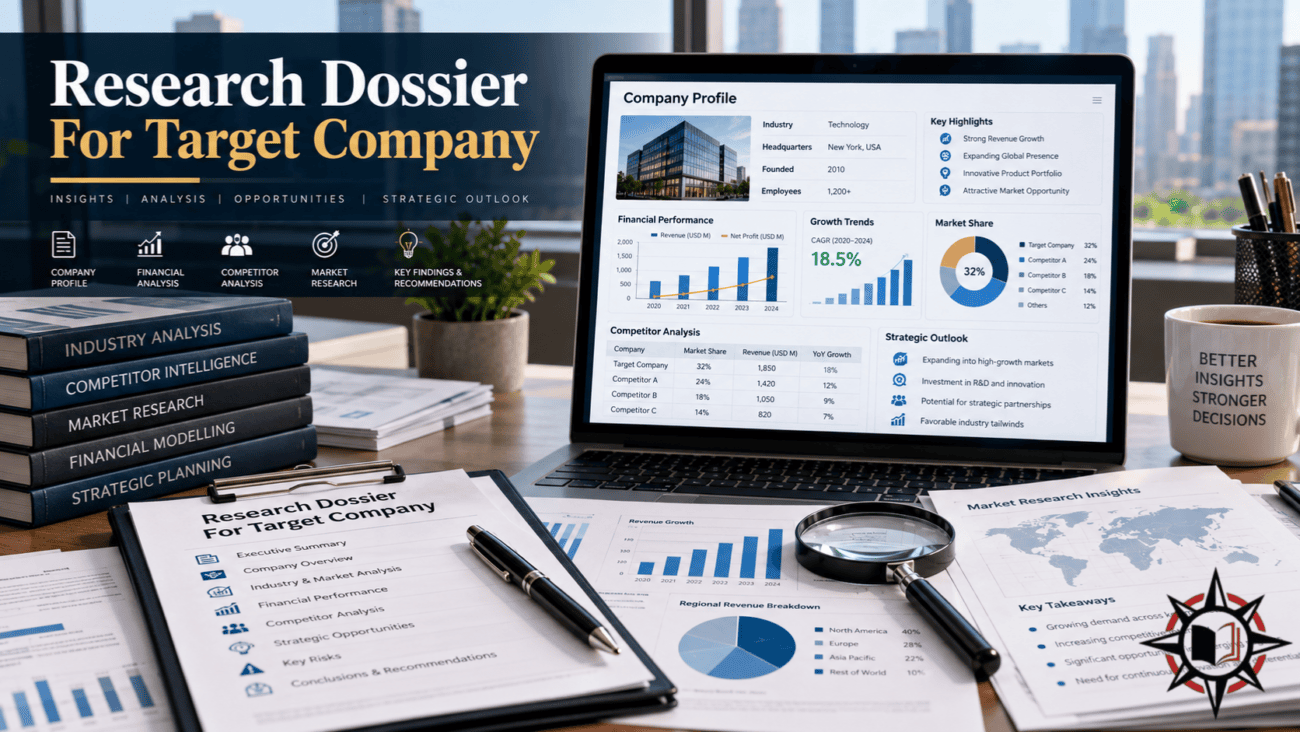
Understanding a business before making an investment, partnership, or acquisition decision requires accurate information and careful investigation. A Research Dossier For Target Company is a detailed report that brings together important information about an organization’s background, financial performance, management, competitors, and business operations. It helps investors, researchers, business owners, and consultants evaluate a company before making important decisions.
Preparing a company research dossier involves collecting information from reliable sources, examining financial records, and understanding the company’s position within its industry. The process also helps identify business opportunities, operational weaknesses, and potential financial risks. A well-organized dossier provides a clear picture of the target company, allowing decision-makers to compare available information and develop strategies based on evidence rather than assumptions.
What Is a Research Dossier For Target Company?
A research dossier for a target company is a structured document containing detailed information about a particular business. The target company is the organization being investigated for investment, acquisition, partnership, competitor analysis, or another commercial purpose. The dossier normally includes the company’s history, ownership structure, products, services, financial condition, management team, and market activities. Each section helps explain how the organization operates and generates revenue.
Unlike a basic company profile, a research dossier includes detailed analysis supported by credible information. For example, a company profile may describe its products and business locations, while a research dossier examines its revenue growth, customer base, operating expenses, and competitive position. This deeper investigation helps researchers understand whether the business is financially stable, commercially attractive, and capable of achieving its objectives.
Importance of Target Company Research in Business Decisions
Target company research helps organizations reduce uncertainty when making commercial decisions. Investors need to understand financial performance before purchasing shares or acquiring ownership. Businesses considering partnerships must examine the reliability, reputation, and operational capabilities of potential partners. Suppliers and customers may also investigate companies before entering long-term agreements. These activities require accurate information about financial stability, leadership, and business performance.
Research is especially important during mergers and acquisitions because purchasing a company involves financial and legal responsibilities. A business may report increasing revenue while experiencing declining profitability or substantial debt. Without detailed investigation, these problems can remain unnoticed. A company research dossier helps decision-makers recognize such issues early and evaluate whether the potential benefits justify the financial and operational risks involved.
Reliable Sources for Company Research and Information Collection
Collecting reliable information is one of the most important steps in preparing a professional research dossier. Official company websites provide background information about products, management, business activities, and organizational history. Annual reports and financial statements contain additional details about revenue, expenses, assets, liabilities, and business risks. Publicly traded American companies submit financial information through the Securities and Exchange Commission’s EDGAR database.
Government business registries also provide useful information. Companies House in the United Kingdom allows researchers to examine registration details, company officers, and available filing records. Industry information can be collected from the United States Census Bureau, Bureau of Labor Statistics, professional associations, and established research organizations. Using several credible sources helps verify company information and reduces the possibility of relying on outdated or misleading claims.
Company Background, Ownership, and Management Structure
A target company dossier should include a detailed business profile explaining the organization’s history, legal identity, headquarters, and operating locations. Researchers should identify when the business was established, the industries it serves, and its main products or services. Understanding the company’s development helps explain important milestones, expansion decisions, and changes in business strategy. Information about subsidiaries and parent companies is also important when investigating larger organizations.
Ownership and leadership analysis examines who controls the company and how important decisions are made. Relevant information includes directors, senior executives, shareholders, and management responsibilities. Researchers may examine the experience of the chief executive officer, chief financial officer, and other senior managers. Changes in leadership can sometimes indicate strategic developments, although they do not automatically suggest problems. A clear management profile helps explain the company’s governance and decision-making structure.
Financial Performance and Business Model Analysis
Financial analysis is a central part of a Research Dossier For Target Company because it helps determine whether an organization is financially stable. Researchers normally examine the income statement, balance sheet, and cash flow statement. These documents provide information about revenue, profitability, assets, liabilities, and cash movement. Comparing financial results across several years helps identify growth patterns, changing expenses, and potential financial difficulties.
Important financial indicators include revenue growth, operating profit, net profit margin, debt levels, and liquidity. For example, consider a company whose revenue increases from $10 million to $12 million in one year. This represents 20 percent revenue growth, but it does not necessarily mean profitability improved. Researchers must also examine operating expenses and cash flow. Understanding how the business generates income and manages its costs provides a more complete assessment of financial performance.
Market Research and Competitor Analysis
Market research helps determine the target company’s position within its industry. Researchers investigate customer demand, market developments, industry growth, and the factors influencing purchasing decisions. Economic conditions, technological developments, government regulations, and consumer preferences can affect business performance. Understanding these factors helps explain whether the company operates in an expanding market or faces difficulties caused by declining demand.
Competitor analysis examines businesses offering similar products or services. Researchers compare pricing, product quality, customer service, geographical coverage, and market positioning. For example, a software company may compete through subscription prices, technical features, and customer support. A manufacturing business may compete through production efficiency, distribution networks, and product reliability. Identifying these differences helps explain the target company’s competitive advantages and areas requiring improvement.
Business Risks, Legal Requirements, and Due Diligence
Every business faces risks that can influence future performance. A target company research dossier should examine financial, operational, market, legal, and technological risks. Financial risks may include high borrowing costs or weak cash flow. Operational risks can involve unreliable suppliers, equipment problems, or production delays. Market risks may result from stronger competitors, reduced customer demand, or changing consumer preferences.
Legal due diligence focuses on identifying regulatory obligations and potential liabilities. Researchers may examine business licenses, contractual agreements, intellectual property, legal disputes, and relevant compliance requirements. The specific investigation depends on the industry and country involved. For example, healthcare organizations face different regulations from retail businesses. A professional dossier should clearly distinguish documented problems from possible risks, allowing decision-makers to understand which concerns require further investigation.
How to Prepare an Effective Target Company Research Report
Preparing a professional dossier begins with identifying the research objective and collecting suitable information. The report should open with an executive summary describing the target company and the most important findings. Following sections can explain business operations, ownership, management, financial performance, customers, competitors, and risks. Organizing information in a logical sequence makes the document easier to understand and helps readers identify important relationships between different findings.
Consider a fictional logistics company generating $15 million in annual revenue with an operating profit margin of 8 percent. A research dossier would examine its delivery services, customers, warehouse facilities, competitors, and financial obligations. The report might also investigate whether the company depends heavily on particular customers or suppliers. These findings would help evaluate its suitability for investment or partnership. Every factual conclusion should be supported by evidence, while estimates and unavailable information should be identified clearly.
Conclusion
A Research Dossier For Target Company provides a structured method for investigating businesses before making important commercial decisions. It combines information about company background, financial performance, leadership, market position, competitors, and potential risks. This approach helps investors, business owners, researchers, and consultants develop a clearer understanding of an organization’s strengths and weaknesses.
Preparing an effective dossier requires reliable sources, careful financial analysis, and accurate interpretation of business information. Official company records, financial statements, industry reports, and market research provide a foundation for the investigation. By presenting verified findings in a clear and organized document, researchers can support better investment decisions, identify business opportunities, and reduce uncertainty during partnerships, acquisitions, and strategic planning.
