
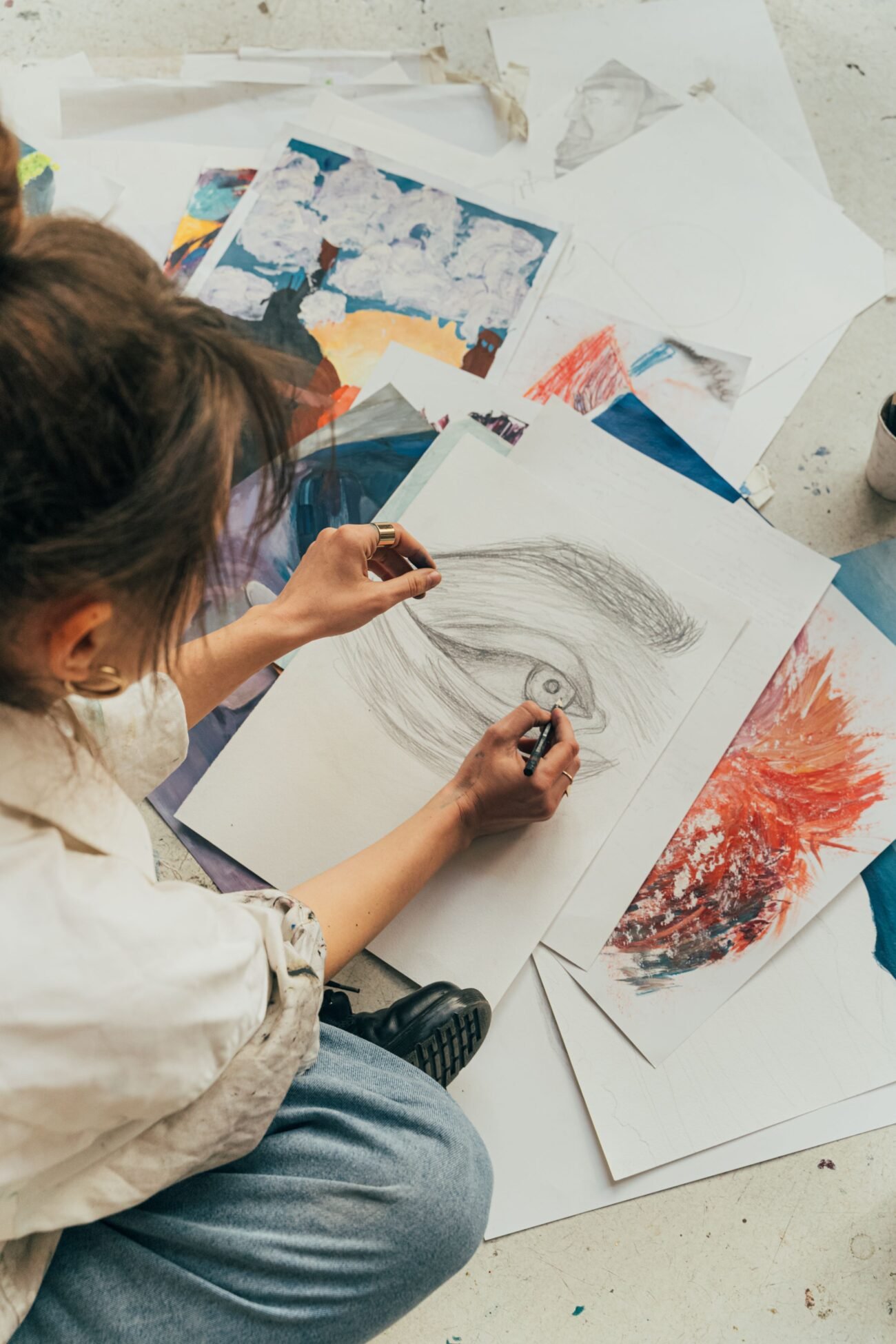
What happens inside your brain when you create something beautiful, even if you think you have no artistic talent? The act of engaging with visual creativity, whether through painting, photography, design, or any other form of visual expression, triggers neural pathways that directly influence your emotional state. This connection between making or observing visual art and feeling better emotionally is not a coincidence. Research and lived experience show that visual creativity serves as a powerful tool for processing emotions, reducing stress, and building resilience in ways that words alone sometimes cannot achieve.
The Neuroscience Behind Visual Expression
When you engage in visual creative activities, your brain releases neurotransmitters that improve mood and reduce anxiety. Creating art activates the prefrontal cortex, the area responsible for decision-making and self-awareness, while simultaneously engaging the limbic system, which processes emotions. This dual activation creates a unique state where you can observe your feelings from both a rational and emotional perspective at the same time. For example, someone sketching during a stressful work situation is not just passing time; they are literally rewiring how their brain processes that stress in real time. The focused attention required during creative work also interrupts rumination, the repetitive negative thinking pattern that fuels depression and anxiety. This interruption alone provides measurable relief, even if the finished artwork never hangs in a gallery.
Color and Visual Perception as Mood Regulators
The colors you surround yourself with or use in your creative work have direct effects on your emotional state. Warm colors like orange and yellow tend to energize and uplift, while cool colors like blue and green promote calm and reflection. When you actively choose colors as part of a creative project, you are not only responding to your emotional needs but also intentionally reshaping your environment and mindset. Creating a piece that incorporates the colors you need in that moment serves a dual purpose: the finished work becomes a visual reminder of your emotional intention, and the process itself provides immediate comfort. Someone struggling with low energy might unconsciously gravitate toward warm, vibrant colors in their artwork, essentially treating their creativity as a form of emotional self-care. This conscious or unconscious selection of color extends beyond the moment of creation and becomes part of a broader practice of attending to emotional needs.
Visual Journaling and Emotional Processing
Visual journaling combines images, colors, sketches, and sometimes words to create a personal record of emotional experiences without the pressure of creating polished art. Unlike traditional journaling, which relies entirely on language, visual journaling allows people to express feelings that resist words. Someone processing grief might create pages of abstract textures and muted colors, letting the visual elements communicate what their voice cannot. This practice creates distance from overwhelming emotions while still honoring them, allowing people to externalize what is happening internally. The pages become a visual map of your emotional journey, and reviewing them over time reveals progress and patterns you might not notice otherwise. Visual journaling does not require artistic skill or formal training, making it accessible to anyone willing to pick up a pencil or paintbrush.
Community and Connection Through Visual Creativity
Participating in visual creative activities alongside others builds social connection, which is itself a critical component of emotional wellness. Group painting classes, photography clubs, or community art projects create spaces where people feel seen and heard without judgment. These environments normalize creative expression and show people that their desire to make something visual is shared by others, reducing the isolation that often accompanies emotional struggles. LIK Fine Art offers a gallery experience where photographers and art enthusiasts can observe how powerful imagery communicates feeling at a deep level, illustrating the emotional reach that visual art holds within a community context. The act of creating together also distributes the emotional weight of individual challenges across a supportive group. This combination of creative expression and human connection amplifies the emotional benefits far beyond what solitary creative practice alone can provide.
Mindfulness and Present-Moment Awareness Through Visual Work
Visual creativity anchors you firmly in the present moment, which is the core principle behind mindfulness-based emotional wellness practices. When you are fully focused on mixing paint colors, composing a photograph, or arranging elements on a page, your mind cannot simultaneously worry about the future or ruminate about the past. This forced presence does not require meditation experience or special training; it happens naturally through the demands of the creative work itself. Photography, in particular, trains the eye to notice details and beauty in ordinary moments, gradually shifting your overall perception toward noticing more positive elements in your daily life. This perceptual shift from noticing what is wrong to noticing what is beautiful directly influences emotional wellbeing over time. The more you practice looking at the world through a creative lens, the more naturally your mind begins to default to noticing possibility and beauty rather than threat and lack.
Conclusion
Visual creativity and emotional wellness are deeply interconnected, operating through multiple biological, psychological, and social pathways. Engaging in visual creative expression activates brain regions that regulate emotion, allows for processing of complex feelings that resist language, and connects you with community and present-moment awareness. Whether you create for yourself or share your work with others, whether you consider yourself artistic or not, the act of making something visual directly supports your emotional health. The connection between what you create and how you feel is not mystical or reserved for trained artists; it is a natural human capacity available to anyone willing to engage with it. Starting a visual creative practice, however simple, is an investment in your emotional wellbeing that pays dividends far beyond the moment you put brush to canvas or lens to eye.
